Be an investor, not a landlord
OPINION: New Zealanders have a love affair with property investment. After securing a family home, buying a rental property is traditionally seen as a safe way to build wealth over the long term.
 increase font size

LACK OF agricultural investment in farming has created a vulnerable food market, says Rabobank.
In 1970, global funding of agricultural research, public and private, was estimated at US$40 billion a year; today it's still US$40 billion but world population has doubled and in the last 20 years demand for food has risen 15 times faster than the available arable land.
Retail food prices are a third lower than when our grandparents were alive even though agricultural commodity prices have reached record levels.
In a paper presented at an economics conference in Geneva the bank says despite the need to feed a growing global population, farmers are not growing significantly more food to meet that need because of an increasing double market failure. This failure – price pressure on both ends of the value chain – leaves farmers trapped.
On the one side, farmers face competition from other farmers, often in other countries, based on lowest price. On the other side, large global food companies are demanding lower prices for farm produce and major industrial firms are demanding higher prices for inputs and agricultural supplies.
The bank says agri-commodity traders, food processors and retailers must take the lead in collaborating with farmers. It says while farmers need to increase their productivity, increasing the agricultural supply takes time and money.
"A big part of the solution to the food supply issue lies in our perspective at farm level, as farmers have the opportunity to close the productivity gap," Rabobank board member Berry Marttin says. "Farmers feed the world. To close this gap, innovation and investment by farmers is crucial."
Marttin says farmers are changing into rural entrepreneurs.
"Farming will become more high tech and more specialized, and farm size will increase further. But to create an enabling environment in which farmers can prosper, cooperation between private sector and public sector with farmers is needed."
Rabobank food and agri coverage global head Gilles Boumeester says the next decade will be dominated by a battle for raw materials.
"As larger players try to carve out their own piece of the raw material pie, the commodities market will break up into separate 'controlled supply chains'. This has placed private enterprise in the driving seat when it comes to solving the dilemma of how to create stability in the vulnerable food supply chain."
Rabobank says it has identified four ways of collaboration between multinationals and farmers:
• Support input: trigger long-term investments in structural access.
• Education: provide tailored support in innovation or training.
• Access: make crop/produce more accessible by improving logistics and finance, urge governments to remove trade barriers and stimulate free trade.
• Demand: stabilise demand by investing directly in sustainable farmers whose supply chains are transparent and whose products are traceable.
OPINION: New Zealanders have a love affair with property investment. After securing a family home, buying a rental property is traditionally seen as a safe way to build wealth over the long term.
Fonterra is is offering up to $150 million of senior fixed rate bonds to institutional investors and to New Zealand retail investors.
The dairy is a significant investment and can have a major impact on milking efficiency and the comfort of cows and milkers.
The Overseas Investment Office needs more resources, but a reform of legislation is not on the cards because of lack of political support, Prime Minister John Key says.
The strength of the kiwifruit industry was a key factor behind MyFarm’s second kiwifruit venture, a proposed $9 million orchard development in the Franklin district, just south of Auckland.

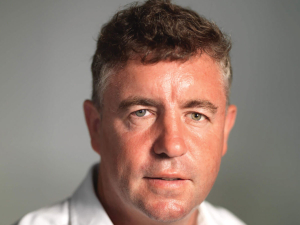
The primary sector is leading New Zealand's economic recovery, according to economist and researcher Cameron Bagrie.
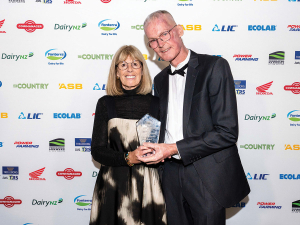
Dairy industry leader Jim van der Poel didn't make much of the invitation he received to the recent New Zealand Dairy Industry Awards in Rotorua.
Farmers around the country are going public big time, demanding their local district, city and regional councils come up with amalgamation plans that meet the needs of rural communities and don't allow urban councils to dominate.
The battle for the rural vote is on and parties are securing high profile names to try and bolster their chances at the general election.
Horticulture New Zealand says proposed changes to the Plant Variety Rights Act 2022 will drive innovation, investment and long-term productivity.
More than 1200 exhibitors will showcase their products and services at next month’s National Fieldays, with sites nearly sold out.