
Diplomatic Incident
OPINION: Your old mate hears an international incident is threatening to blow up the long-standing Anzac alliance as Kiwis and Aussies argue over who wants new Australian resident and former NZ Prime Minister Jacinda Ardern.
 increase font size
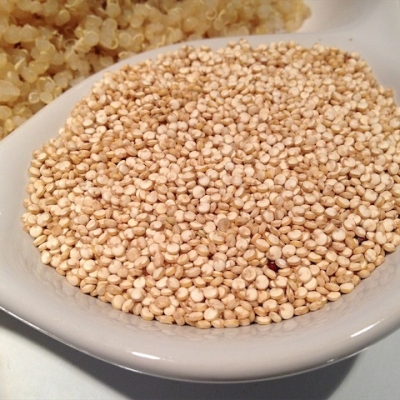 Quinoa.
Trials of the grain quinoa (‘keenwa’) are expanding in Australia as imports from South America, and prices, soar.
“Australian quinoa imports increased 137% in 2013-14 year-on-year as consumers discovered this previously little known product,” says National Australia Bank’s general manager agribusiness Khan Horne.
Prices hit $8/kg in early 2014, up from $2.50/kg two years before. Several growers in Western Australia and Tasmania, and researchers at Western Australia’s Department of Agriculture and Food, have harvested crops and “a fledgling market for the local product seems to be developing”.
Much of quinoa’s appeal is its gluten-free status, but that presents cross-contamination and certification challenges if headers and/or storage facilities are also used for wheat.
Weed control, poor tolerance of waterlogging, highly variable yield, and a lack of domestic transport and marketing arrangements are other pitfalls, though trials are trying to address these.
“While the strong price growth may tempt producers to switch to quinoa, there are risks for growers to consider,” stresses Horne.
The UN Food and Agriculture Organisation (FAO) made 2013 the International Year of Quinoa. Its website puts quinoa’s yield potential at 11t/ha, with 6t/ha considered good and 0.85-3.5t/ha average. It says it will grow in a wide range of soil types and climates, withstanding temperatures from 8oC to 38oC.
OPINION: Your old mate hears an international incident is threatening to blow up the long-standing Anzac alliance as Kiwis and Aussies argue over who wants new Australian resident and former NZ Prime Minister Jacinda Ardern.

OPINION: Your old mate hears that at a recent China Business Summit, PM Christopher Luxon delivered a none-too-subtle "could try harder" report card on the red meat industry regarding its exports to China - particularly when compared to Australia.
More Australian states are embracing virtual fencing technology, opening growth opportunities for Kiwi companies like Halter.
Fonterra says its ongoing legal battle with Australian processor Bega Cheese won’t change its divestment plans.
Farmers in the Australian state of New South Wales will soon be able to use virtual fencing and herding technology to boost farm productivity.


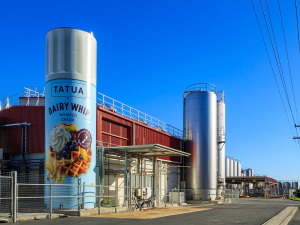
Waikato milk processor Tatua has again declared a record milk payout to farmer shareholders, leaving other processors in the dust.

A Labour-led Government won’t be bringing back the controversial freshwater rules of 2020.
National’s much-touted free trade deal with India featured in the Rural Issues Debate at Mystery Creek, Hamilton on Wednesday night.
New Zealand's 2026-27 freshwater fishing season has opened, with anglers encouraged to head to rivers and lakes over the coming days as conditions look favourable across much of the country.
Central Otago District Council (CODC) has voted against a plan to spread treated sewage sludge from Cromwell and Alexandra on farmland near Lauder, a decision Federated Farmers says reflects strong opposition from rural residents.
Pāmu has released its FY26 Integrated Annual Report, reporting a Net Operating Profit of $113 million, more than double the $49 million recorded in FY25.