Mark Hooper Joins NZPork Board as Independent Director
Rural leader Mark Hooper has been appointed as an independent director to the NZPork board, bringing extensive farming, governance and advocacy experience to the role.
 increase font size
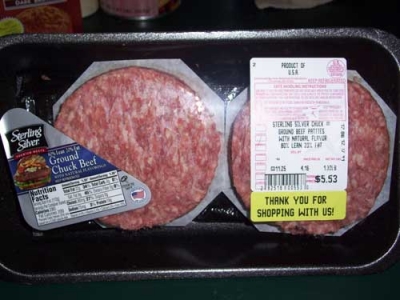
US beef and pork producers are bemoaning their lack of access to the huge Chinese market.
China is one of few markets that never reopened to US beef after a case of bovine spongiform encephalopathy (BSE) -- commonly known as mad cow disease -- in 2003.
Then, and for years, the loss of the China market wasn’t a concern – the Asian giant was not a large importer of beef. But that changed in 2012 when beef import demand in China surged due to strong economic growth and a sharp decline in domestic production.
China now imports more beef every month than it did in an entire year in 2011. In first-half 2015 imports were US$910 million (NZ$1.38b) – up 28% from a year ago.
And the US industry remains sidelined while Australia, Uruguay, New Zealand, Argentina and Canada are all gaining a strong foothold in China.
Key competitors have also got ahead via free trade agreements that cut import duties on their beef and pork products.
US beef exports were US$7.13b (NZ$10.8b) and pork exports US$6.67b (NZ$10.1b) last year, both records.
Still, US Meat Export Federation president and chief executive Philip Seng says being shut out of the Chinese market affects the prices US beef cuts fetch elsewhere in Asia, as China has begun to strongarm the global beef trade.
“For the US beef industry, the lost opportunity due to our lack of access to China is now about US$100 (NZ$151.62) per head,” he says.
Seng says China’s stance on BSE is not science-backed.
“Considering we export to 100 countries, all [convinced] US beef is safe, it would be easy to view China’s import conditions as overly strict,” Seng says.
“But [many more beef exporting] countries are meeting China’s requirements, aware of the market’s potential global impact on beef demand.”
In mid-2014, he says, China began testing beef imports from Australia for hormone residues, citing a hormone ban in place for a decade, but only sporadically enforced.
Australia responded quickly with certification to meet China’s demands. Australian exports to China dipped nearly 50%, but temporarily, as its producers adjusted and shipments to China shot back up.
When Canada confirmed its most recent BSE case in February, its food inspection agency voluntarily suspended export certificates to China and began talks to restore access. Trade resumed in early April.
Similarly, in Argentina, where trade was suspended due to a finding of vesicular stomatitis in dairy cattle, government and industry reps rushed to China to meet officials, reaching agreement to resume trade.
Says Seng, “Our competitors have learned that the best way to do business with China… is to meet its expectations.”
Rural leader Mark Hooper has been appointed as an independent director to the NZPork board, bringing extensive farming, governance and advocacy experience to the role.
Milk powder prices are keeping farmgate prices up, helping processors offset the dip in milk fat prices.
Chinese beef trade quotas and a looming suspension of Brazilian beef imports into the European Union are expected to reshape global beef trade flows over the remainder of 2026, with implications for New Zealand exporters, according to Rabobank's Q3 Global Beef Quarterly report.
As the cost-of-living crisis continues to put pressure on household grocery budgets, new figures show pork remains one of the most affordable fresh meat options for New Zealand families.
Ballance Agri-Nutrients has released its latest fertiliser outlook, detailing some of the current global trends influencing fertiliser supply. Ballance head of procurement Shane Crean takes part in a Q&A in the report:


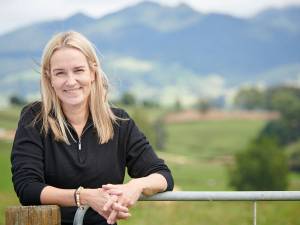
Minister of Conservation Hon Tama Potaka has appointed Susan O'Regan as Chair of the Queen Elizabeth II National Trust (QEII) for a three-year term.
Red meat farmers are welcoming Labour’s plan to review the Emissions Trading Scheme and not to campaign on pricing agricultural emissions.
Where any worker in the kiwifruit industry is mistreated, we expect the authorities to take action.
Mid Canterbury Federated Farmers arable chair, Bevan Lill, said Beef + Lamb NZ data indicated that for the last six years, the average arable return on investment was about 0.8% while inflation ran about 4% - so the average arable farm was going backwards at about 3% a year.
Seed and grain companies share the concerns of arable farmers about the viability of their sector, says Seed and Grain New Zealand chief executive Dr Sarah Clark.
The New Zealand Institute of Forestry (NZIF) says unnecessary changes to New Zealand’s Emissions Trading Scheme (NZ ETS) will seriously erode investor confidence and result in significant reductions in forest planting rates.