New Zealand Wine Vintage 2026: Regional Harvest Results and Industry Outlook
Vintage 2026 yielded excellent fruit for most New Zealand wine regions.
 increase font size
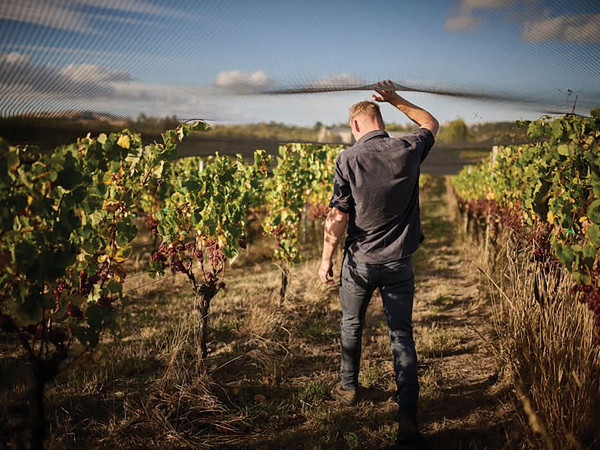 Ben McNab at Dry River Wines. Photo Credit: Amber-Jayne Bain
"Discombobulated vines lead to great wines", says viticulturist James Dicey, who has lamented the past five years of comparatively easy "cookie cutter" growing in Central Otago.
The region has a very dry winter then a very wet spring, along with a high wind run - including "some extreme, crop-damaging gusts". The growing season progressed with relatively cool weather, barring the occasional hot day and the occasional cooler one. It is, he says, a "light switch season", where growers need to be ahead of unexpected shifts, not reacting to them.
James is seeing "unusual flowering", including Chardonnay that came late to the party, meaning December's inconsistent conditions led to variable fruit set, including more hen and chicken than he's seen for a while. Yields are variable and harvest dates are tracing seven to 10 days behind typical, in a year of "difference rather than similarity", he says. "The vines are upset and unsettled. They don't know whether they're Arthur or Martha; they're off balance and out of sync. They're having to react quite quickly to large swings in temperature and rain and dry and heat. In those sort of years, we tend to end up with a little bit more focus and concentration and density in our wines. And that's only a positive thing."
Matt Barbour says North Canterbury's growers had a difficult end to the 2025 vintage, leading to tough decisions. "To prune on as usual or mothball sections of vineyards. Many chose to continue as usual with the hope wineries would be able to find new markets or increase volume to existing markets," he says.
"Spring was incredibly mild, with minimal severe frost events, and meand many of the buds laid down burst and the season was off, like Brad Pitt in F1, to an incredibly positive start," he says. A very hot and dry November and early December allowed for good growth and perfect flowering and fruit set conditions. "Then New Year's hit," he says. "A few decent rain events occurred, but unlike 2025 it has stayed warm, leading to high humidity and high disease pressure. Due to this, vineyards have kept spray windows tight, to fight off our nemesis powdery mildew, with great success, and it looks like harvest will be exceptional this year." Matt, who is Chair of North Canterbury Winegrowers, says wineries have now started having "difficult conversations" with growers around their ability to take fruit, "so it looks like the challenging times will continue for a while yet".
Speaking on 23 January, Hunter's winemaker James Macdonald said Marlborough's Sauvignon Blanc crop is lower than spring expectations, with flowering conditions lightening the load. That's put the crop around the long term average and well under the bumper fruit set of the 2025 vintage.
The industry will welcome that turn of events, with wine companies working to correct the current oversupply, he says. Hunter's has undertaken additional reduction, through early shoot thinning and then mechanical shaking with a harvester, or bunch thinning, "and we think we're in a pretty good place now". The industry appears to be responding to an oversupply situation with yield caps firmly in place this year, he says. "For us, we feel like the line is about 12 tonnes per hectare for Sauvignon Blanc. Anything close to last year's average tonnes per hectare is going to exacerbate any oversupply issues."
Speaking after a series of wet days, he says Marlborough growers are nervous about larger berry size at harvest, "which is not what we want when we're trying to pull back yields... We're hoping that it's going to be another magical Marlborough late summer, and everything will dry down. But at the moment all of our irrigation is off and we're hoping it will stop raining."
There's also some tension around powdery mildew, given the number of mothballed vineyards in the region. As powdery mildew winds up, even vineyards with "gold standard" spray schedules will be worried about "abandoned" vineyards across the fenceline, he says, citing anecdotal reports of mildew spreading from those sites. "We need to keep a close eye on disease." The season is running ahead, with the sparkling harvest likely to start around mid-February, and Hunter's main harvest set to come in through March, with Rapaura and Waihopai Valley vineyards. "It should be done and dusted by Easter."
James, who is Chair of Marlborough Winegrowers, says the rebuild of industry will be slow, because it's a structural oversupply. "It's not a case of a big harvest plus a small harvest and then everything goes back to normal. It's going to be rebuilding at 1% or 2% growth per year, and hopefully in a sustainable way."
The Sauvignon New Zealand 2027 event can play a role in that rebuild, rekindling pride in Marlborough's "hero variety", James says. "We need everybody, not just wine companies, to get behind it. It's our showcase to the world."
Dry River Wines Winemaker Ben McNab says the Wairarapa growing season has been "incredibly" arid and dry, due to wind more than heat. "October winds were strong and frequent so dried us all out really early." That's meant slow canopy growth, leading to "really lovely bunch architecture".
Speaking on 23 January, he welcomed recent rain on the dry-farmed vineyard, "which I think we all needed. It's filled the bunches up and given us a little bit of volume, and it's given us a little bit more green canopy and new leaf that we will need for photosynthesis over the next six, seven weeks before harvest."
It's an exciting season, says Ben. "I'm seeing small bunches. I'm seeing lovely, powerful architecture, lovely exposure to sunlight, and lots of air flow." Disease pressure has been incredibly low and driving around the region reveals healthy vineyards throughout, he says. "As long as the season continues the way it is at the moment, I think '26 is going to be a third wonderful vintage for the region."
The Hawke's Bay growing season has been "enchanted", says Brent Linn, founder of Wairiki Wines and Chief Executive of Hawke's Bay Wine. The benign frost season was followed by settled weather during flowering, then some rain to "push the canopy along". At the end of the year, there were predictions of a very early vintage, but it's now looking similar to 2025, which was a little earlier than normal.
Harvest for sparkling wine was likely to begin before the end of January, followed by a "very compressed vintage", thanks to early veraison in red varieties after hot early-summer weather. "So we're not going to have a leisurely vintage like we did last year," Brent says. Yields are looking very good, "so everyone's quite hapy about how the season has progressed".
Tighter yield caps are in place on contracted blocks, with growers managing crop levels to meet those restrictions. But for those without contracts the season is a tough one, Brent says, noting that interest in Hawke's Bay Sauvignon Blanc fruit has fallen, with a drop in demand out of Marlborough, while Merlot is also struggling to find a home. "Some people have been very proactive about that, and we have quite a lot of mothballed vineyards in Hawke's Bay, probably somewhere around 400 hectares... People have realised that it's going to take a couple of years to correct and looking to minimise the inputs while preserving the asset.
Vintage 2026 yielded excellent fruit for most New Zealand wine regions.
Surprisingly awesome, says James Dicey when asked about the Central Otago outlook for Vintage 2024.
There's September snow falling in Central Otago as James Dicey explains the wine label he and his brother Matt launched last year.
Central Otago winegrowers facing a third season of labour shortages are hopeful for a change in rules.
Central Otago had "a tricky little vintage", says James Dicey of Grape Vision.


