Fonterra FY26 Results: $9.69 Milk Price, $3.4bn Profit
Fonterra has unveiled its annual results for the 2026 financial year, posting $27 billion in revenue and close to $20 billion returned to New Zealand farmer owners and unit holders.
 increase font size

CANADIAN DAIRY farmers Don Dietrich and Larry Parkin are two members of the Gay Lea Foods Cooperative delegate body, the equivalent of Fonterra’s Shareholders Council.
As part of their cooperative’s training programme, Dietrich and Parkin got the task of examining how dairy co-ops operate in New Zealand, so they approached Cooperative Business New Zealand for assistance.
Particularly interested in how Fonterra operates, they want to compare this with the Ontario Supply Management system which markets milk by a quota system and pays farmers different prices for butterfat, protein and other solids.
The two are keen to learn to what extent New Zealand co-ops are successful in looking after members’ interests, and whether the direction taken is responsible for their success. An important aspect of their study is a comparison of the legislative and business circumstances of Canada and New Zealand, and what result this has on the strategic directions dairy co-ops take.
To what extent, they also want to know, have cooperative values and principles guided the development of dairy cooperatives, and how has this differed in the two countries. They are also looking at external influences on dairy cooperatives, such as what happened when New Zealand dairy products lost guaranteed entry to the UK in 1973.
Formed in 1958 and owned by a quarter of Ontario’s dairy farmers, Gay Lea Foods Cooperative makes products from which its 2011-12 revenue was C$539 million. Farmer members own three shares for every 1000L of milk produced and get a ‘patronage’ payment of C$0.90 per hectolitre on top of the milk price.
The Gay Lea Foods delegate body is large – 60 members elected in four zones. Meeting quarterly they elect two delegate members to each of three board committees: audit, governance, and training and development. Don Dietrich is a delegate to the governance committee.
With the slogan, ‘Better Together’, Gay Lea Foods promote themselves strongly as a cooperative. They measure success not just in financial terms, but as a reflection of an approach which leverages cooperative principles and values to create what they describe as ‘a winning combination’ of employees and members, products in the market place, customers and vendors, as well as the charities, other co-ops and the co-op associations they support.
The Gay Lea ‘Leadership in Governance: By Farmers For Farmers’ programme, in which Dietrich and Parkin are taking part in an inaugural advanced level programme, was recognised with a Cooperative Governance award at the recent Canadian Cooperative Association annual meeting.
The question that came to mind after talking with Dietrich and Parkin, however, is: what can New Zealand’s dairy cooperatives learn from Gay Lea Foods?
• Ramsey Margolis is executive director of Cooperative Business New Zealand.
www.gaylea.com
Fonterra has unveiled its annual results for the 2026 financial year, posting $27 billion in revenue and close to $20 billion returned to New Zealand farmer owners and unit holders.
Fonterra Co-operative Group has confirmed the independently assessed candidates standing for election to its board in 2026.
Fonterra has revised its Farmgate Milk Price forecast for the 2026/27 season, lifting the midpoint and narrowing the range on the back of improving global dairy commodity prices.
Outgoing Fonterra Co-operative Council chair John Stevenson says that it has been a privilege to represent the co-op's farmer shareholders.
OPINION: It seems Canterbury processor Synlait is still in the doldrums.


Federated Farmers says it welcomes Labour's commitment to reviewing the Sharemilking Agreements Act, calling on other major parties to do the same.
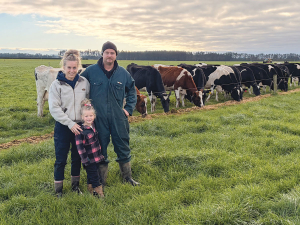
For Canterbury dairy farmers Sian Meijer and Rick Wobben, wearable technology has become one of their most valuable on-farm tools - helping manage 1850 cows across an expansive, high-performing dairy operation while improving efficiency, mating outcomes and day-to-day decision making.
Fonterra has unveiled its annual results for the 2026 financial year, posting $27 billion in revenue and close to $20 billion returned to New Zealand farmer owners and unit holders.
The first major update to the Dairy Cattle Code of Welfare in more than a decade has been released, marking what DairyNZ describes as an important step in ensuring animal welfare standards continue to evolve alongside scientific evidence and on-farm realities.
Ravensdown shareholders have elected Jane Montgomery and Kate Acland to the Ravensdown Board for three-year terms, following a closely contested director election.
Federated Farmers says new legislation replacing the Resource Management Act will cut red tape, unlock investment and help grow New Zealand's export-led economy, after the Planning Bill and Natural Environment Bill passed their third reading in Parliament yesterday.