The highly anticipated 2023 Discovery Project team has been revealed, marking an exciting milestone for New Zealand Holstein Friesian breeders.
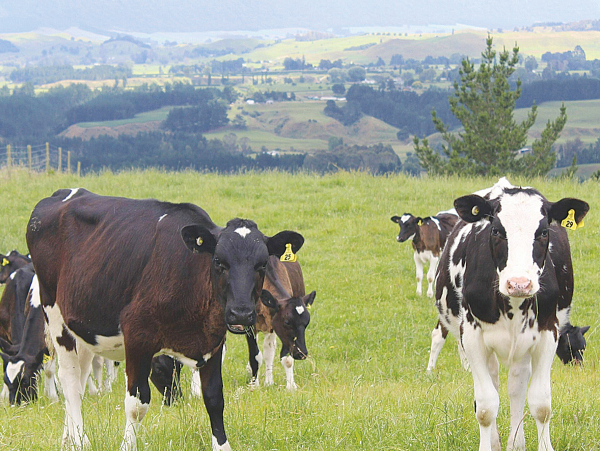
Celebrating 20 years this year, the 2023 Discovery Project team consists of 31 heifers, sourced from 17 breeders, all aiming to make a lasting impact on the AI industry and the Holstein Friesian breed.
This year, Meander Holsteins – owned by Robert and Annemarie Bruin, Otautau – stood out with an impressive selection of six heifers entering the Discovery Project.
Meander Holsteins has had a considerable number of heifers included in the Discovery Team over recent years, consistently showcasing their ability to produce superior Holstein Friesian livestock.
In addition to Meander Holsteins, Lawwal Holsteins (K & MK Singh), Payne Farms Ltd (Brad Payne) and Tanglewood (MB & NL Hawkings) have each contributed three high- BW heifers to the 2023 team, among others.
A joint venture between Holstein Friesian NZ and LIC, the Discovery Project aims to support the opportunity for breeders to develop top cow families and breed bulls for the AI industry.
Each year, HFNZ members are invited to nominate their high-BW heifer calves for the Discovery Project. Just over 156 nominations were received for the 2023 team, with 62 selected for genomic testing by the Discovery Project Committee.
Heifers undergo a meticulous evaluation to identify those with the highest potential for genetic excellence. Advanced breeding technologies such as genomic testing, Embryo Transfer (ET) and TVR (Trans-Vaginal Recovery) select the best heifers of potential bull-dam standard early on in their lives, allowing all breeders the opportunity to have their pedigree Holstein Friesian bulls recognised by the industry.
This approach ensures only the most exceptional heifers are chosen, in line with the programme’s commitment to advancing the Holstein Friesian breed.
Any heifer calves born within the Discovery Project are free from any breeding restriction with LIC and can be nominated and screened in the hope they will be eligible to re-populate the programme.
Thanks to the Discovery Project, animals that would have been overlooked 10-15 years ago – ‘outliers’ – are now being selected based on their genomic merit, rather than BW alone.
All members can nominate a heifer, not just the mainstream bull breeders, allowing members to make the most of the genetics within the Holstein Friesian herd book.
The Discovery Project has seen success since its inception: between 2013-2020, Discovery Project teams delivered a total of 73 sires into LIC’s Sire Proving Programme, with 17 of these sires going on to graduate into LIC teams.
In 2022, LIC purchased six bulls from the 2020 Discovery Project team to join its Sire Proving Scheme for the 2022/23 season.
The Discovery Project has also shown success with contract mating, with several Discovery Project heifers from previous years’ teams still being contract mated today.