BCS Targets: Why Body Condition Score Matters at Calving
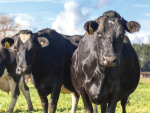
Body Condition Score (BCS) is a critical element in managing the health and reproduction of the dairy herd.
 increase font size
 CRV herd testing manager Mark Redgate says many farmers may still not realise the value of herd testing.
Some dairy farmers could be missing out on up to 160 kgMS of production because they are not herd testing.
That’s according to CRV herd testing manager Mark Redgate.
While the number of cows being herd tested jumped by 1.2% last season, many farmers may still not realise its value.
Redgate wants that to change.
For some dairy farmers, herd testing can be another job to add to the list. They may not see the upsides. More specifically, they may not see how the expense of herd testing could make them enough money to justify the financial and labour costs of getting it done.
Redgate says he understands the rationale.
“I wouldn’t spend money on things that don’t improve my profit. But making money is the result of making enough of the right decisions,” he says.
“That’s what herd testing is all about – giving farmers the kind of information from which they can make better moneymaking calls.
“The other thing to remember is that some key information and insights are hidden. You can’t know what’s really going on with an individual animal without this kind of testing.”
160 kgMS is a stat Redgate likes to talk about with farmers. 160 kgMS per year is the production difference between the top 20% of a farmer’s cows and the bottom 20%. That represents a big gap in revenue between these two groups of animals.
It makes financial sense to know which cows are in the top 20%. You breed from these animals to increase the productivity of your herd, points out Redgate.
Knowing which cows are in the bottom 20% can also be profitable. The worst performers can be culled or bred for dairy beef, while animals with genetic potential can be inseminated with sexed semen or targeted with specific traits to boost the productivity potential of their progeny.
Redgate says when he talks about identifying the top and bottom performers, many farmers feel confident they know their cows.
There’s no denying farmers observe their animals every day. They watch their cows’ behaviour and can see who the best producers are, he says.
But he adds that unfortunately, looks can be deceiving.
“Take the cow with high milk volume. Her quantities suggest she’s a good money earner, but farmers are not paid strictly by volume; they’re paid on milk fat and milk protein, neither of which can be discerned with the naked eye.
“But a test of 30ml of milk from that cow will reveal the exact composition of her milk and the true profitability of that animal.
“Farmers are often surprised at how best and worst performers are reordered after a herd test.
“The same is true for animal health. We’ve tested herds and discovered cows that they were carrying mastitis but were asymptomatic. That means these cows weren’t going down sick themselves but were happily spreading mastitis throughout the herd.
“There’s no way to detect that visually. But we can spot a dangerous somatic cell count from that 30ml test of milk.
“By capturing your herd test results in myHERD, you can interpret and link the data to help you make better decisions.”
Add to your 'To Do' List
Mark Redgate says he understands that farmers are constantly battling an endless list of things to do.
“They’ve got cows that are empty, and animals struggling with eczema.
“The idea of spending money on a herd test seems more trouble than it’s worth, especially if that test might lead to the culling of animals. But this is precisely where a herd test shines.
“In a herd’s bottom 20%, there are animals that will continually drain resources and cost farmers money.
“But there are also animals in that lower 20 with the genetic potential to be among a farmer’s best performers. Based on milking stats alone, they look the same. So which ones are which? Herd testing will tell us.
Body Condition Score (BCS) is a critical element in managing the health and reproduction of the dairy herd.
Livestock Improvement Corporation (LIC) and the Ag Emissions Centre have completed the latest phase of a mult-year methane research project, providing important insight into the role genetics may play in reducing gross emissions.
New Zealand dairy farmers are making more informed, strategic breeding decisions, and it’s paying off, according to CRV managing director James Smallwood.
Body condition scoring ewes at least six weeks out from mating can make a significant difference to conception rates and scanning percentages.
Fewer bobby calves are heading to the works this season, as more dairy farmers recognise the value of rearing calves for beef.


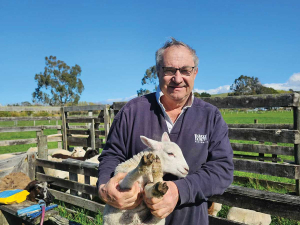
Decades piloting planes has ensured vet and farmer David Hayes is focused on safety. So, after a serious accident while welding on farm, he is sharing his experience so others can learn from it.
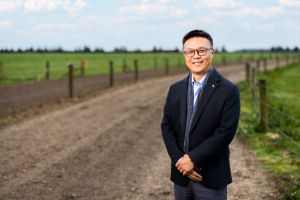
Canterbury milk processor, Synlait Milk has confirmed Leon Fung as its chief executive officer.
OPINION: Making it easier to collect rainwater and use it to grow crops and livestock is a no brainer.
As part of its Election 2026 coverage, Rural News asked political parties how they would help pull the arable sector out of the doldrums. Here's what they said:
Farmers are being encouraged to rethink how they manage waste on farm with the launch of ruralwastesorted.co.nz, a new website bringing together practical tips, real farmer experiences and resources.
New Zealand Winegrowers (NZW) is celebrating the India-New Zealand Free Trade Agreement (FTA) coming into force today, bringing New Zealand wine improved access to one of the world’s fastest-growing economies.