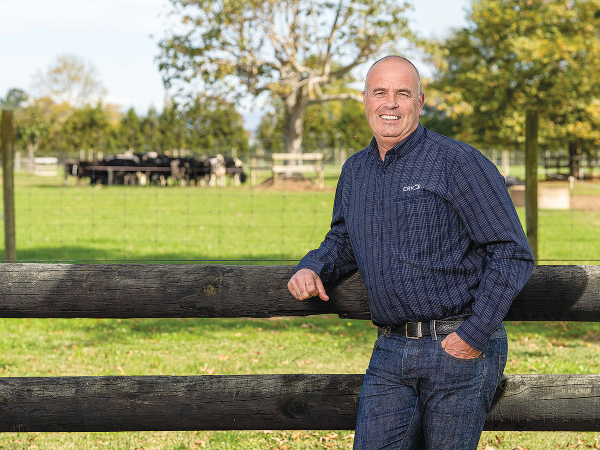
New Zealand dairy farmers are making more informed, strategic breeding decisions, and it’s paying off, according to CRV managing director James Smallwood.
He says the industry is finally seeing the lift in herd genetic gain it has been pushing for, driven by greater use of genomic young sires and a shift toward breeding replacements only from the best cows.
“What we’re seeing isn’t a sudden change, it’s farmers over time making better use of the technologies already available to them,” says Smallwood. “The industry was challenged to lift its rate of genetic gain, and farmers have responded.”
New data from NZAEL shows a dramatic rise in the use of young genomic sires. In 2016, fewer than half of herds used young sires. By 2025, that figure has climbed to 88%. Over the same period, the average age of dairy sires has dropped from 5.9 years in 2017 to 4.3 years in 2025, reflecting farmers’ growing confidence in genomics.
“We use genomics to select bulls in our breeding programme because it gets us ahead faster,” says Smallwood.
“Farmers are now using the same tools and that’s something worth celebrating.”
He says many of the high-ranking genomic bulls are now going on to appear on the RAS (Ranking of Active Sires) list as proven sires, reinforcing trust in the technology.
“Farmers are accessing elite new genetics without having to wait for a daughter proof. They’re getting a head start.”
This shift is reflected in NZAEL’s long-term genetic trend data, which shows BW rising sharply from –0.5 in 2019 to +141 in 2025 – one of the strongest lifts in recent decades.
Smallwood says the biggest behavioural change is farmers being more selective about which cows they breed replacements from.
“Fewer farmers are mating the bottom 10 or 20 percent. When you stop breeding replacements from your worst cows, the genetic potential of the next generation jumps quickly.”
He says this is being supported by better use of sexed semen and improved heat detection, including the rapid uptake of cow wearables.
“Farmers are already paying for this data. The next step is using it to identify their elite cows and make more strategic breeding decisions. That’s where the real gains are.”
Clever Use of Sexed Semen
James Smallwood acknowledges that early experiences with sexed semen left some farmers wary but says the story has changed dramatically.
“The technology hasn’t changed much. What’s improved is how farmers are selecting cows and managing heat detection. If you go in blanket, it won’t work. But when you’re strategic about which cows you use it on, the payback is there.”
He says many dairy farmers now use sexed semen and dairy-beef together to maintain calf numbers, while lifting the quality of replacements. And with beef prices improving, Smallwood says farmers are also capturing more value from surplus calves through better dairy-beef genetics.
Genomics reinforces the need for a single source of truth.
He says the industry’s increasing reliance on genomics makes the Future Focused Animal Evaluation (FFAE) programme more important than ever. FFAE is an initiative led by DairyNZ, LIC and CRV to develop a single, unified breeding index for both cows and bulls, which will allow genomically tested animals to be compared on the same scale.
“As more genomically tested animals enter the system, we need one consistent way to compare them. A single source of truth is essential for farmers and breeding companies.”
More Positive Outlook
James Smallwood says the economic outlook for the agricultural sector is more positive than initially forecast by Rabobank, with stronger farmgate returns and firm beef prices giving farmers more room to reinvest in long-term improvements like herd genetics.
He says farmers now have an opportunity to use today’s stronger returns to invest in their herd’s genetic potential as a long-term asset for the future.
“Genetics is one of the few capital items you can write off in the year you spend it. You’re getting cows in calf anyway - it’s a sunk cost. So why not spend a bit more and make the right decision?
“If someone gave you $8 to go to the casino and said you’d walk away with $100, you’d take it. That’s the kind of return we’re talking about when you choose a premium bull.”
Strong Genomic Line-Up for 2026
CRV’s new sire catalogue landed in mailboxes last month. It features one of its strongest genomic teams yet, alongside proven sires that have held their early genomic rankings.
James says the catalogue reflects where the industry is heading.
“Farmers want access to elite genetics earlier, and genomics gives them that head start. Our job is to help them use these tools in a way that fits their system and accelerates their herd’s genetic gain."