Don’t get ticked off this season — or next!
New Zealand appears to be lucky in having only one major livestock tick.
 increase font size
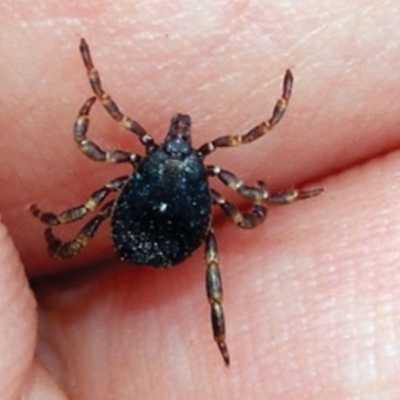 Theileria nymph.
Farmers are being warned to assess the risks to their herds from the tick-borne disease Theileria if they are moving stock this autumn and winter.
DairyNZ veterinarian and technical policy advisor Nita Harding says stock now grazing, such as heifers, that will be coming onto the farm could pose a risk – or be at risk of Theileria – depending on the situation onfarm.
Harding says farmers can help the industry and veterinarians manage and prevent the spread of the disease if they are moving cattle between Theileria zones this season.
“Pregnant cattle are at the highest risk. Other stock classes appear not to be as susceptible,” she says.
“To assess your risk you need to understand your current level of risk where you farm and the risk in the area the cattle are moving from or to. We’ve subdivided the country into three general zones based on our current knowledge of tick distribution and farms on which the disease has been confirmed.
“Essentially we have stable, unstable and free areas – and they equate to high, moderate and low risk areas for Theileria. At particularly high risk are high performing animals from free and unstable areas moving into stable areas. We strongly recommend that farmers shouldn’t bring in pregnant heifers and cows from tick free areas into stable areas without seeking veterinary advice.
“Sharemilkers who are forming their herds or farmers undertaking conversions and forming new herds need to take particular care.”
If you are buying in replacements or are building a herd from multiple sources, it is a lot more complicated to assess the risk of Theileria to your farm, she says.
“Remember there could be multiple diseases that could pose a risk to your farm so it’s important to talk to your veterinarian and do a bit of risk assessment and management planning.”
Franklin Vets managing director Mark Hosking says there is a movement risk tool on the Franklin Vets’ website (www.franklinvets.co.nz) which farmers can quickly use to see what risk they may face.
There is also advice on DairyNZ’s website www.dairynz.co.nz/theileria and the New Zealand Veterinary Association website www.nzva.org.nz
“We’ve dealt with a lot of cases in our area so we have worked to help others across the country to understand the disease,” says Hosking. “For people who are moving stock into areas with ticks, we would strongly advise they carry out blood tests to determine if the animals being moved have been exposed to the parasite. If they have been exposed then there should be relatively little risk of them developing clinical disease. However if they haven’t come across the parasite before then they will be at a high risk of breaking down with clinical Theileriosis.
“If you are moving animals from one property to another, it is paramount that you try to assess the risk you face of running into problems.
“Farmers should avoid exposing naïve animals to infected ticks six-eight weeks prior to calving/peak milk production. Most naïve dairy animals arrive in infected areas in May/June, two months prior to the major stress of calving and milk production.”
What to look out for
The signs of Theileriosis are those associated with anaemia and include:
New Zealand appears to be lucky in having only one major livestock tick.
Ensuring young stock are sourced from areas caught up in the outbreak of Theileriosis is still the best defence for farmers’ in areas where the disease is prevalent, says Bay Of Islands vet Garth Riddle.
DairyNZ IS alerting all farmers, including graziers, to keep an eye out for signs of a tick-carried disease that causes anaemia in cattle.
FARMERS could safeguard next year’s calves against Theileria by treating cows for ticks in summer according to senior Vets North vet Mark Anderson.
FARMERS SHIFTING stock this season are urged to keep contact details and animal movements up to date.



LIC shareholders have elected a new North Island representative to the co-operative's Board, along with five representatives to its Shareholder Reference Group (SRG), following the company's Annual Meeting held in Invercargill.
Farmers across parts of Southland and South Otago are continuing to deal with difficult conditions after a prolonged run of wet weather, with pressure building around feed supply, stock management, pasture damage, farm infrastructure and everyday workloads.
Federated Farmers says it welcomes Labour's commitment to reviewing the Sharemilking Agreements Act, calling on other major parties to do the same.
For Canterbury dairy farmers Sian Meijer and Rick Wobben, wearable technology has become one of their most valuable on-farm tools - helping manage 1850 cows across an expansive, high-performing dairy operation while improving efficiency, mating outcomes and day-to-day decision making.
Fonterra has unveiled its annual results for the 2026 financial year, posting $27 billion in revenue and close to $20 billion returned to New Zealand farmer owners and unit holders.
The first major update to the Dairy Cattle Code of Welfare in more than a decade has been released, marking what DairyNZ describes as an important step in ensuring animal welfare standards continue to evolve alongside scientific evidence and on-farm realities.