
Don’t get ticked off this season — or next!
New Zealand appears to be lucky in having only one major livestock tick.




 increase font size
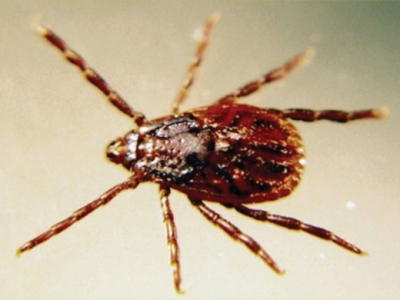 An unfed adult Theilera tick.
Ensuring young stock are sourced from areas caught up in the outbreak of Theileriosis is still the best defence for farmers’ in areas where the disease is prevalent, says Bay Of Islands vet Garth Riddle.
The disease is caused by the ikeda strain of the Theileria orientalis parasite and is implicated in anemia, poor production and cattle deaths in young stock and older cows.
It has spread from Northland all over the northern half of the North Island in just two years, with confirmed cases discovered as far south as Canterbury.
Riddle discussed the results of a Beef + Lamb NZ-funded tick control trial with 50 farmers at a field day in Kaeo late March, revealing that tick treatment is unable to prevent infection and anaemia.
A trial was carried out on Jeff and Helen Linssen’s drystock farm northwest of Kaeo last season using 100 weaner bull calves bought from an area free of the disease. Stock were split into two groups of 50 bull herds. Researchers applied a flumethrin pour-on to half of the animals in each herd.
Animals were treated for ticks before they left the yards and again three weeks later, which was at a higher frequency than recommended, with doses at the top end of the recommended dose rate.
The researchers were trying to establish whether farmers importing stock from uninfected regions could protect them by aggressively treating them for ticks, using a method currently suggested as best practice -- but not actually tested – as a means of preventing animals from contracting Theileria.
Stock liveweight gains and animal losses among both the treated and untreated stock were so similar that the results were statistically insignificant, says Riddle.
“The threshold of tick bites required to pass on Theileria was less than they thought. It doesn’t matter how good your treatment is, it’s not going to stop all the ticks.”
In fact, Riddle and some Northland farmers at the event wondered whether the immune system’s reaction to the Theileria parasite was a bigger problem than the parasite itself.
Another of the clinic’s clients had lost 8-10% of his young stock over three years despite having them in top condition and he had reached the point of selling his breeding cows.
“These were top-condition calves; we put their stats into a benchmarking program and it came back saying it was impossible for stock to grow that fast.”
While Riddle is considering trying using antihistamines and steroids to treat stock with the condition, he expects more results to come out of a much wider study being done by a group made up of veterinary associations, Beef + Lamb NZ and DairyNZ, and led by Massey University animal breeding and genetics lecturer Rebecca Hickson.
Expect more results to come out of study, Riddle says.
“They’ve collected information from studies all around the country and are doing the hard work needed to compile that information. The really exciting solutions will come out of that study.”
New Zealand appears to be lucky in having only one major livestock tick.
Farmers are being warned to assess the risks to their herds from the tick-borne disease Theileria if they are moving stock this autumn and winter.
DairyNZ IS alerting all farmers, including graziers, to keep an eye out for signs of a tick-carried disease that causes anaemia in cattle.
FARMERS could safeguard next year’s calves against Theileria by treating cows for ticks in summer according to senior Vets North vet Mark Anderson.
BLOODTHIRSTY ADULT TICKS are on a quest right now and farmers in the North Island in tick-prevalent areas should be checking cattle and talking to their veterinarian, say DairyNZ.



Dairy processors are ready to further boost New Zealand’s export earnings but want the incoming government to match their ambition with good policy.

Massey University is best placed to solve the “problems” facing the dairy industry, says vice chancellor, Pierre Venter.
Synlait's longest serving employee – a man who joined the Canterbury-based milk processor even before it began processing milk – is now its newest executive.
A dairy industry leader believes eradicating the common and costly disease, Bovine Viral Diarrhoea (BVD) is within reach.
A farmgate milk price of $10/kgMS this season is firming up as milk powder prices soar and the New Zealand dollar weakens.
Federated Farmers has welcomed new rural policies released by ACT, saying they align closely with its own election priorities.





OPINION: The same mainstream media muppets that brought you Jacindamania in 2017 have been flat out pimping for the Opportunities…
OPINION: Your old mate reckons the atrocious way farmers in the UK are treated by their lords and masters in…




