How Trace Minerals Support Dairy Cow Recovery Pre-Mating
By September, pre-mating heat recording is underway on many spring-calving dairy farms.
 increase font size
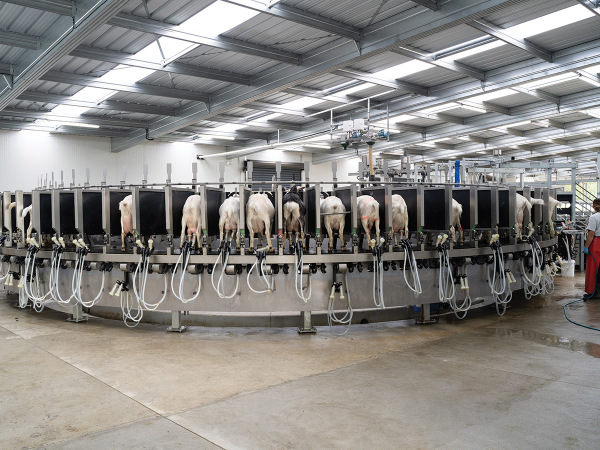 The effects of mineral imbalance reach far beyond milk loss and into performance for seasons to come.
Most dairy goat farmers focus on getting energy, protein, and fibre right, and fair enough – feed drives milk.
But even the best ration won’t deliver if the mineral balance is off. Too little, and production slips. Too much or in the wrong form, and you waste money or risk creating new problems.
Mineral supplementation is about keeping goats productive and healthy through every stage of the season.
Why do minerals matter?
Minerals are involved in every system within the body – metabolism, immunity, milk production, bone growth, and reproduction. Trace elements, like copper, zinc, selenium, manganese, and iodine, are especially important for fertility, kid survival, and disease resistance.
Research shows that mineral imbalances often first appear as vague issues like poor milk yield, delayed cycling, weak kids, or slower recovery post-kidding. These show up long before any signs of deficiency become clear.
Goats are also different from cows and sheep. Their capacity to store minerals, especially copper, is much lower. That means they rely on steady intake, not the occasional top-up.
Performance starts in the minerals
Mineral balance directly affects how well a goat converts feed into milk solids. Trials have shown that goats receiving consistent trace mineral supplementation (particularly highly bioavailable chelated forms) produce more milk and have stronger immune function than those on standard salts.
Beyond yield, mineral supply also influences milk quality. Elements like calcium, phosphorus, and zinc contribute to milk composition and stability, and small shortfalls can reduce fat and protein percentages, cutting into the return per litre.
Reproduction and longevity are also tied to mineral status. Kiwi soils are often low in selenium and iodine. These two trace minerals support thyroid and metabolic function, which are the basis of fertility, embryo survival, and kid health. Zinc and manganese help with uterine repair post-kidding, while copper supports hormone function.
The effects of mineral imbalance reach far beyond milk loss and into performance for seasons to come.
The tricky part
The thing is, not all mineral sources are equal. Chelated or proteinbound forms are more easily absorbed and less likely to interact with other minerals in the rumen. While oxides and simple salts may look cheaper, they’re less bioavailable and more likely to upset rumen performance, costing you in the long run.
Mineral interaction adds yet another layer of complexity. Too much of one mineral can block another – zinc can suppress copper, as can high sulphur or molybdenum in pasture. Chelated trace elements are less prone to negative interactions in the rumen. Seasonal changes in soil and fertiliser can also cause imbalances.
Goats bring their own quirks, too. They’re selective eaters, often leaving fine mineral powders in the trough. Pelleted or in-shed feeding systems can be more reliable. Our pastures also need to be treated with balanced fertiliser, as many are naturally low in iodine and selenium.
Another complication is timing. Demand peaks in late pregnancy, early lactation, and during mating. Pasture growth fluctuates with the season. By the time performance drops, reserves are already gone, so we need to be acting to prevent, instead of reacting after the fact.
Feeding for performance
A good mineral programme begins with data. Before you adjust anything, test your pasture or soil and run blood or liver samples. This gives a clear picture of what’s missing and what might already be too high. Testing helps target exactly where support is needed and identifies any antagonisms that could be limiting uptake.
Once you know what you’re dealing with, tailor your mix. The ratio of macro and trace elements needs to reflect your pasture profile, herd size, and production goals. That’s why custom-blended minerals can sometimes perform better long term.
Delivery matters as much as formulation. Goats are picky eaters and will often leave behind the mineral powders. Consistent intake makes all the difference, so minerals are best provided in a form they’ll reliably eat, such as pellets, prills, or via in-shed feeding. Keeping intake steady prevents the highs and lows that can undo an otherwise well-designed mineral plan.
Monitoring progress is important – watch milk yield, milk solids, fertility, and kid health through the season. If performance starts to slide, it’s often the first sign of a mineral imbalance creeping back in. Pasture quality and environmental conditions change, so retesting regularly helps to refine your approach. Effective mineral nutrition is an ongoing exercise based on what your goats and data are telling you.
Finally, think of minerals as an investment. A wellbalanced mineral programme often pays for itself in the form of better feed conversion, fewer health issues, and more consistent production. Even small gains, like a few extra litres of milk solids per doe, or fewer mastitis cases over the season, can make a big difference to the bottom line.
Feeding for performance means feeding the whole system, from soil to rumen, and keeping minerals in balance every step of the way.
Chris Balemi is managing director of Agvance Nutrition
By September, pre-mating heat recording is underway on many spring-calving dairy farms.
There's a common assumption that effective transition cow management is only practical for high-input farms, as controlled rations can make delivery simpler.
When a cow goes down after calving, it is easy to blame the calving itself. Milk fever, calving stress, poor weather, bad luck. Yet many down cows are not caused by one dramatic event. They are the end result of poorly transitioned cows entering calving under nutritional pressure.
The dry period isn’t just a farm holiday but a chance to get your herd match-fit for calving and early lactation. If you treat it as a focused phase of preparation, recovery and capacity building, you’ll see the benefits when the cows return to milk.
March often brings a useful mix of opportunity and risk on New Zealand dairy farms.


Safer Farms is urging farmers to make sure everyone working on farm has safe, suitable footwear for the job.

The Government is backing work on a community-led water storage scheme that could irrigate up to 11,000 more hectares of the Poverty Bay flats, Agriculture Minister Todd McClay says.
Agri-tech company Herd-i has become a new all-region sponsor of the New Zealand Dairy Industry Awards (NZDIA), the largest nationwide celebration of excellence in the dairy sector.
Four candidates have been confirmed for two director positions on Fonterra’s board.
Returning to the family dairy farm after playing 20 years of professional rugby around the world is no easy task.
After delivering another record farmgate milk price to 100 supplying farms, independent milk processor Tatua is entering thee new financial year with a positive outlook.