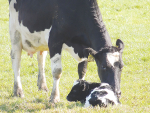
Early Calf Nutrition Linked To Better Growth And Future Milk Production
Giving calves the best possible start to life has been shown to boost growth and resilience.
 increase font size
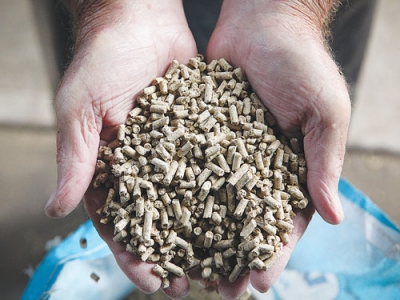
Adopting a transition feeding programme should be a ‘no-brainer’ for Australian dairy farmers, says a nutrition and animal health specialist.
Dr Steve Little, of Capacity Ag Consulting, says feeding a supplementary diet in the last three weeks before calving will give cows the best chance of a successful transition.
“I recommend every farmer use some form of transition feeding program in the last three weeks,” Little says. “It’s the [biggest] nutritional technology in 25 years.”
But Little acknowledges that a transition feeding program can be challenging. “You need to use an approach that is appropriate for the farm. There are many details to manage.”
Heavily pregnant cows face many challenges, he says. “Their rumen needs to be adapted to a diet they’re going to get as milking cows –
usually grain and other highly digestible feed.
“They suddenly have to be able to mobilise a lot of calcium which is required for colostrum in the milk, and meet the nutritional demands of the calf and the udder in the last three weeks.”
But there’s no magic formula for success. “Different feeding approaches can be used in the pre-calving transition period. The approach depends on the farmer’s feeding approach after calving,” Little says.
Some farmers use anionic salts in water troughs but most favour a supplement usually of energy, protein, minerals, extra magnesium and some sort of anionic supplement, Little says.
“About 70% of farmers in Australia already use some form of transition feeding. Half of those use a commercial supplement, usually with hay and a controlled amount of pasture.”
Anionic salts, which contain chlorine or sulphur irons, are salty and cows may not like them. But nowadays the flavours and aromatic additives the stockfeed companies add cause them to go down well.
Little says farmers must ensure forage fed with commercial supplements is appropriate for pre-calving transition cows. “That requires feed testing and analysis. Some good high production forage suitable for a milking cow isn’t necessarily appropriate for pre-calving transition cows.”
Cows’ rations need sufficient megajoules of energy, sufficient protein, the correct mix of calcium, phosphorus, magnesium and the dietary cation anion difference must be low enough.
Transition feeding can help get control over cow health problems, Little says. Good transition feeding would virtually eliminate milk fever and all cow health problems that commonly occur around calving, he says.
“We’re trying to adapt the rumen so that freshly calved cows can cope well with grain and digestible pasture and start milking well after calving; and we try to minimise the amount of body condition they lose after calving.”
Giving calves the best possible start to life has been shown to boost growth and resilience.
The first weeks of a calf's life quietly shape the future of the entire herd.
In calf rearing, the smallest details often have the biggest impact. While feed and genetics remain critical, bedding is increasingly recognised as a key driver of calf health, growth, and overall performance.
For decades, probiotics in calf rearing have been treated as a reactive tool – something to reach for when illness strikes. That thinking, according to Matt Collier of Probiotic Revolution, is leaving significant money on the table.
When a cow goes down after calving, it is easy to blame the calving itself. Milk fever, calving stress, poor weather, bad luck. Yet many down cows are not caused by one dramatic event. They are the end result of poorly transitioned cows entering calving under nutritional pressure.
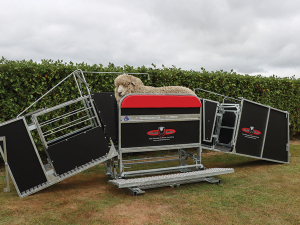
Oamaru-based livestock handling specialist Te Pari has bought Combi Clamp, the New Zealand manufacturer of Combi Clamp manual sheep handlers.

Agriculture Minister Todd McClay has admitted that a scheme bringing workers from Pacific nations to work on orchards has become too hard to navigate but says changes are coming.
A new app designed in New Zealand aims to help sheep, beef and deer farmers capture, analyse and use body condition score data more effectively.
Canterbury farmer Andy Macfarlane has been appointed to the board of AgriZeroNZ, the public-private partnership designed to accelerate the development and deployment of emissions reduction tools for New Zealand farmers.
For over 50 years Mel Ewers has been supporting the apple sector navigate through compliance and quality assurance issues.
The apple sector is enjoying a bumper harvest season.