The Power of Refugia
Worms are present on every farm; it’s ensuring there are enough worms that are susceptible to drench within your farm system, through the use of refugia, that is a key tool in slowing the rise of drench resistance.
 increase font size
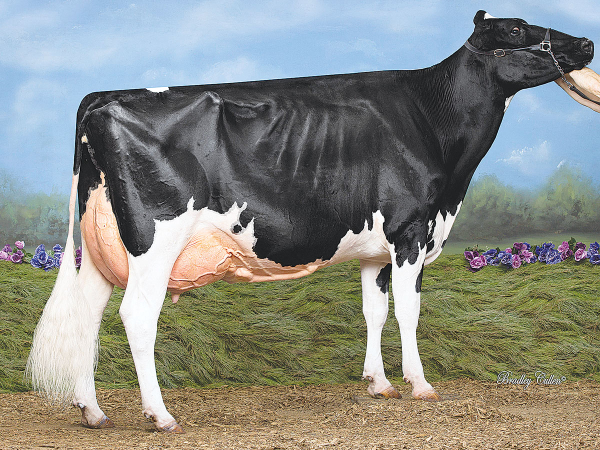 The granddam of Lot 15, Windy Vale Windbrook Frosty-Imp-ET; her granddaughter sold for $8500.
In a reasonably tight season for milk prices, the Summer Sensation Sale at the New Zealand Dairy Event in Feilding last month averaged $4,612 over 33 live lots.
The sale included live lots, embryos and semen. The top live lot was $15,000 and it was paid for a Jersey which sold at lot 23a – Posterity Man Susie.
The top-priced Holstein was $9,000, and it was paid for Lot 20, Paragon Graze Charlie. The second top-priced Holstein was paid for lot 15, Barwell Mercy Frosty. Frosty travelled from Canterbury to sell, and she traces back to an international household name in the industry that twice won World Dairy Expo. She was bought by Ryan Andrew, of Panic Station.
The sole Milking Shorthorn to sell was Westell Hunt Angela SOS and she was a popular inclusion.
She sold for the fifth highest price in the sale to Jarod Hudson, of Hudson Farming, at Ngatea, for $7,500. Angela’s fourth dam was the 2008 International Dairy Week Champion in Australia, Panorama Angeline 8. Her sire comes from the equally successful big-milk Queensland herd of Myrtleholme.
The pick of ten Brown Swiss calves from the Meier Trust sold for $4,000 to Fernlee limited.
The highest priced embryos were the imported embryos from double master breeder herd from Canada, Avonlea Jerseys. A package of five embryos sold for $2,000 an embryo ($10,000 for the package).
The semen lots sold for up to $1,200 per dose for five straws of sexed Holstein semen, Westcoast Alcove ($6,000 total), which as offered by the Gilbert family, from Ashburton in Mid-Canterbury.
Only one animal as passed in, according to Carrfields representative, Luke Gilbert.
“It was an extremely successful sale, with buyers from both islands of the country,” says Gilbert.
“BIDR played a massive part with 315 people watching the sale online from home. We are pleased and grateful to the vendors and to the purchasers.”
Worms are present on every farm; it’s ensuring there are enough worms that are susceptible to drench within your farm system, through the use of refugia, that is a key tool in slowing the rise of drench resistance.
A dairy industry leader believes eradicating the common and costly disease, Bovine Viral Diarrhoea (BVD) is within reach.
Farmers with high-quality feed available in late spring could consider weaning at least a proportion of their lamb crop early to benefit both lambs and ewes.
The first major update to the Dairy Cattle Code of Welfare in more than a decade has been released, marking what DairyNZ describes as an important step in ensuring animal welfare standards continue to evolve alongside scientific evidence and on-farm realities.
Bovine Viral Diarrhoea (BVD) is sometimes viewed as a dairy industry issue, but the reality is that the disease can have serious consequences for beef breeding herds as well.


Fonterra’s 2026 financial year was a year of delivery, with record volumes of milk collected, processed and shipped by the co-op.
OPINION: The Government's decision to reinstate agriculture and horticultural science as a standalone subject from Year 11 is the right one.
Dairy farmers, still holding onto their Fonterra shares despite switching milk supply elsewhere or exiting the industry, now face a stricter share sell-down requirement.
Hamilton-based agritech company Aimer Farming has completed a $3 million capital raise to support its next stage of growth, including a beef farming product due to launch in 2027.
When dairy manager Miriam Lauridsen learned the farm, she was joining held weekly health and safety meetings, she initially thought that was “a bit over the top”. Experiencing that culture changed her mind.
Nominations are open for the 2027 Fonterra Dairy Woman of the Year Award.