Beef + Lamb New Zealand Awards 2026 Winners Announced in Christchurch
Last night saw the winners of the 2026 Beef + Lamb New Zealand (B+LNZ) Awards named at a gala dinner at Te Pae Christchurch Convention Centre.
 increase font size

Check WEED infestations on farms you are importing stock or feed from or risk bringing potentially costly problems with them.
That’s the message from Agresearch scientist Graeme Bourdot following on-farm finds of giant buttercup in Golden Bay resistant to both herbicide groups registered for its control. The weed, already present in six of New Zealand’s 17 dairy regions, and climatically suited to grow nationwide, can cause substantial production losses.
Bourdot and colleagues calculate the impact on the 100ha Golden Bay farm’s bottom line to be $100,000.
“Losses are proportionate to the ground cover of the buttercup plus 25%. It’s more than just the area the buttercup occupies because the cows don’t graze up close to it because the smell of it repels them.”
Widespread resistance to phenoxy mode-of-action herbicides such as MCPA and MCPB was found in giant buttercup in the early 2000s, leaving ALS-inhibitor flumetsulem as the only herbicide option in such cases. Now, repeated use of that mode of action has seen the giant buttercup population on at least one farm develop resistance such that even a dose of five times the label rate only kills 90% of seedlings.
“We don’t know how widespread geographically the resistance to flumetsulam is, but where it’s been used repeatedly there could be resistance now. Once-per-season [use] is all that’s required [to select for resistance].”
The weed, in New Zealand for at least a century, is a big problem in Taranaki and Golden Bay, and is creeping down the South Island West Coast. It’s also present but less widespread in Waikato, Horowhenua and Wairarapa.
“One simple thing you can do is if you are buying stock, don’t buy them from a farm that’s infested. Or if you do have to buy in stock from an infested farm keep them on a run-off area for a couple of days so any seed has passed through their gut and you can monitor that area for buttercup.”
Hay is also a possible means of import. Well made silage should be safe, as the heat should destroy the weed’s seeds, but research is needed to be sure of this, he adds.
“The seed is not windblown so the only way it is going to be moved is by farmers and farm produce from infested regions.”
Industry-wide, Bourdot calculates the weed is already costing millions in lost revenue, and should it spread to all 17 dairying regions national dairy farm revenue loss caused could hit $328 million to $748 m per year.
Recent work by AgResearch technician Carolyn Lusk at Lincoln confirmed the flumetsulam resistance.
“The AgResearch work also gives a possible explanation for the persistence of the weed on dairy farms in Golden Bay and in other regions where farmers have relied on regular applications of this herbicide to control the buttercup,” says Boudot.
Last night saw the winners of the 2026 Beef + Lamb New Zealand (B+LNZ) Awards named at a gala dinner at Te Pae Christchurch Convention Centre.
A significant breakthrough in understanding facial eczema (FE) in livestock brings New Zealand closer to reducing the disease’s devastating impact on farmers, animals, and rural communities.
A breakthrough in the understanding of Facial Eczema (FE) in livestock could bring New Zealand closer to reducing the disease’s impact.
An innovative idea for transforming mechanically deboned meat (MDM) into a meat flake for seasoning has taken top honours in the Meat Industry Association’s (MIA) first-ever Dragon’s Den competition.
The Government's plan to merge the seven crown institutes presents exciting possibilities for plant technology company Grasslanz Technology, says chief executive Megan Skiffington.


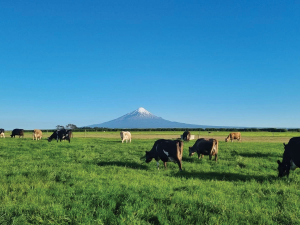
A spate of southerly winds bringing cold temperatures has presented challenges for Taranaki dairy farmers.
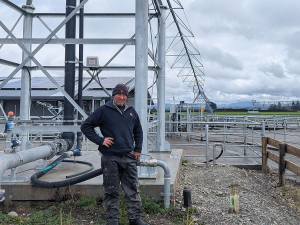
Converting a longstanding cropping farm to dairy was the only way to ensure the land stayed in the family long term, says new dairy farmer Rod May.
As the election heats up, Organics Aotearoa New Zealand (OANZ) has launched its election scorecard designed to help voters wanting to support policies that grow organic and New Zealand's organic sector.
A 'tsunami' of milk from key exporting countries is winding down and this may be good news for New Zealand dairy farmers.
Will the good times last? That's one of the key issues to come out of the latest Federated Farmers confidence survey.
Outgoing Fonterra Co-operative Council chair John Stevenson says that it has been a privilege to represent the co-op's farmer shareholders.