Rural Mobile Coverage Worse After 3G Shutdown, Survey Finds
Mobile phone coverage and reliability are deteriorating in rural areas, and farming families are bearing the cost, according to a Federated Farmers survey.
 increase font size
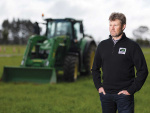
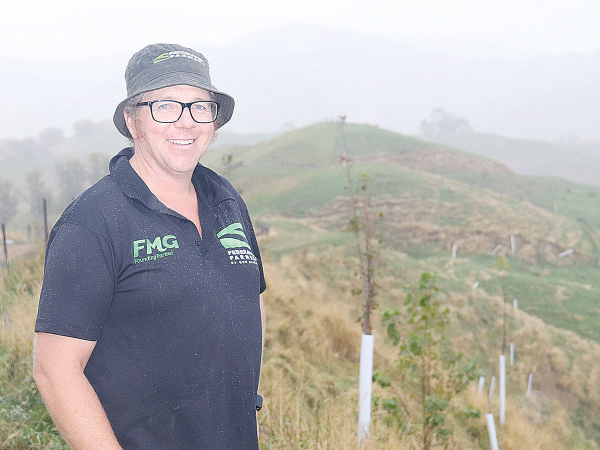 Toby Williams says the debate to withdraw from Paris Agreement was a healthy one to have.
Auckland Federated Farmers want a national conference debate on whether New Zealand should withdraw from the Paris Agreement on Climate Change.
At the province's annual conference earlier this month, committee member Deborah Alexander moved a remit to this effect, seconded by immediate past president, Wendy Clark. The remit was passed and will be tabled at Feds' annual conference in Christchurch next month.
Alexander said withdrawing from the agreement would solve farmers' present problems with forests being planted on grazing land to gain carbon credits.
"We're not targeting the source," she said.
"We should be getting out of the Paris Agreement. It would cause people to flock to become members of the federation."
She also questioned whether New Zealand's commitments under the agreement, which came into effect in 2020, were legally enforceable.
Former Auckland dairy chair, John Sexton, said he believed the federation had got sidetracked on the issue.
"We've forgotten about the basics," he said.
"Agricultural emissions are supposed to be causing warming but that's nonsense."
He claimed that ruminant methane emissions made up only one part in four million of the gases causing global warming.
"We are wasting billions of dollars around the world."
Both Alexander and Sexton are founder members of the Methane Science Accord between Groundswell, 50 Shades of Green, Rural Advocacy Network and Facts about Ruminant Methane (FARM) which wants a zero tax on ruminant methane.
Meat and Wool national chair, Toby Williams, who attended the conference, said the debate was a healthy one to have at the federation's national conference in a few weeks' time and he would be comfortable with the policy the federation's national board put forward.
"We have tried to ask Government and Treasury what the cost would be of withdrawing but they wouldn't engage," he said.
Pressed on what his personal view was he said he didn't know enough about the consequences of withdrawing - "but if we did, I wouldn't be boohooing".
Auckland Meat and Wool chair, Peter Anich, said his view was that what New Zealand did wouldn't make any difference globally.
"The world's biggest populations and industrial polluters are not signed up to it," he said.
"Having to pump billions into the European Union for them to decide what third world countries they want to assist in climate change mitigation is wrong, wrong, wrong."
Climate change was being caused by population growth, not farming, but if more New Zealand farmland went into forestry, earning carbon credits which were often going to overseas countries, this country would not have the critical mass to keep exporting agricultural products.
"We're on a hiding to nothing."
Former Auckland policy manager, Richard Gardner, sounded a note of caution, saying it would be a mistake for the federation to take too strong a position on the Paris Agreement.
"It certainly needs to be looked at," he said.
"No one is meeting their targets, and it looks as if it's going to fall over anyway. But if we take an extreme position, we could be targeted. We don't want to force the Government to do something that's not in New Zealand's best interests."
Mobile phone coverage and reliability are deteriorating in rural areas, and farming families are bearing the cost, according to a Federated Farmers survey.
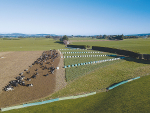
Central Otago District Council (CODC) has voted against a plan to spread treated sewage sludge from Cromwell and Alexandra on farmland near Lauder, a decision Federated Farmers says reflects strong opposition from rural residents.
Federated Farmers has called on Central Otago District Council (CODC) to drop or vote down a plan to truck sludge from Alexandra and Cromwell to farmland near Lauder, warning it would compound an "outrageous" situation created by a separate council's decision weeks earlier.
Federated Farmers says new legislation replacing the Resource Management Act will cut red tape, unlock investment and help grow New Zealand's export-led economy, after the Planning Bill and Natural Environment Bill passed their third reading in Parliament yesterday.
Leading figures from the major political parties will be questioned on their primary sector policies at the Rural Issues Debate at Mystery Creek Events Centre, Hamilton, on 30 September.

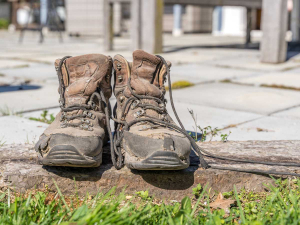
Safer Farms is urging farmers to make sure everyone working on farm has safe, suitable footwear for the job.
The Government is backing work on a community-led water storage scheme that could irrigate up to 11,000 more hectares of the Poverty Bay flats, Agriculture Minister Todd McClay says.
Agri-tech company Herd-i has become a new all-region sponsor of the New Zealand Dairy Industry Awards (NZDIA), the largest nationwide celebration of excellence in the dairy sector.
Four candidates have been confirmed for two director positions on Fonterra’s board.
Returning to the family dairy farm after playing 20 years of professional rugby around the world is no easy task.
After delivering another record farmgate milk price to 100 supplying farms, independent milk processor Tatua is entering thee new financial year with a positive outlook.