Westpac Urges Farmers to Prepare Now for El Niño Drought
Westpac NZ is calling on farmers and growers to start preparing now for the possibility of a dry summer, as likely El Niño conditions raise the risk of drought across parts of the country.
 increase font size
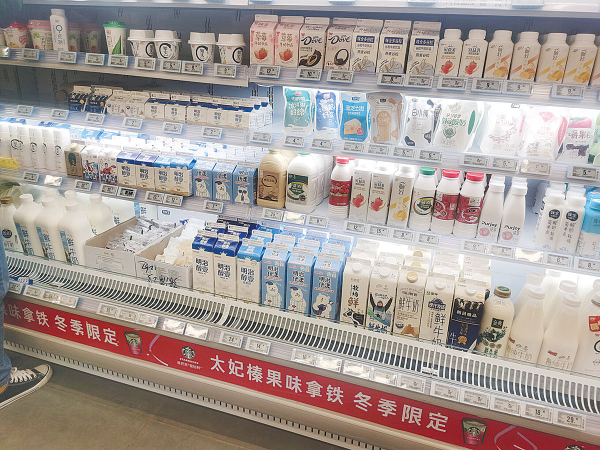 After being notably absent earlier this year, Chinese buyers are back on the global dairy market.
Chinese buyers are returning in force to replenish stocks and helping send global dairy prices higher.
China significantly reduced its imports of dairy products over the past two years compared to previous years, due to softening demand at home and a surge in their own production.
However, Westpac senior economist Michael Gordon says it's becoming more apparent now that the pullback in their imports has left them significantly understocked, especially for milk powders.
Gordon notes that China's dairy industry is still struggling with an oversupply of liquid milk, some of which is being dried into powders in order to be able to store it - but it appears they don't have the capacity to make up for the extent of the shortfall in imports.
"For whole milk powder (WMP) in particular, China has few options for increasing its supply. New Zealand is by far the dominant supplier on the global market, and Fonterra has tilted its product mix away from WMP in the last couple of seasons, in response to the fall in Chinese demand.
"So, the only real way to secure more WMP is to divert it away from other markets. Consequently, we're seeing buyers from North Asia (largely China) take up an increasing share of the product sold at the Global Dairy Trade auction."
The last GDT saw the price index jump 1.9% to US$4089/metric tonne, its highest point since July 2022. WMP prices rose 3.25% to US$3826/MT.
Westpac has revised its forecast milk price for the season to $10/kgMS. If achieved, it would be the highest milk price on record and the first double-digit one. However, he cautions that's not quite the case once we account fro the general rate of inflation.
"It's certainly above average, but there have been four previous years where the milk price was higher in inflation-adjusted terms. It should also be noted that none of those previous highs were sustained, and in some cases were followed by sharply lower prices in the following season."
Adjusting for general inflation also understates the degree to which on-farm costs have risen in recent years.
DairyNZ currently estimates a breakeven price of $8.15/kgMS for a typical dairy farm, up from $8.01/kgMS last season.
"That said, a $10 milk price would leave substantial room for farmers to spend and invest more, even after catching up on maintenance and other costs that might have been deferred during the previous tougher season," says Gordon.
"A $10/kg milk price, along with an increase in milk volumes that is shaping up to be in the order of 2%, would mean around $3.5 billion of additional revenue for Fonterra's suppliers compared to last season (and $4.5b in total if this experience is repeated across the other dairy companies).
"After allowing for an increase in costs, this suggests about $4b of extra discretionary income for dairy farmers this year, equal to around 1% of GDP."
Another factor pushing dairy prices up is production constraints, especially in Europe and the US - two of the world's biggest milk producers.
Westpac NZ is calling on farmers and growers to start preparing now for the possibility of a dry summer, as likely El Niño conditions raise the risk of drought across parts of the country.

China remains New Zealand’s biggest market, taking $23 billion of our exports, but it’s no longer a commodity story, says Prime Minister Christopher Luxon.
The new dairy season is kicking off with plenty of risks to the forecast farmgate price, both upside and downside, says ANZ agricultural economist Matt Dilly.
Fonterra is strengthening its foodservice presence in China with the launch of a new cream for professional bakeries at Bakery China 2026 in Shanghai.
A new Westpac NZ community banking van begins making visits around Northland this week.


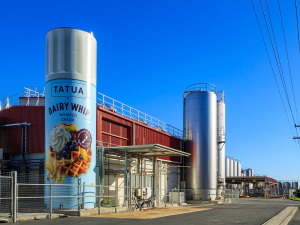
Waikato milk processor Tatua has again declared a record milk payout to farmer shareholders, leaving other processors in the dust.

A Labour-led Government won’t be bringing back the controversial freshwater rules of 2020.
National’s much-touted free trade deal with India featured in the Rural Issues Debate at Mystery Creek, Hamilton on Wednesday night.
New Zealand's 2026-27 freshwater fishing season has opened, with anglers encouraged to head to rivers and lakes over the coming days as conditions look favourable across much of the country.
Central Otago District Council (CODC) has voted against a plan to spread treated sewage sludge from Cromwell and Alexandra on farmland near Lauder, a decision Federated Farmers says reflects strong opposition from rural residents.
Pāmu has released its FY26 Integrated Annual Report, reporting a Net Operating Profit of $113 million, more than double the $49 million recorded in FY25.