Fonterra FY26 Results: $9.69 Milk Price, $3.4bn Profit
Fonterra has unveiled its annual results for the 2026 financial year, posting $27 billion in revenue and close to $20 billion returned to New Zealand farmer owners and unit holders.
 increase font size
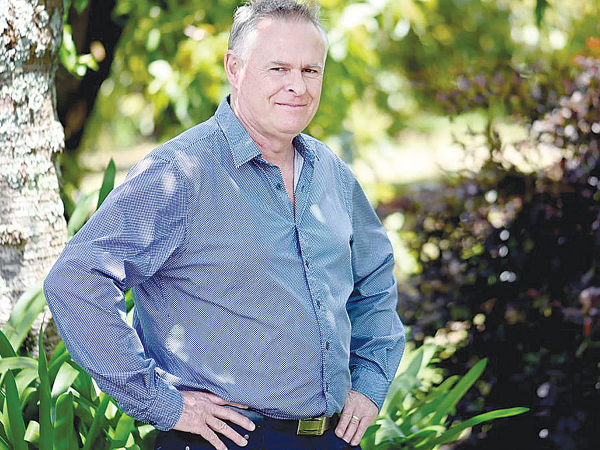 Fonterra chair Peter McBride says Fonterra has been advocating for greater transparency of milk price.
Fonterra is rejecting claims by rival processors that the co-operative can improperly influence the milk price to boost its raw milk supply.
Fonterra says it objects to claims that the co-op is "gaming" the system.
The comments were made in the co-op's submission to parliamentary select committee for primary production.
It is hearing submissions on the Government's proposal to amend the Dairy Industry Restructuring Act (DIRA) to accommodate changes to the co-op's capital structure.
Fonterra chairman Peter McBride told the committee that many of the proposed DIRA amendments seem to address perceptions around the transparency and independence of the milk price regime.
"We respect the national interest in our milk price, considering that in the last financial year Fonterra's milk payments represented $13.7 billion delivered to the New Zealand economy.
"And, as you will hear from our competitors, Fonterra's milk price sets the benchmark for the industry," says McBride.
"So all New Zealand dairy farmers, whether they supply Fonterra or not, benefit from the fair, transparent, and independently overseen price we pay for our farmers' milk."
McBride goes on to say that, for the record, Fonterra objects "to any inference that the co-op or the individuals involved in the process are somehow 'gaming' the system".
"In fact, Fonterra has been advocating for greater transparency of milk prices across the industry in all of our DIRA submissions.
"We continue to propose that DIRA be amended to require all processors to publish prices paid for farmers' milk.
"Improved transparency of milk prices paid by other processors will address the current imbalance of information available to farmers and support contestability in milk supply."
In their joint submission, four rival processors - Synlait, Miraka, Open Country Dairy and Westland Milk - claimed that with the dismantling of the open entry and exit provisions, the regulation of the base milk price remains the only substantive DIRA provision supporting contestability in the raw milk.
The submission acknowledges that the Government has included provisions which provide for increased transparency, oversight, and some independent management of the processes that determine the base milk price.
"These provisions provide crucial changes which can start to bring credibility to the base milk price," it says.
"The provisions do not prevent or limit Fonterra from paying a milk price different to the base milk price.
"Fonterra has nevertheless criticised them as unnecessarily intrusive.
"Fonterra criticism can alternatively be interpreted to be because they reduce Fonterra's ability to control the base milk price."
McBride notes that it's interesting their competitors are questioning the integrity of our milk price calculation.
He points out that, since 2012, the Commerce Commission has raised just two matters related to the inputs, assumptions and processes used to calculate the base milk price, which Fonterra has not promptly addressed to the Commission's satisfaction.
Fonterra has unveiled its annual results for the 2026 financial year, posting $27 billion in revenue and close to $20 billion returned to New Zealand farmer owners and unit holders.
Fonterra Co-operative Group has confirmed the independently assessed candidates standing for election to its board in 2026.
Fonterra has revised its Farmgate Milk Price forecast for the 2026/27 season, lifting the midpoint and narrowing the range on the back of improving global dairy commodity prices.
Outgoing Fonterra Co-operative Council chair John Stevenson says that it has been a privilege to represent the co-op's farmer shareholders.
OPINION: It seems Canterbury processor Synlait is still in the doldrums.


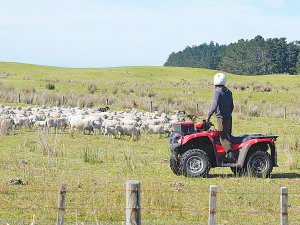
Farmers across parts of Southland and South Otago are continuing to deal with difficult conditions after a prolonged run of wet weather, with pressure building around feed supply, stock management, pasture damage, farm infrastructure and everyday workloads.
Federated Farmers says it welcomes Labour's commitment to reviewing the Sharemilking Agreements Act, calling on other major parties to do the same.
For Canterbury dairy farmers Sian Meijer and Rick Wobben, wearable technology has become one of their most valuable on-farm tools - helping manage 1850 cows across an expansive, high-performing dairy operation while improving efficiency, mating outcomes and day-to-day decision making.
Fonterra has unveiled its annual results for the 2026 financial year, posting $27 billion in revenue and close to $20 billion returned to New Zealand farmer owners and unit holders.
The first major update to the Dairy Cattle Code of Welfare in more than a decade has been released, marking what DairyNZ describes as an important step in ensuring animal welfare standards continue to evolve alongside scientific evidence and on-farm realities.
Ravensdown shareholders have elected Jane Montgomery and Kate Acland to the Ravensdown Board for three-year terms, following a closely contested director election.