Fonterra FY26 Results: $9.69 Milk Price, $3.4bn Profit
Fonterra has unveiled its annual results for the 2026 financial year, posting $27 billion in revenue and close to $20 billion returned to New Zealand farmer owners and unit holders.
 increase font size
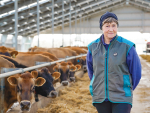
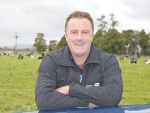
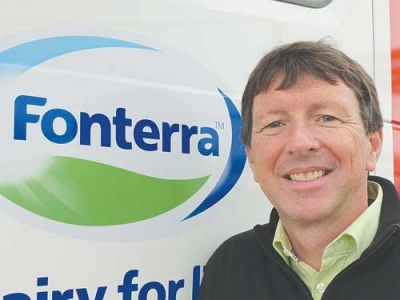 Fonterra’s new cooperative affairs manager in Waikato Paul Grave.
Fonterra's top farmer contact in Waikato, Paul Grave, says he hopes he can improve the communication between the co-op and local farmers and other regional stakeholders.
Grave is Fonterra’s newly appointed cooperative affairs manager in the region.
He says Fonterra previously took a centralist approach, but is now devolving more responsibility to a regional level to improve relations with farmer suppliers and others in direct contact with the co-op – local authorities, iwi, river authorities and DairyNZ.
Going regional is intended to make sure Fonterra is “integrated” into local rural communities.
“The very nature of New Zealand makes it hard for a one-size-fits-all approach, that’s why we have gone regional.
“There are a lot of different factors out there: my [counterpart] in Canterbury will be experiencing different things from what you see in Waikato. For example, he’s got a lot of larger scale conversions with irrigation, with their own set of issues, whereas here we have a lot of environmental issues such as the Waikato River – a big issue.”
Grave is concerned to connect with farmers during these tough times and explain to them what’s going on and why and make sure they understand the problems.
“We have run a series of small shed meetings for up to 30 farmers – talking to them informally about some of the issues instead of having a big meeting in a hall with a couple of hundred people where it’s very hard to answer questions.
“The farmers can front up in their gumboots to a shed and have a chat, which is a lot less intimidating. Farmers go away feeling a lot better informed about what’s going on.”
Grave says a lot of information is sent to Fonterra farmers, and he sees an informal chat in a dairy shed as better for them.
Transparency rules on GDT
Grave took up his present role after six years running Fonterra’s GDT platform. He’d also had sales roles in the US.
He says the GDT is not a complex system; it is a means of balancing supply and demand in a transparent way without which it would be difficult to assess what was happening in the market.
Grave says anyone who thinks that because Fonterra has lots of specialist staff it should be able to accurately set the farmgate milk price one year out needs to understand the market complexities.
“To get it right it means you have understood what the US/NZ dollar is going to do, what the Euro and US dollar is going to do, what Putin is going to do in Russia and what the supply in Europe is going to do.
“Then it [requires] knowing what the supply in the US is going to do and by definition you need to know what the grain price is and what the milk price is going to be in those places.
“Also you need to know what the supply in New Zealand is going to be and… a whole lot of other geopolitical factors… to come to that final decision in 15 months,” he says.
Grave says the best Fonterra can do is arrive at an estimate and it’s not possible to get it right given the huge number of unknown factors – not to mention the volatile nature of the world dairy market.
Fonterra has unveiled its annual results for the 2026 financial year, posting $27 billion in revenue and close to $20 billion returned to New Zealand farmer owners and unit holders.
Fonterra Co-operative Group has confirmed the independently assessed candidates standing for election to its board in 2026.
Fonterra has revised its Farmgate Milk Price forecast for the 2026/27 season, lifting the midpoint and narrowing the range on the back of improving global dairy commodity prices.
Outgoing Fonterra Co-operative Council chair John Stevenson says that it has been a privilege to represent the co-op's farmer shareholders.
OPINION: It seems Canterbury processor Synlait is still in the doldrums.


Federated Farmers says it welcomes Labour's commitment to reviewing the Sharemilking Agreements Act, calling on other major parties to do the same.
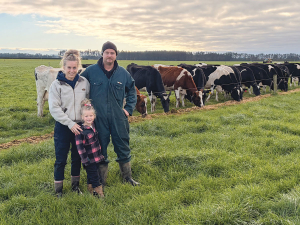
For Canterbury dairy farmers Sian Meijer and Rick Wobben, wearable technology has become one of their most valuable on-farm tools - helping manage 1850 cows across an expansive, high-performing dairy operation while improving efficiency, mating outcomes and day-to-day decision making.
Fonterra has unveiled its annual results for the 2026 financial year, posting $27 billion in revenue and close to $20 billion returned to New Zealand farmer owners and unit holders.
The first major update to the Dairy Cattle Code of Welfare in more than a decade has been released, marking what DairyNZ describes as an important step in ensuring animal welfare standards continue to evolve alongside scientific evidence and on-farm realities.
Ravensdown shareholders have elected Jane Montgomery and Kate Acland to the Ravensdown Board for three-year terms, following a closely contested director election.
Federated Farmers says new legislation replacing the Resource Management Act will cut red tape, unlock investment and help grow New Zealand's export-led economy, after the Planning Bill and Natural Environment Bill passed their third reading in Parliament yesterday.