New Rural Recycling Scheme to Replace Voluntary Farm Plastics Programmes by 2027
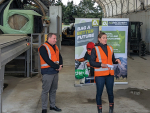
Environment Minister Nicola Grigg has announced details of a new rural plastics recycling scheme.
 increase font size
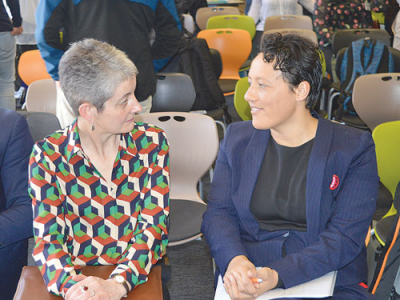 Labour MP Kiritapu Allan (right) with new MPI deputy director general policy and trade Penny Nelson at the ETS forum.
The Government says it will be important to set the right 2050 target in its Zero Carbon Bill.
Labour MP and primary production committee member Kiritapu Allan says the Government recognises the target has to be “something that everybody can get behind, live with and work towards achieving together”.
Speaking at a New Zealand Institute of Agriculture and Horticultural Science (NIAHS) forum in Wellington this month, Allan said the Government is looking for “an enduring consensus on this target to provide the certainty the sectors have been asking for”.
“With this Act we aim to be clear, honest and fair to farmers about what will be expected of them in the future.
“Everybody has a role to play in meeting these future targets. We need to work with farmers and the sectors to share best practice and support farmers through this transition.”
By means of the Zero Carbon Act, the Government will also set up an independent climate change commission in 2019 to advise on climate change issues. An interim climate change committee has been set up as a precursor and this is providing analysis on how surrender obligations could best be arranged if agricultural methane and nitrous oxide emissions enter into the NZ emissions trading scheme (ETS).
Allan says the committee will give evidence and analysis of the full range of policy options to reduce emissions from the agriculture sector.
“This will include, but is not limited to, the pricing of agricultural emissions in the NZ ETS.
“In providing their analysis and recommendations, the committee will consider the Government’s objective for a just transition.”
‘Just’ land-use transition
Labour MP Kiritapu Allan says the Government sees reducing NZs agricultural greenhouse gas emissions as an important and necessary step towards a productive, sustainable and inclusive economy.
Achieving this will require a just transition to more sustainable land use, she says.
“Farmers are facing demands to lower their greenhouse gas emissions and improve water quality, biodiversity, biosecurity and animal welfare outcomes.”
To align these objectives, various approaches and tools, such as a One Farm Plan and Overseer, are being developed and improved. This has opportunities for farmers and producers.
“An intensive, volume-driven growth model has created economic and environmental sustainability concerns.
“Continuing to grow wealth this way is no longer viable. By focussing instead on proving our strong environmental credentials, we can add value to our products and ensure their premium status. By diversifying and adding value, we can also boost our resilience and lessen exposure to swings from commodity prices.”
Environment Minister Nicola Grigg has announced details of a new rural plastics recycling scheme.
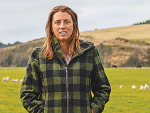
Red meat farmers are welcoming Labour’s plan to review the Emissions Trading Scheme and not to campaign on pricing agricultural emissions.
For the first time in a quarter of a century, Federated Farmers has something positive to say about the Labour Party’s climate change policy leading into a general election.
The Ballance Farm Environment Awards are coming to the West Coast of the South Island.
Climate, nature and animal wellbeing make up Fonterra's refreshed sustainability roadmap released last week.


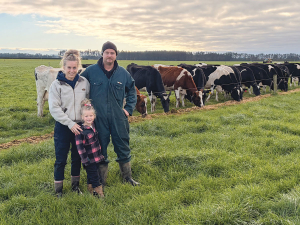
For Canterbury dairy farmers Sian Meijer and Rick Wobben, wearable technology has become one of their most valuable on-farm tools - helping manage 1850 cows across an expansive, high-performing dairy operation while improving efficiency, mating outcomes and day-to-day decision making.
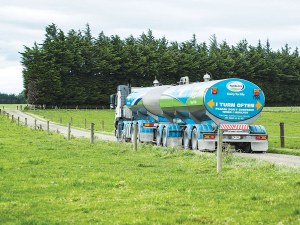
Fonterra has unveiled its annual results for the 2026 financial year, posting $27 billion in revenue and close to $20 billion returned to New Zealand farmer owners and unit holders.
The first major update to the Dairy Cattle Code of Welfare in more than a decade has been released, marking what DairyNZ describes as an important step in ensuring animal welfare standards continue to evolve alongside scientific evidence and on-farm realities.
Ravensdown shareholders have elected Jane Montgomery and Kate Acland to the Ravensdown Board for three-year terms, following a closely contested director election.
Federated Farmers says new legislation replacing the Resource Management Act will cut red tape, unlock investment and help grow New Zealand's export-led economy, after the Planning Bill and Natural Environment Bill passed their third reading in Parliament yesterday.
Leading figures from the major political parties will be questioned on their primary sector policies at the Rural Issues Debate at Mystery Creek Events Centre, Hamilton, on 30 September.