Federated Farmers Warn Government Is Running Out of Time on Freshwater Reform
With six months until the election, Federated Farmers says the Government is running out of time to deliver its long-promised reform to the country's freshwater system.
 increase font size
 Sir Peter Gluckman.
Dairy farmers are applauding the clear message in Sir Peter Gluckman’s freshwater report that everyone has a role to play in ensuring freshwater quality.
“Our farmers are pleased the report points out impacts come from all sectors of society, and addresses the complexity surrounding the protection and improvement of waterways,” says DairyNZ chief executive Dr Tim Mackle.
“Dairy farmers have copped too much of the blame for the decline in water quality, and it is a vindication for them to see that Sir Peter and his scientist colleagues make it clear urbanisation, industrialisation and climate change, as well as the agricultural sector, impact waterways.”
The report, ‘New Zealand’s fresh waters: Values, state, trends and human impacts’ points out there are trade-offs that need to be faced between conserving ecosystems and reducing the effects of economic and urban development.
Mackle says the fresh water debate needs to be in the context of 80% of NZ waterways having stable or improving quality.
“Dairy farmers quite rightly stake a claim in this stabilisation and improvement. Over the last five years in particular – even longer in Taranaki – they have gone to considerable effort and expense to clean up and protect waterways on their farms.
“Some of the critics of dairy question whether farmers have spent $1 billion on this work. I say to them, ‘visit a few dairy farms to see what our farmers are doing for the environment. They have fenced waterways on farms, bridged stock crossings, planted native species that filter and protect waterways and installed effluent management systems’.
“Of course there’s still a way to go in some areas. We acknowledge that improving NZ waterways is a long journey, as Sir Peter’s report points out. The good news is dairy farmers are leading the way in protecting freshwater on their farms.”
No quick fixes
Federated Farmers says Gluckman’s water quality report confirms there are no easy, quick fixes NZ’s water quality challenges and all sectors contribute to water degradation.
Feds says 80% of NZ waterways have stable or improving water quality.
Environment spokesperson and national board member Chris Allen says all sectors of society, including farmers, are culpable and all need to contribute to solving the problem.
Farmers are by no means the whole problem, Allen says.“The farming sector has made significant improvements in recent years to the way we manage our land. I am convinced we can continue to produce food and agricultural exports while reducing our environmental footprint.
“All sectors, including urban communities with sewage and stormwater challenges, need to be given time to implement changes that are sensible, practical and affordable.
“Improving trends in phosphate and ammonia levels show that farmers good management over the last decade is showing results. Dairy farmers alone have [spent at least] $1 billion dollars in the last five years on environmental improvements on farm.”
The conservation vs economic development dilemma also applies to the introduction of “predatory trout”, with the report noting “many threatened populations of the endemic non-migratory galaxiid fish populations in NZ only exist upstream of natural barriers that exclude predatory trout”.
With six months until the election, Federated Farmers says the Government is running out of time to deliver its long-promised reform to the country's freshwater system.
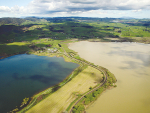
Waikato is home to a diverse range of lakes, and experts say they urgently need better management and restoration.
OPINION: As decisions around freshwater rules edge closer, the message from dairy farmers is clear.
A committee which carried out the review into New Zealand's science system says the underinvestment will continue to compromise the country's future.
OPINION: In a victory for common sense over virtue signalling, David Parker's National Policy Statement (NPS) work on freshwater is now dead in the water.


Beef + Lamb New Zealand (B+LNZ) says it welcomes the passage of the Natural Environment Bill and Planning Bill, calling the bills a positive step for sheep and beef farmers.
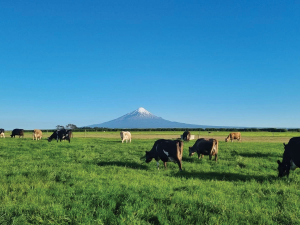
A spate of southerly winds bringing cold temperatures has presented challenges for Taranaki dairy farmers.
Converting a longstanding cropping farm to dairy was the only way to ensure the land stayed in the family long term, says new dairy farmer Rod May.
As the election heats up, Organics Aotearoa New Zealand (OANZ) has launched its election scorecard designed to help voters wanting to support policies that grow organic and New Zealand's organic sector.
A 'tsunami' of milk from key exporting countries is winding down and this may be good news for New Zealand dairy farmers.
Will the good times last? That's one of the key issues to come out of the latest Federated Farmers confidence survey.