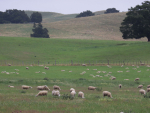
Hawke’s Bay sheep and beef farmers warned to monitor stock water wells
Sheep and beef farmers in Hawke's Bay are being urged to keep a close eye on the wells that supply water to their stock.
 increase font size

DairyNZ is joining with other agencies to coordinate a range of drought support mechanisms for Northland and other North Island dairy farmers, with a focus on facilitating farmer-to-farmer advice.
A state of drought has been officially declared in Northland by the Minister for Primary Industries Nathan Guy, with other regions likely to follow soon.
DairyNZ's regional team manager, Craig McBeth, says dry conditions are being experienced throughout the North Island and the industry body has already been sending out weekly newsletters with practical advice to farmers. It is also using its local discussion groups to help farmers find out how others are dealing with the dry conditions.
"We are working with the Rural Support Trust, Federated Farmers, the Ministry for Primary Industries and the banking and rural professional sector to ensure farmers know there are people they can turn to. It's important for farmers to know they are not alone," he says.
"The best support can be talking to your neighbours and just hearing what others are doing. That's what we're trying to facilitate through our farmer networks. We'll also be running some dry summer events to give more detailed advice and support. Farmers should contact their local DairyNZ consulting officers for updates on when and where these events will be held."
McBeth says farmers need to keep an eye on young stock as well as milking stock and their body weights and take action quickly. "What condition dairy cattle are in now will impact on how well they are able to make it through the winter and through calving later in the year. This can have long term impacts on a herd's productivity."
DairyNZ senior economist, Matthew Newman, says Northland milk production for the month of February 2013 is about 20% lower than February 2012. In the wider Waikato, production for the same month is about 15% down.
"Dairy farmers in Northland will have $13 million less income from milk produced in the month of February 2013 compared to the same month a year ago. About $8 million of this is from reduced milk production, while the remainder is from lower milk prices.
"Looking across the whole of the North Island, we estimate that just for February this year North Island farmers will receive $114 million less milk revenue than February 2012. The drought counts for a reduction of $64 million and lower milk prices for $50 million.
"This is based on a prediction of 15% lower milk collected this year compared to last year for the month of February across the North Island," he says.
"The economic effects of that drop will ripple through rural communities. If it stays dry for another three or four weeks, and herds have to dry off early, then the medium term impacts will be a lot more dramatic."
DairyNZ says its main advice to Northland and other dairy farmers experiencing dry conditions is to:
• Look after yourself and talk with other farmers in your area.
• Monitor and record your cow body condition. Make sure you know how to do this or get an expert to help.
• Focus on milking on with a core group of cows until it rains.
• Assess how you can destock.
• Have a plan around feed, financials, stock and communicate the plan to your team (family, staff, consultant, banker). Don't be afraid to change to Plan B if things change.
• Manage young stock on and off the farm.
• Talk to your grazier.
• Attend a DairyNZ dry summer field day.
• Make the best use of your rural professionals.
"Information is the key to developing a response to the drought conditions and is available on the DairyNZ website (www.dairynz.co.nz/drysummer), from rural professionals and from experienced fellow farmers," says McBeth.
Sheep and beef farmers in Hawke's Bay are being urged to keep a close eye on the wells that supply water to their stock.
Fears of a serious early drought in Hawke’s Bay have been allayed – for the moment at least.
OPINION: Farmers along the east coast of both islands are being urged to start planning for drought as recent nor'west winds have left soil moisture levels depleted.
As you approach Hastings from the south along SH2, the colour of the west-facing hills are a good indicator of a drought.
New research could help farmers prepare for a future where summer rainfall is increasingly unpredictable and where drought risk is rising, no matter what.


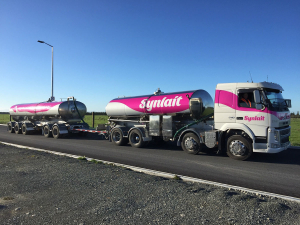
Synlait has swung to second-half profit as operations stabilise, but the dairy processor still posted a $75.4m annual loss.

LIC shareholders have elected a new North Island representative to the co-operative's Board, along with five representatives to its Shareholder Reference Group (SRG), following the company's Annual Meeting held in Invercargill.
Farmers across parts of Southland and South Otago are continuing to deal with difficult conditions after a prolonged run of wet weather, with pressure building around feed supply, stock management, pasture damage, farm infrastructure and everyday workloads.
Federated Farmers says it welcomes Labour's commitment to reviewing the Sharemilking Agreements Act, calling on other major parties to do the same.
For Canterbury dairy farmers Sian Meijer and Rick Wobben, wearable technology has become one of their most valuable on-farm tools - helping manage 1850 cows across an expansive, high-performing dairy operation while improving efficiency, mating outcomes and day-to-day decision making.
Fonterra has unveiled its annual results for the 2026 financial year, posting $27 billion in revenue and close to $20 billion returned to New Zealand farmer owners and unit holders.