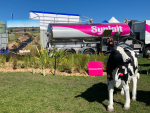
What Would Synlait Be Worth to Fonterra or a2 Milk?
Speculation of a possible joint move by Fonterra and a2 Milk to buy Synlait raises a much bigger strategic question, says agribusiness expert Dr Nic Lees.
 increase font size
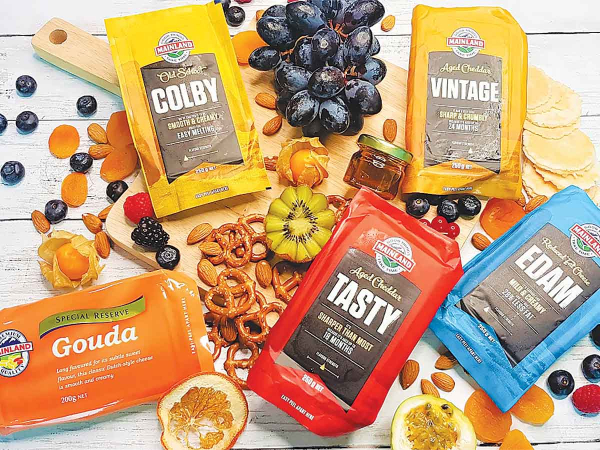 Fonterra is seeking buyers for its consumer businesses, which include household name brands such as Mainland.
Despite the turmoil in global markets, Fonterra is continuing with a dual track process to divest its multi-billion dollars consumer businesses.
A co-op spokesperson told Dairy News that it will continue to assess market conditions as the process evolves.
The co-operative is considering both a trade sale and an initial public offering (IPO) for the businesses, which include household name brands such as Anchor and Mainland as well as the Fonterra Oceania and Fonterra Sri Lanka operations. If the for-sale assets are to be listed on the stock exchange, it will be under the name of Mainland Group.
However, as countries grapple with President Trump’s onagain, off-again additional import tariffs, several US companies have paused their initial public offerings in recent days including UKbased Klarna, the specialty lending and online payments provider, and online ticketing company StubHub. Both were set to list on the New York Stock Exchange. Global markets are spiralling, with US indices marking their worst losses since 2020. Global business analysts fear it would be very tricky to get any deal to the finish line as cost of debt is expected to go up and it will be harder to ascertain valuations of companies.
Forsyth Barr senior equity analyst, Matt Montgomerie believes the market turmoil should have a negligible impact on Mainland Group’s direct operations.
However, he agrees that there is downward pressure on valuations, and this could impact Mainland if Fonterra chooses the IPO option.
“The market turmoil is clearly in the face of tariffs along with global and US economic growth fears,” Montgomerie told Dairy News.
“In reality, this should have a negligible impact on Mainland’s direct operations.
“This said, at this point there is clear downward pressure on valuations. The valuation impact could flow through to Mainland if it is to be an IPO candidate, but the world is evolving at a rapid pace currently, so this is difficult to call at this juncture.”
Montgomerie points out it will still be some time before the IPO option is finalised. “While it could be considered by Fonterra, this is not our base case,” he adds.
Fonterra Oceania is a fully integrated business, recently created through merging Fonterra Brands New Zealand and Fonterra Australia. It comprises consumer, foodservice and ingredients businesses. Fonterra Sri Lanka comprises consumer and foodservice businesses. Fonterra says it's decision on the future of its consumer business would need farmer approval.
Montgomerie doesn’t think the recent turmoil would’ve altered the trade sale vs IPO probabilities to any great extent.
“The trade sale will come down to the opportunities prospective buyers see to create value above what Fonterra has failed to deliver – whether that is through cost synergies or a sharper focus on the brands.”
He adds that the ‘in-scope’ or Mainland EBIT growth for first half of 2025 was +16% compared to same period last year.
“If these growth rates can be held for the remainder of FY25, this represents an FY25 Mainland Group EBIT of $231m, which would likely be at the upper end of what it has delivered historically.
“So, while valuations are down from recent peaks, Mainland Group earnings versus history are relatively well placed.”
Speculation of a possible joint move by Fonterra and a2 Milk to buy Synlait raises a much bigger strategic question, says agribusiness expert Dr Nic Lees.

Supply chain problems, growing protectionism and a move to greater food security are some of the key challenges facing New Zealand exporters, according to our top trade negotiator, Vangelis Vitalis.
In the past, much has been made of the concept of farm to fork, but an Australian expert in food science and marketing with experience in the dairy industry, Dr Angeline Achariya, says the reverse of this slogan is critical to win modern day consumers.
A four year trial has reaffirmed that mixing plantain into dairy pastures can help reduce nitrogen losses to freshwater while maintaining milk production and profitability, say researchers.
Fonterra has opened its upgraded Chengdu Application Centre, bringing New Zealand dairy expertise closer to customers in one of China's fastest-growing regions.


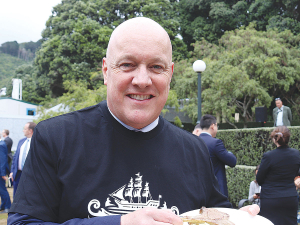
OPINION: In politics, credibility is and should be big. It must surely rank higher than charisma, which is quite trite and superficial. Yet, voters nowadays are often wooed and influenced by how someone looks or talks at a superficial level. TV plays a huge role in this.
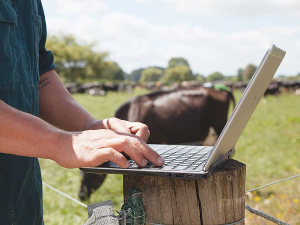
Farmers can spend less time on paperwork, thanks to a new data sharing agreement between DairyNZ’s DairyBase and LIC’s MINDA software.
Kaikōura families affected by July's severe storm have found a practical solution to a problem that's kept some children away from regular schooling for weeks: a washed-out section of Inland Kaikōura Road, which has stopped the local school bus from running its usual route.
Rural New Zealand is welcoming the Government’s recent package of rural healthcare initiatives.
Interest in agritech and production animal systems has prompted Massey University's School of Agriculture and the Environment to new majors to its popular animal science degree.
Ballance Agrinutrients chief executive Kelvin Wickham says despite a tough year, he is pleased the business has returned to profit.