Fonterra CFO Andrew Murray Resigns
Fonterra Co-operative Group chief financial officer Andrew Murray has resigned to take up a role outside the dairy giant.
 increase font size
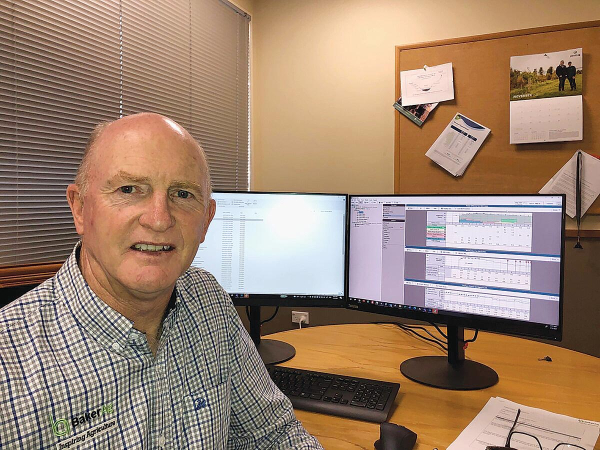 BakerAg director Chris Lewis.
A large slice of the $3.2 billion proposed capital return for Fonterra farmer shareholders could end up with the banks.
Debt reduction is the overwhelming preference of most Fonterra farmers, if a survey of a small group is anything to go by.
The survey, carried out by agribusiness consultants BakerAg, received responses from 28 Fonterra shareholders. Debt reduction was the first choice of 75% of respondents, with 10% preferring on-farm investment and another 10% succession. The responses were published in BakerAg’s monthly publication, MilkLines.
BakerAg dairy team director Chris Lewis says while the sample is small, the survey provides insight into both the financial priorities of some farmers and the cultural mindset underpinning their investment and succession decisions.
“While the sample size is modest, the responses offer a valuable snapshot of attitudes, priorities, and strategies.”
Lewis says the overwhelming preference for debt reduction highlights the risk-averse and financially disciplined stance of most farmers.
“Reducing debt provides immediate security, lowers interest obligations, and improves long-term resilience. Notably, none selected land purchase, retirement or personal spending as their priority. Underscoring that farmers view this capital as core business-first rather than growth or lifestyle-oriented.”
Fonterra farmers will vote at a special general meeting this week on a board proposal to sell its global consumer and associated businesses for $4.22 billion to French company Lactalis. If the divestment is approved, Fonterra is signalling a capital return of $2/share, which is equivalent to $3.2 billion.
In the survey, respondents were asked to break down percentages of allocation. Debt repayment dominates with 75% of respondents saying this was first choice and on average they would put 72% of the Fonterra Brands sale distribution into debt reduction.
According to Lewis, applying that 72% to the $3.2b of distribution is $2.3b could be going back to banks.
“Several respondents did go on to say that debt reduction was the first step in a process that would ultimately enable future land purchase or succession.”
He noted that nearly 26% have land purchase as their second option.
“If 1 in 4 Fonterra shareholders are looking to buy another farm, that must equal strong demand and an inevitable push in real estate prices.
“Investments, both on- and off-farm, absorb much of the remainder. Several respondents noted that their debt was already low and that they were exploring alternatives that included purchasing urban houses.”
Lewis says that the survey paints a clear picture of farmers’ priorities and what might happen following the Fonterra Brands sale.
“The proceeds are largely treated as an opportunity to strengthen balance sheets rather than immediately fuel expansion or consumption. Farmers remain conservative, debt-focused, and reliant on trusted advisors. These decisions will likely position the sector for future stability and measured growth,” Lewis says.
Fonterra Co-operative Group chief financial officer Andrew Murray has resigned to take up a role outside the dairy giant.

Four candidates have been confirmed for two director positions on Fonterra’s board.
A record farmgate milk price and strong global demand is laying the foundation for continued growth of organic dairy farming in New Zealand.
Waikato milk processor Tatua has again declared a record milk payout to farmer shareholders, leaving other processors in the dust.
Fonterra has unveiled its annual results for the 2026 financial year, posting $27 billion in revenue and close to $20 billion returned to New Zealand farmer owners and unit holders.


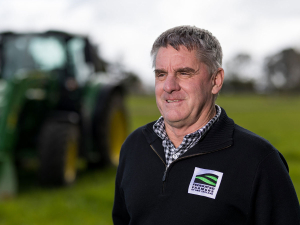
National’s pledge to introduce 19 new national standards shows the party is serious about getting Wellington out of farming, Federated Farmers says.
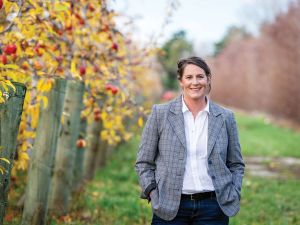
The National Party’s policies to make it easier to grow fresh vegetables, secure reliable water and energy and simplify farm planning are practical changes that will give growers the confidence to invest, according to Horticulture New Zealand (HortNZ).
Fonterra Co-operative Group chief financial officer Andrew Murray has resigned to take up a role outside the dairy giant.
A major move is about to get underway to improve the quality and viability of dairy beef and cattle in NZ.
Veterinarians say changes to the code of welfare for dairy cattle provides a positive foundation for improved cattle welfare across the country.
Today, 15 October, is the International Day of Rural Women, which recognises rural women’s contribution to farming, communities and the environment.