Lanaco and Blueair Launch World-First NZ Wool Air Filter
New Zealand wool is reaching new heights as air filtration companies move away from synthetic products to biodegradable alternatives.
 increase font size
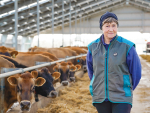
 Halter founder Craig Piggott says New Zealand farmers will always remain their main partners.
Virtual fencing company Halter is going global but for founder Craig Piggott, New Zealand farmers will always remain their main partners.
His company, now valued at over $1.65 billion and growing, still gets feedback from New Zealand farmers on how to improve and enhance features on its world-leading cow collars.
"New Zealand farmers are, like, at the centre of it. They've been partners, effectively, the whole way through and they give us feedback on the product every day," Piggott told Dairy News.
"They are constantly asking for new additions: we get them up to the office and our staff spend heaps of time in the field with customers."
Piggott says farmers are the reasons the Halter teams get out of bed in the morning.
"We live to serve them," he says.
Piggott's first customers - his parents - still farm in Waikato and are still using Halter. In some regions of NZ, about 30% of farmers are using Halter cow collars to move cows between paddocks without the need for fencing, boosting pasture efficiency and production.
The Halter system includes a solar-powered smart collar for each cow, towers for connectivity, and an app that lets farmers manage their cattle and pasture from their phone. Cattle are guided by the collar's sound and vibration cues. Farmers can virtually fence, move, and monitor their cattle 24/7.
Piggott says sales in NZ are strong with more farmers embracing the technology.
"We are building more collars and deploying more farms and selling more than we've ever had before."
The company is also selling collars in Tasmania, with 25% of the cows in the Australian state wearing Halter collars.
Other Australian states are opening up to virtual fencing, with regulatory changes in the pipelines.
"Tasmanian farmers have been super successful with the product, and I think they've played a huge role in helping to show the mainland Australia states the potential of the product," says Piggott.
Piggott grew up on the family farm and has a deep passion for farming. In 2016, he left his job, raised $150,000 and launched Halter.
He's happy with where Halter is placed in 2025 but is always looking on improving the product.
"I think we're always looking to do more, and it feels so early on the journey.
"There's a lot more product that we want: we want to keep improving the system and keep building more features and more things."
Last month Halter announced that it had raised $165 million in a new round of funding with key investors.
Piggott says the new capital will help unlock more productivity gains for farmers.
"Halter was built with our early farmers - we wouldn't be here without them. We're deeply grateful for their trust.
"Halter farmers are more profitable and get better outcomes for the environment and their animals.
"Farmers use Halter to grow and harvest more grass, reduce workload, increase herd size, improve animal health and welfare, and unlock environmental benefits," says Piggott.
"Farmers are the backbone of rural communities.
"They feed society and play a key role in builiding sustainable food systems. Halter farmers are pioneering a more productive and sustainable way to farm."
New Zealand wool is reaching new heights as air filtration companies move away from synthetic products to biodegradable alternatives.
Generative AI in the workplace, trials in the field, and industry-relevant research took centre stage at this year’s Grape Days events in Central Otago, Hawke’s Bay and Marlborough.
Efficiency is the big one because it tracks back into what is done on farm.
Halter has announced the six winners of its 2026 One Year Free competition, marking the biggest year yet for the annual award and the first time the company has expanded the field beyond its usual line-up.
Two months after unveiling a major upgrade to its beef product, Halter says its farmers are on track for major production gains and additional grass growth.


South of the central Hawke’s Bay town of Waipukurau is Taniwha Station – a highly successful 550ha bull beef farming operation.
Beef + Lamb NZ funded research has shown that some simple changes to pasture management could help farmers make better use of rainfall and build resilience before dry conditions hit.
OPINION: There could hardly be a more appropriate theme for a conference than the one chosen by the red meat sector - Navigating Volatility.
When Northland leather worker Vernon Suckling started making horse saddles 50 years ago, quad bikes and side-by-side vehicles were unheard of.
Alliance Group has confirmed that eligible farmer-shareholders who supply and continue to back the business will receive up to $20 million later this year, following the strategic investment partnership with Dawn Meats.
With a general election under five weeks away, Rural News is asking major political parties about their policies and positions on key issues facing the primary sector. We will run their responses to each question over the next four weeks. The ACT Party and the Greens didn't respond in time.