BCS Targets: Why Body Condition Score Matters at Calving
Body Condition Score (BCS) is a critical element in managing the health and reproduction of the dairy herd.
 increase font size
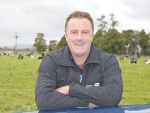
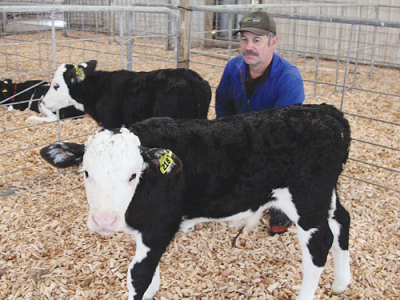 Mark Bocock.
The 2018 dairy calving/mating season has a new, unsettling dynamic with the incursion of Mycoplasma bovis.
And a prediction that the supply of quality dairy/beef calves will diminish has caused many farmers to be uncertain about how to protect their farms and livelihoods.
Mark Bocock, who runs a large dairy beef calf operation and is a member of the Beef + Lamb NZ dairy beef integration programme, is reminding the industry that dairy farmers can increase farm profit by breeding quality calves for the red meat sector.
“It just requires more attention to onfarm biosecurity,” says Bocock.
“Traditionally dairy farmer focus has been on producing milk, not calves, but the potential to treble their calf cheque by breeding calves in demand by the beef industry has resulted in a growing number of dairy farmers mating cows, after replacements, to proven short gestation beef genetics.
“The figures speak for themselves: last year bobby calves fetched $20 - $40 while quality dairy beef calves realised, on average, $150 – the best going for at least $270.
“The figures speak for themselves: producing quality beef calves has the potential to increase the calf cheque for the average dairy farm by at least $15,000.
“Generally farmers choose between ‘going all AI’ over the herd, or mating the herd to AI for six-eight weeks and then following with run bulls.
“Farmers I’m talking to are erring, in this Mycoplasma bovis environment, towards all-AI mating in fear of bringing diseased bulls onto the farm.”
Bocock said advice from the Ministry for Primary Industries (MPI) and BLNZ gives simple guidelines for protecting the farm and perhaps getting record prices for quality dairy beef calves.
MPI offers the following guidance on breeding quality dairy beef calves:
AI
1. Get assurance from your AI company that its beef semen stocks are free of Mycoplasma bovis
2. Clearly state and demand adherence to your farm’s biosecurity standards by people visiting the farm and/or herd, i.e. AB technicians, etc.
Run bulls
1. Ensure all bulls arrive onfarm properly identified and accompanied by details of their movement history. Tell the vendor or agent that you expect to get these details.
2. On arrival the bulls should be held apart from the main herd for at least seven days to enable an assessment to be made of their health status, and for any procedures such as drenching to be done. If you have any concerns about the health of the bulls, contact your veterinarian before you mix the bulls with the herd.
3. If the bulls are leased, talk over the options with the owner.
4. R2 bulls: once mating is finished these bulls should be sent to slaughter directly -- not via saleyards or some other intermediate stopping point. If they are being held for further use (mating in autumn 2018 or spring/summer 2018/19) then follow the recommendations for R1 bulls.
5. R1 bulls: these may present a risk of spreading infection. The best indicator of the level of risk from them is the health status of the herd the bulls have been running with.
If the bulls are of dairy origin and the herd has been screened via bulk milk and discard milk tests -- and the results show Mycoplasma bovis infection is not detected -- then the risk of these bulls spreading infection is lower than those from a property where test results are unavailable.
If the bulls are from a beef property and Mycoplasma bovis test results are unavailable, then the best indicator of the level of risk from them remains the health status of the herd(s) the bulls have been running with: pay particular attention to the herd’s levels of mastitis and lameness.
If the test results show evidence of Mycoplasma bovis infection, MPI will provide direction for the ongoing management or slaughter of any animals leaving the farm, including bulls.
Buying calves
1. Buy from as few sources as possible.
2. Deal directly with the source farm or via an agent: ask about any M.bovis test results available for the farm and about cow and calf health on the farm for the past two seasons; use the prepurchase checklist available at dairynz.co.nz/mbovis.
3. Avoid buying from saleyards because of the cattle mixing that occurs in such places.
4. Buy only NAIT-registered and tagged calves, and promptly record all movements.
5. Ask your trucking firm to avoid mixing calves with other cattle in holding yards or on the truck.
6. Isolate newly arrived calves for seven days and monitor them for signs of disease.
7. Find a buyer now for your future weaned calves, telling buyers about your efforts to reduce risk of M.bovis exposure.
Feeding milk
1.Milk at lowest risk of containing M.bovis bacteria comes in three forms: calf milk replacer powder, pasteurised milk, or acidified milk.
2. If you’re using milk replacer powder, order now to avoid problems with supply.
3. If you’re feeding whole milk, consider the following:
a. Discarded milk from cows under treatment for illness or mastitis is much more likely to contain M.bovis than milk from healthy cows -- so avoid this.
b. M.bovis is not killed by adding potassium sorbate preservative.
c. Yoghurt bacteria will give variable results and should not be relied upon to kill M.bovis.
d. Pasteurisation will kill M.bovis if the machine is maintained and instructions are followed.
e. Acidification with citric acid to pH5 for eight hours or pH4 for one hour will kill M.bovis. Below pH4 the milk becomes progressively unpalatable and calves will drink it slowly or refuse to drink altogether. It’s best to discuss acidification with your vet.
Body Condition Score (BCS) is a critical element in managing the health and reproduction of the dairy herd.
Running a tight and self-contained ship is the key to the success of the country's largest dairy farmer, says Blair Robinson, the new man at the helm of Dairy Holdings.
OPINION: It's no surprise that "world-class biosecurity" continues to dominate as the top priority for agribusiness leaders, holding the number one spot for the 16th consecutive year in KPMG's latest agribusiness report.
Giving calves the best possible start to life has been shown to boost growth and resilience.
The first weeks of a calf's life quietly shape the future of the entire herd.


Synlait has swung to second-half profit as operations stabilise, but the dairy processor still posted a $75.4m annual loss.

LIC shareholders have elected a new North Island representative to the co-operative's Board, along with five representatives to its Shareholder Reference Group (SRG), following the company's Annual Meeting held in Invercargill.
Farmers across parts of Southland and South Otago are continuing to deal with difficult conditions after a prolonged run of wet weather, with pressure building around feed supply, stock management, pasture damage, farm infrastructure and everyday workloads.
Federated Farmers says it welcomes Labour's commitment to reviewing the Sharemilking Agreements Act, calling on other major parties to do the same.
For Canterbury dairy farmers Sian Meijer and Rick Wobben, wearable technology has become one of their most valuable on-farm tools - helping manage 1850 cows across an expansive, high-performing dairy operation while improving efficiency, mating outcomes and day-to-day decision making.
Fonterra has unveiled its annual results for the 2026 financial year, posting $27 billion in revenue and close to $20 billion returned to New Zealand farmer owners and unit holders.