It's The Margins That Matter
OPINION: It appears to be difficult for people who haven’t tried to run a business to understand the difference between assets and cash.
 increase font size
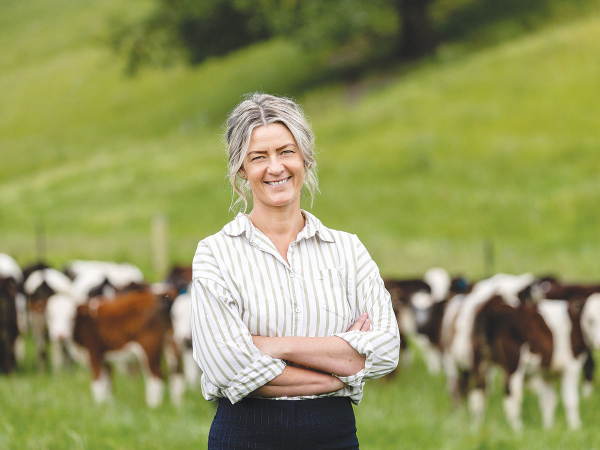 Ravensdown director Kate Faulks says there are many astute farmers who already have what it takes to be good board directors.
Farming is changing fast, and future-focused leaders are needed in New Zealand’s boardrooms.
That’s according to Ravensdown director Kate Faulks, who says there are many astute farmers out there who already have what it takes to be good board directors.
“They’re constantly scanning, solving problems, exploring opportunities, looking for better efficiency and they’re often thinking long-term and they’re doing this day to day in their businesses so whether they know or not, those things all translate really well to the boardroom,” Faulks told Rural News.
Elected to the Ravensdown board in September 2024, Faulks has a unique perspective on governance. She holds a Bachelor of Engineering with Honors in Chemical & Process and a Master of Business Administration and since 2018, Faulks and her husband Adam have been farming in North Otago, rearing and finishing 500 dairy-beef and grazing 1400 dairy stock.
“My background in engineering operations laid a good foundation for governance. Both require the ability to understand complex problems and then explore multiple solutions so it sort of trained me to be by default a systems- thinker and always thinking bigger picture but then when we began farming in 2018, I began really interested in the role of cooperatives, not just because of their role in agriculture but how they influence the broader economy,” she says.
She says it was agriculture’s role in New Zealand’s economy that motivated her to get involved in governance.
“I think governance really offers you the opportunity to contribute to those decisions that don’t just effect a business, but they effect entire communities, stakeholders, and future generations effectively.
“It really relates quite closely to farming because I think very much about stewardship in terms of the role of a director and I see it more as being a custodian of the company, similar to how farmers are custodians of the land and we’re making decisions now that will position us better for the future.”
Faulks says that while strategic thinking is an important trait for those wanting to be on boards, she values things like clarity.
“I think governance is just as much about the emotional intelligence… I think a good director stays curious, they have the courage to ask both the tough questions and also the really simple questions are just as important.
“I think it’s equally as important to know what governance is not. It’s not running the business,” she says. “We have an excellent leadership team that’s actually taking care of that.”
Faulks says farmers looking to join a board should start locally.
“Start where you are, whether it’s a local board, a catchment group or a local trust. Every experience builds your skillset and sharpens your thinking.”
In 2025, Ravensdown shareholders will have the opportunity to nominate and elect two directors to the company’s board – one in the North Island and one in the South Island.
OPINION: It appears to be difficult for people who haven’t tried to run a business to understand the difference between assets and cash.
OPINION: In the 1980s, concern was expressed in West Germany about the falling birth rate. Some simple analysis was performed by Professor Helmut Sies, physician and biochemist at Dusseldorf University. His letter ‘A new parameter for sex education’ was published in Nature in 1988:
When it comes to annual rebates, it's been a long time between drinks for Ravensdown shareholders.
Ravensdown has reported a net profit before tax and rebate of $50.1 million for the year ended 31 May 2026.
Farmer owned co-operative Ravensdown has signed a two-year naming rights sponsorship of the Canterbury A&P Show.


A spate of southerly winds bringing cold temperatures has presented challenges for Taranaki dairy farmers.
Converting a longstanding cropping farm to dairy was the only way to ensure the land stayed in the family long term, says new dairy farmer Rod May.
As the election heats up, Organics Aotearoa New Zealand (OANZ) has launched its election scorecard designed to help voters wanting to support policies that grow organic and New Zealand's organic sector.
A 'tsunami' of milk from key exporting countries is winding down and this may be good news for New Zealand dairy farmers.
Will the good times last? That's one of the key issues to come out of the latest Federated Farmers confidence survey.
Outgoing Fonterra Co-operative Council chair John Stevenson says that it has been a privilege to represent the co-op's farmer shareholders.