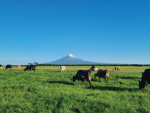
Labour Vows to Change Tact on How to Handle Freshwater Rules
A Labour-led Government won’t be bringing back the controversial freshwater rules of 2020.
 increase font size
 Jacinda Ardern.
Labour Party leader Jacinda Ardern says after National came into power it shelved the Environment Court judge David Sheppard’s national policy statement (NPS) initiated by the last Labour government.
“That NPS would have controlled increases in livestock intensity. The national dairy herd has since increased by one million cows producing effluent equivalent to 14 million people, most of which is discharged to land, much of which is leaches into waterways,” she told the Environmental Defence Society ‘Tipping Points’ conference in Auckland.
“Nine years on, nitrate levels are still increasing in 55% of monitored waterways. In 2015 over 60% of monitored river sites are graded poor or very poor for swimming.
“In some areas, dairy conversions or battery beef lots or more intensive farming systems using irrigation or intensive winter grazing on steep slopes are doing enormous damage to our rivers and estuaries. Effects are spreading out to sea blocking photosynthesis of kelp beds and clogging up sands with fine silts.”
Labour plans to introduce a new National Policy Statement (NPS) for Freshwater Management based on an original NPS drafted by a board of inquiry chaired by Environment Court judge David Sheppard in 2010.
Sheppard said an increase in land use intensity such as a large dairy conversion or putting in a beef lot or irrigation should always require a resource consent so that a point of control exists to prevent intensification of land use making water quality worse, Labour’s spokesman on water David Parker told Dairy News.
Parker acknowledged this is already the case for dairy in many regions.
“In respect of the dairy platform there are parts of Southland with inadequate controls on winter grazing; some sediment loads and nutrient loads from winter break feeding are beyond the pale.”
Ardern said the Canterbury medical officer of health has told mothers not to feed babies bottled milk from South Canterbury water bores because nitrates are so high they disrupt oxygen flow around the body – ‘blue baby syndrome’.
The Parliamentary Commissioner for the Environment has said there is a “clear link between expanding dairy farming and increasing stress on water quality. Even with the best practice mitigation the large scale conversion of more land to dairy farming will generally result in more and more degraded fresh water”.
“To some in politics this doesn’t appear to be a threat worth worrying about,” Ardern told the conference. “They think the environment and public should simply carry the cost. The past decade of political inaction has legitimised this pollution and current land use policies have institutionalised it.
“The current government’s first replacement NPS required a low wadeable standard which most New Zealanders ridiculed. They then proposed fencing of mid country waterways many years from now, sometimes not until 2030.
“Under pressure in their ninth year of government they have now introduced a draft swimmable target which has been widely criticised by scientists. They shifted the goalpost on E.coli.
“The NPS says a river is swimmable even if livestock effluent and nutrient pollution or low flows from irrigation extraction are causing excessive slime growth.
“That is not what I call swimmable, not even for my friends the eels.
“Their standards allow nitrates at levels perilously close to toxic for plants and macro-invertebrates. They use floods as cover to ignore adverse test results for up to 20% of the time.”
A Labour-led Government won’t be bringing back the controversial freshwater rules of 2020.

Federated Farmers says it welcomes Labour's commitment to reviewing the Sharemilking Agreements Act, calling on other major parties to do the same.
Red meat farmers are welcoming Labour’s plan to review the Emissions Trading Scheme and not to campaign on pricing agricultural emissions.
For the first time in a quarter of a century, Federated Farmers has something positive to say about the Labour Party’s climate change policy leading into a general election.
There's been widespread support from the primary sector for the Government's announcement on changes to freshwater farm plans that come under the Natural Environment Bill, which is now set to replace the existing RMA.


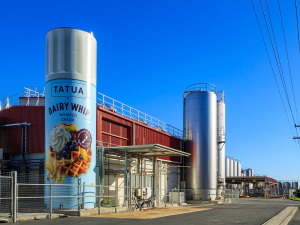
Waikato milk processor Tatua has again declared a record milk payout to farmer shareholders, leaving other processors in the dust.

A Labour-led Government won’t be bringing back the controversial freshwater rules of 2020.
National’s much-touted free trade deal with India featured in the Rural Issues Debate at Mystery Creek, Hamilton on Wednesday night.
New Zealand's 2026-27 freshwater fishing season has opened, with anglers encouraged to head to rivers and lakes over the coming days as conditions look favourable across much of the country.
Central Otago District Council (CODC) has voted against a plan to spread treated sewage sludge from Cromwell and Alexandra on farmland near Lauder, a decision Federated Farmers says reflects strong opposition from rural residents.
Pāmu has released its FY26 Integrated Annual Report, reporting a Net Operating Profit of $113 million, more than double the $49 million recorded in FY25.