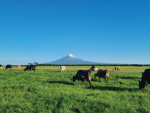
ANZ Warns of Milk Price Risks as New Dairy Season Begins
The new dairy season is kicking off with plenty of risks to the forecast farmgate price, both upside and downside, says ANZ agricultural economist Matt Dilly.
 increase font size
 China’s economic growth is slowing and demand for milk is also on the wane.
Weaker demand for dairy, particularly in the key Chinese market, is being blamed for the continued slide in the forecast milk price.
Dairy analysts and forecasters are shifting their focus from weak global milk supply to the impact on global demand from Covid and economic uncertainty.
ASB economist Nathaniel Keall points out that milk prices have always been a combination of dairy supply and consumer demand.
"But often supply has been the thing that swings around the most, particularly over the last couple of years, so it's often the thing forecasters have highlighted," he told Dairy News.
"But when global growth really slows - in the way that it is at the moment - you expect that to have an impact."
He notes that China has gone from over 8.5% growth last year to around 3.2% this year.
All that missing demand comes from chunks of the population being in lockdown.
"That stuff has an impact," Keall says.
Over the past three Global Dairy Trade (GDT) auctions, overall prices have slid by 11.5%: over the past year, prices have slipped by over 18%.
Whole milk powder prices have slid from a high of US$4,757/metric tonne in March this year to $3,279/MT at the last auction.
Keall says from a GDT perspective, it all depends on what China does and that is still really opaque.
“A lot of analysts thought it would back away from the zero-Covid policy and we’d get food service demand coming back, but if anything, the government has doubled down.
“At the very least it looks like there will be a little bit more near-term weakness.”
A weaker global economy also translates into weaker commodity prices.
Keall says less economic activity tends to mean weaker consumption, which means less demand for commodities and ultimately, less upward pressure on commodity prices.
“So all else being equal, a weaker global economy probably means a somewhat weaker milk price than would otherwise be the case.
“But we also think supply is likely to remain pretty constrained though, which will provide some support for prices.”
ASB last month reduced its 2022-23 forecast milk price by 60c to $9.40/kgMS.
Westpac has gone further, shaving 50c off its forecast price and settling at $8.75/kgMS.
Westpac senior agri economist Nathan Penny says global dairy prices have been under pressure for some time.
These recent falls are both larger and have continued for longer than the market anticipated, he notes. Penny agrees that the weakness in demand largely traces back to conditions in China.
The new dairy season is kicking off with plenty of risks to the forecast farmgate price, both upside and downside, says ANZ agricultural economist Matt Dilly.
As expected, Fonterra has lifted its 2025-26 forecast farmgate milk price mid-point to $9.50/kgMS.
OPINION: The year has started positively for New Zealand dairy farmers and things are likely to get better.
Entries have opened for two awards in the New Zealand Dairy Industry Awards (NZDIA) programme, aimed at helping young farmers progress to farm ownership.
Dairy farmers are still in a good place despite volatile global milk prices.


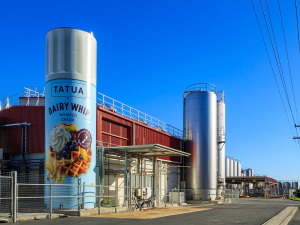
Waikato milk processor Tatua has again declared a record milk payout to farmer shareholders, leaving other processors in the dust.

A Labour-led Government won’t be bringing back the controversial freshwater rules of 2020.
National’s much-touted free trade deal with India featured in the Rural Issues Debate at Mystery Creek, Hamilton on Wednesday night.
New Zealand's 2026-27 freshwater fishing season has opened, with anglers encouraged to head to rivers and lakes over the coming days as conditions look favourable across much of the country.
Central Otago District Council (CODC) has voted against a plan to spread treated sewage sludge from Cromwell and Alexandra on farmland near Lauder, a decision Federated Farmers says reflects strong opposition from rural residents.
Pāmu has released its FY26 Integrated Annual Report, reporting a Net Operating Profit of $113 million, more than double the $49 million recorded in FY25.