Fonterra FY26 Results: $9.69 Milk Price, $3.4bn Profit
Fonterra has unveiled its annual results for the 2026 financial year, posting $27 billion in revenue and close to $20 billion returned to New Zealand farmer owners and unit holders.
 increase font size
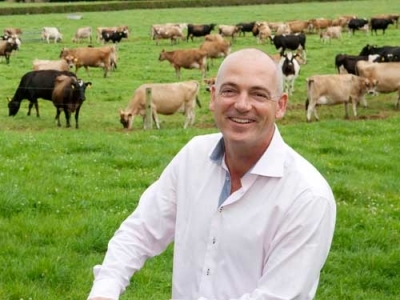 Fonterra chief executive Theo Spierings.
Fonterra chief executive Theo Spierings says the long term fundamentals for global dairy remain positive.
Demand is expected to increase by 2-3% a year due to the growing world population, increasing middle classes in Asia, urbanisation and favourable demographics.
"In addition to global supply growth slowing, we are seeing imports into major dairy markets improving compared to a year ago," he says
"China dairy consumption growth remains positive and its demand for imports has been steady over recent GlobalDairyTrade events.
"We expect these drivers to result in the globally traded market rebalancing.
"We will remain focused on securing the best possible returns for our farmers by converting their milk into high-value products for customers around the world."
There is no change to the current 2015/16 season forecast farmgate milk price, which is being held at $3.90/kgMS.
Tough number to hear
It's a tough number for farmers to hear but it's the reality of where the market is at present, says Shareholders Council chairman Duncan Coull.
"The signal farmers have received from their board is that while there are encouraging signs and the market should move in a positive direction over the next 12 months, it will be slow to do so.
"However, we farmers are well tuned to volatility... and will have this front of mind as we work through our budgets for the coming year."
Coull says the $4.25/kgMS is a forecast for a season not even begun.
"So, as we move through the year it is vital that farmers continue to read the signals being delivered by the market and our co-op, and act appropriately.
"Fundamental to this is Fonterra communicating any significant pricing shifts to our farmers in a timely and transparent manner."
Coull also acknowledged that the opening advance rate of $3.0/kgMS indicated the strength of the co-op's balance sheet.
"Farmers can look to this as an indication that their business is in a strong position, and that their board is aware of the current situation onfarm and has a desire to relieve cashflow pressure where possible.
"However, the current environment is placing additional stress on us all, so [we must] continue to stay engaged in our communities and support our friends and neighbours."
Fonterra has unveiled its annual results for the 2026 financial year, posting $27 billion in revenue and close to $20 billion returned to New Zealand farmer owners and unit holders.
Fonterra Co-operative Group has confirmed the independently assessed candidates standing for election to its board in 2026.
Fonterra has revised its Farmgate Milk Price forecast for the 2026/27 season, lifting the midpoint and narrowing the range on the back of improving global dairy commodity prices.
Outgoing Fonterra Co-operative Council chair John Stevenson says that it has been a privilege to represent the co-op's farmer shareholders.
OPINION: It seems Canterbury processor Synlait is still in the doldrums.


Federated Farmers says it welcomes Labour's commitment to reviewing the Sharemilking Agreements Act, calling on other major parties to do the same.
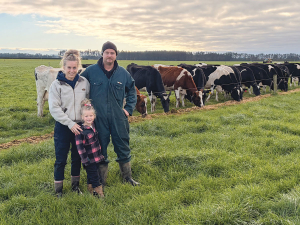
For Canterbury dairy farmers Sian Meijer and Rick Wobben, wearable technology has become one of their most valuable on-farm tools - helping manage 1850 cows across an expansive, high-performing dairy operation while improving efficiency, mating outcomes and day-to-day decision making.
Fonterra has unveiled its annual results for the 2026 financial year, posting $27 billion in revenue and close to $20 billion returned to New Zealand farmer owners and unit holders.
The first major update to the Dairy Cattle Code of Welfare in more than a decade has been released, marking what DairyNZ describes as an important step in ensuring animal welfare standards continue to evolve alongside scientific evidence and on-farm realities.
Ravensdown shareholders have elected Jane Montgomery and Kate Acland to the Ravensdown Board for three-year terms, following a closely contested director election.
Federated Farmers says new legislation replacing the Resource Management Act will cut red tape, unlock investment and help grow New Zealand's export-led economy, after the Planning Bill and Natural Environment Bill passed their third reading in Parliament yesterday.