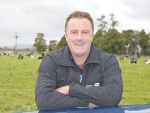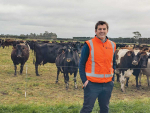
New Dairy Holdings CEO Backs Self-Contained Model
Running a tight and self-contained ship is the key to the success of the country's largest dairy farmer, says Blair Robinson, the new man at the helm of Dairy Holdings.
 increase font size
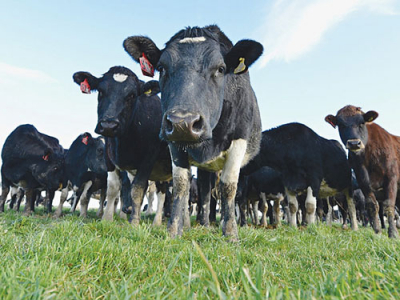
A government decision on on how to deal with Mycoplasma bovis in the future should be known early this week.
MPI last week prepared a Cabinet paper on options for the Government in light of more herds having been found carrying the disease. The Treasury is also understood to have contributed to the paper, given the cost implications and benefits of the respective options.
Farming leaders, the Prime Minister, Minister of Agriculture and government officials were updated earlier in the week on the disease and gave their views on how best to combat it. Their views were likely to have been contained in the Cabinet paper.
Agriculture and Biosecurity Minister Damien O’Connor says everyone understands that farmers need certainty, hence the commitment to making a decision.
“The meeting was constructive with all participants, including Prime Minister Jacinda Ardern, updated on the known extent of the disease, the effects it’s having and the costs, both social and economic, of dealing with it.”
Organisations represented at the meeting were DairyNZ, B+LNZ, Federated Farmers, Rural Women New Zealand, Dairy Companies Association of New Zealand and the Meat Industry Association.
The two key options before the Cabinet were either ‘phased eradication’ of the disease over time, or ‘long term management’. Phased eradication would mean placing diseased herds in lockdown for slaughter over possibly a year. This is what is now happening.
The alternative is to try to slow the spread of the disease. 38 herds are known to be infected and 40 more are on restricted notice, meaning they are highly likely to be infected. NZ has 11,918 dairy cow herds.
O’Connor says farmer, rural community and animal welfare is at the heart of the decision.
DairyNZ Chairman Jim van der Poel described the past 10 months as challenging for farmers living with a great deal of uncertainty. He says the meeting with the Prime Minister and others was very helpful with a lot of useful information shared and constructive discussion.
Federated Farmers President Katie Milne says while Mycoplasma bovis is challenging, the degree of cooperation between farmers and the Government is positive.
Running a tight and self-contained ship is the key to the success of the country's largest dairy farmer, says Blair Robinson, the new man at the helm of Dairy Holdings.
OPINION: It's no surprise that "world-class biosecurity" continues to dominate as the top priority for agribusiness leaders, holding the number one spot for the 16th consecutive year in KPMG's latest agribusiness report.
Compensation assistance for farmers impacted by Mycoplama bovis is being wound up.
New Zealand's world-first Mycoplasma bovis eradication programme is making great strides but this isn't the time for complacency, says Ospri.
A national pest management plan to eradicate Mycoplasma bovis (M. bovis) will come into effect by the end of this year.


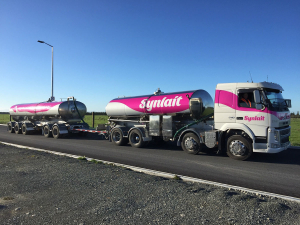
Synlait has swung to second-half profit as operations stabilise, but the dairy processor still posted a $75.4m annual loss.
LIC shareholders have elected a new North Island representative to the co-operative's Board, along with five representatives to its Shareholder Reference Group (SRG), following the company's Annual Meeting held in Invercargill.
Farmers across parts of Southland and South Otago are continuing to deal with difficult conditions after a prolonged run of wet weather, with pressure building around feed supply, stock management, pasture damage, farm infrastructure and everyday workloads.
Federated Farmers says it welcomes Labour's commitment to reviewing the Sharemilking Agreements Act, calling on other major parties to do the same.
For Canterbury dairy farmers Sian Meijer and Rick Wobben, wearable technology has become one of their most valuable on-farm tools - helping manage 1850 cows across an expansive, high-performing dairy operation while improving efficiency, mating outcomes and day-to-day decision making.
Fonterra has unveiled its annual results for the 2026 financial year, posting $27 billion in revenue and close to $20 billion returned to New Zealand farmer owners and unit holders.