Ah Tatua, You've Done It Again!
Waikato milk processor Tatua has again declared a record milk payout to farmer shareholders, leaving other processors in the dust.
 increase font size
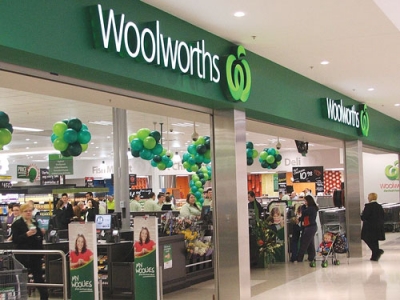 ACCC are alleging the supermarket giant abused its bargaining position when seeking payments from Tier B suppliers.
The Australian Competition and Consumer Commission (ACCC) has begun action against Woolworths.
ACCC are alleging the supermarket giant abused its bargaining position when seeking payments from Tier B suppliers as part of a strategy to reduce its profit shortfall in December 2014.
It is not yet known whether any dairy companies were targeted because, according to the Statement of Claim lodged by the ACCC, Woolworths had no accurate written record of which suppliers were approached, which suppliers agreed to make payments, how much money they contributed or on what basis the suppliers agreed to make the payment.
Fonterra and other Australian dairy companies supply Woolworths.
The ACCC alleges that Woolworths management approved a scheme in which Woolworths sought to obtain payments from a group of 821 'Tier B' suppliers – broadly defined as a group of non-market leaders in their category – to its supermarket business.
"Woolworths' category managers and buyers contacted a large number of the Tier B suppliers and asked for 'Mind the Gap' payments from those suppliers for amounts (ranging) from $4291 to $1.4 million, to "support" Woolworths. Not agreeing to a payment would be seen as not "supporting" Woolworths," the ACCC said in a statement.
"The ACCC alleges that Woolworths did not have a pre-existing contractual entitlement to seek the payments, and either knew it did not have or was indifferent to whether it had a legitimate basis for requesting a 'Mind the Gap' payment from every targeted Tier B supplier."
The allegations claim Woolworths sought about $60.2 million payments from the suppliers, expecting that while many suppliers would refuse to make a payment, some suppliers would agree. Woolworths ultimately captured about $18.1 million from these suppliers, according to the ACCC.
ACCC chairman Rod Sims said the 'Mind the Gap' payments were "unconscionable in all the circumstances".
A common concern raised by suppliers relates to arbitrary claims for payments outside of trading terms by major supermarket retailers.
It is difficult for suppliers to plan and budget for the operation of their businesses if they are subject to such ad hoc requests.
The ACCC is seeking injunctions, including an order requiring the full refund of the amounts paid by suppliers under the 'Mind the Gap' scheme, a pecuniary penalty, a declaration, and costs.
The proceedings follow broader investigations by the ACCC into allegations that supermarket suppliers were being treated inappropriately by the major supermarket chains.
In a statement, Woolworths said it had been fully cooperating with the ACCC during the course of the investigation.
"We believe our conduct was consistent with Australian and international industry practice to engage regularly with suppliers over product and category performance.
"Woolworths believes in working cooperatively with suppliers.
"Woolworths was the first major supermarket to agree to sign the Grocery Code of Conduct and is currently implementing the Code across its business."
Woolworths has until February 15 to submit its defence, with mediation between the parties to start in July.
Waikato milk processor Tatua has again declared a record milk payout to farmer shareholders, leaving other processors in the dust.
Fonterra has unveiled its annual results for the 2026 financial year, posting $27 billion in revenue and close to $20 billion returned to New Zealand farmer owners and unit holders.
Fonterra Co-operative Group has confirmed the independently assessed candidates standing for election to its board in 2026.
Fonterra has revised its Farmgate Milk Price forecast for the 2026/27 season, lifting the midpoint and narrowing the range on the back of improving global dairy commodity prices.
Outgoing Fonterra Co-operative Council chair John Stevenson says that it has been a privilege to represent the co-op's farmer shareholders.


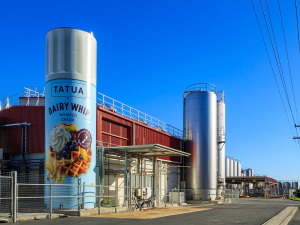
Waikato milk processor Tatua has again declared a record milk payout to farmer shareholders, leaving other processors in the dust.

A Labour-led Government won’t be bringing back the controversial freshwater rules of 2020.
National’s much-touted free trade deal with India featured in the Rural Issues Debate at Mystery Creek, Hamilton on Wednesday night.
New Zealand's 2026-27 freshwater fishing season has opened, with anglers encouraged to head to rivers and lakes over the coming days as conditions look favourable across much of the country.
Central Otago District Council (CODC) has voted against a plan to spread treated sewage sludge from Cromwell and Alexandra on farmland near Lauder, a decision Federated Farmers says reflects strong opposition from rural residents.
Pāmu has released its FY26 Integrated Annual Report, reporting a Net Operating Profit of $113 million, more than double the $49 million recorded in FY25.