Rural Mobile Coverage Worse After 3G Shutdown, Survey Finds
Mobile phone coverage and reliability are deteriorating in rural areas, and farming families are bearing the cost, according to a Federated Farmers survey.
 increase font size
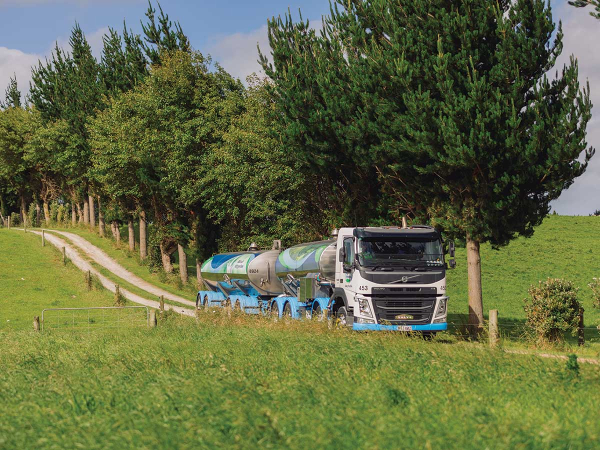 Most farmers in the South Island are having a good season.
Milk production is up nationally, despite drought conditions beginning to bite in some districts, according to the latest update from Fonterra.
In its February Global Dairy Update, Fonterra reports milk collections for January of 165.7 million kgMS, 4.6% above January last season. The rise is attributed to favourable weather conditions, despite soil moisture levels being low in places.
Federated Farmers' Mid-Canterbury dairy chair Nick Giera says most dairy farmers in his province have had a good season.
"It's not often you get increased production in a high milk price year. So that's been really pleasing for farmers.
"And combined with that there's nbeen some easing of interest rates. That's put farmers in a strong cash flow position."
Giera said that for Mid Canterbury, a mild winter and a kind spring set up the cows really well to peak in the spring and through the summer.
"Apart from an early dry period, we've hjad more mild weather, basically a La Nina type scenario where we've had reasonable rainfall so irrigation hasn't been tested too much.
"It's been good for the cows and they've been able to hold quite high levels of production."
Giera, who contract milks about 1400 cows at Ruapuna, near Mayfield, says the province is also now well set up for winter, with good feed levels on most dairy platforms.
"There seems to be plenty of winter feed out there and also winter crops are looking pretty strong," he said.
"I think most people are looking at a surplus at the moment."
In its Update, Fonterra said favourable weather conditions supported higher milk collections in both the North and South Islands. Overall, milk collections were above the prior season for the seventh month in a row. Season-to-date collectiions were 1,048.2 million kgMS, 3.6% above last season.
Fonterra said North Island milk collections in January were 90.3 million kgMS, 5.4% higher than January last season. The increase was mainly due to above average sunlight levels which supported pasture growth across the Waikato, despite North Island soil moisture remaining drier than average. Season-to-date collections were 624.1 million kgMS, 5.0% above last season.
South Island collections in January were 75.4 million kgMS, 3.7% higher than January last season. The increase was mainly due to improved rainfall which saw easing pressure on irrigation by raising water tables. Season-to-date collections are 424.1 million kgMS, 1.6% above last season.
New Zealand production increased 2.9% in January compared to the previous January, making an increase of 2.0% for the 12 months to January, compared to the previous year.
Meanwhile, dairy exports increased 8.6% or 29,935 metric tonnes, in January compared to the same period the year prior.
The increase was mainly due to higher export volumes of Whole Milk Powder (WMP) and butter to China, and cheese to the UK, Japan, and South Korea.
Exports for the 12 months to January were up 0.8%, or 27,811 MT.
The increase was mainly due to higher export volumes of Milk Protein Concentrate (MPC) and Milk Protein Isolates (MPI), partially offset by lower export volumes of Anhydrous Milk Fat (AMF).
Mobile phone coverage and reliability are deteriorating in rural areas, and farming families are bearing the cost, according to a Federated Farmers survey.

Four candidates have been confirmed for two director positions on Fonterra’s board.
A record farmgate milk price and strong global demand is laying the foundation for continued growth of organic dairy farming in New Zealand.
Waikato milk processor Tatua has again declared a record milk payout to farmer shareholders, leaving other processors in the dust.
Central Otago District Council (CODC) has voted against a plan to spread treated sewage sludge from Cromwell and Alexandra on farmland near Lauder, a decision Federated Farmers says reflects strong opposition from rural residents.


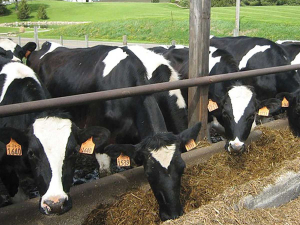
Veterinarians say changes to the code of welfare for dairy cattle provides a positive foundation for improved cattle welfare across the country.
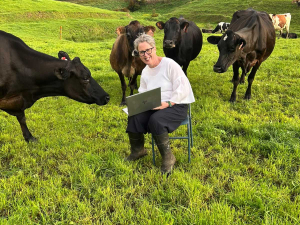
Today, 15 October, is the International Day of Rural Women, which recognises rural women’s contribution to farming, communities and the environment.
Global dairy giant Lactalis has integrated its Australian operations with the Mainland Dairy consumer business it acquired from Fonterra earlier this year.
After almost two decades of sharemilking, saving and building equity, Aaron and Marcia Flay this year realised their long-held dream of settling on their first dairy farm.
Good medium to long term prospects for NZ beef, especially in the US, has heighted the focus on various initiatives to capitalise on this situation.
High country stations, mixed sheep and beef farms, Māori-owned farms, corporates and family operations are among the nine commercial farms taking part in the Livestock Innovation Farming Transformation programme, known as LIFT.