Closing the Loop: Carbon Amendments & Vineyard Soils
New Zealand’s wine industry produces around 100,000 tonnes of grape marc waste annually, while the forestry sector generates over five million tonnes of wood residue.
 increase font size
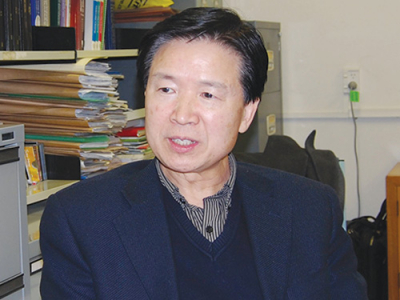 Professor Hong Di in his office at Lincoln University.
Authorities investigating the Havelock North water contamination incident need to follow the science, says Lincoln University professor of soil and environmental science Hong Di.
Despite interest groups such as Greenpeace pointing the finger at farming, no-one should jump to conclusions, he says.
Di would not be drawn into speculation on the cause, but says authorities need to get to the bottom of it.
“Unless they identify the source they cannot prevent it happening again.”
Di was recently named to head a new New Zealand-China Water Research Centre at Lincoln, with partners AgResearch, Landcare Research, Plant & Food Research, Lincoln Agritech Ltd and the University of Otago.
The centre will coordinate long-term work by New Zealand and Chinese scientists researching issues common to both countries, such as ground and surface water contamination by agrichemicals, and inefficient irrigation practices.
“One aim of the centre is basically to try to involve as many people as possible to engage in water quality and water quantity research,” Di told Rural News.
“The emphasis will be trying to mitigate nutrient losses to ground water or to surface water. The key to water quality is how you stop pollution in the first place. We know from Havelock North, once the water is polluted it is very hard to clean it.”
The water research centre is one of three NZ-China centres for which Science and Innovation Minister Steven Joyce announced funding in July; the other two are a food protection network based at Massey University and a non-communicable diseases centre at the University of Otago.
Di has a history of working with Chinese institutions, and will head a team working on groundwater hydrology, solute and water transport, irrigation management, nutrient losses to waterways, waste management, microbial ecology, water foot-printing and bioinformatics (using DNA profiling to identify soil microbe populations and what they do).
The Lincoln centre will get $1.25 million over three years to pay for work not bricks and mortar, Di says. Some of the money may be spent on infrastructure such as lysimeters and laboratories, but its main purpose is seed funding “to apply for other funding”.
The centre will coordinate the two countries’ work and tap into international funding. Di says China has a lot of environmental issues and its central and local governments are spending a lot on research which may benefit both countries.
“People are important. There will be exchange visits; we’ll be going to China to visit the leading teams over there, look at their research programmes, their infrastructure, their investment and so on to see how we can work with them, where we can participate in their research and how we can apply for joint funding.”
The centre’s priorities will be nutrient losses, nitrogen leaching and contamination of ground and surface water, to meet new stricter rules imposed by ECan and other regional councils.
Despite Lincoln University’s financial woes, Di believes the centre’s long-term future will be assured because of its independent funding.
New Zealand’s wine industry produces around 100,000 tonnes of grape marc waste annually, while the forestry sector generates over five million tonnes of wood residue.
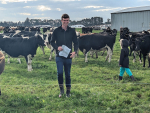
A young man just five years out of his Lincoln University degree already has his foot in the door of farm ownership, as equity manager of a large new dairy conversion now taking shape in Mid- Canterbury.
Analysis of decades of research has revealed the good farming pracrtice plays a critical role in reducing nutrient losses to improve freshwater outcomes.
A Lincoln University research fellow is working to safeguard grapevine species from extinction, using careful science and liquid nitrogen.
The South Island Dairy Event has announced Jessica Findlay as the recipient of the BrightSIDE Scholarship Programme, recognising her commitment to furthering her education and future career in the New Zealand dairy industry.

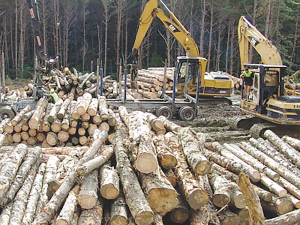
Forestry Minister Todd McClay has today congratulated the winners of the 2026 Growing Native Forests Champions Awards at Fieldays.

The Government has announced $60,000 to provide one-off grants of $1,000 to each of the 60 New Zealand Young Farmers (NZYF) clubs across the country.
New Zealand’s rural sector has once again demonstrated its generosity, with the second Rural Industry Leaders Dinner, Debate and Auction raising an impressive $400,000 for the Rural Support Trust.
There has been another twist to the Federated Farmers annual election fiasco.
Analysis of decades of research has revealed the implementation of good farming practices plays a critical role in reducing nutrient losses to improve freshwater outcomes.
Yesterday the Government used the opening of Fieldays to announce a major investment, as part of its Land Use Flexibility package, to support a more productive and sustainable future across six sectors including dairy.