Rabobank Launches HortPathways for Emerging Hort Leaders
Twenty-eight emerging leaders from across the horticulture sector spent two days last month learning valuable skills and connecting with industry experts.




 increase font size
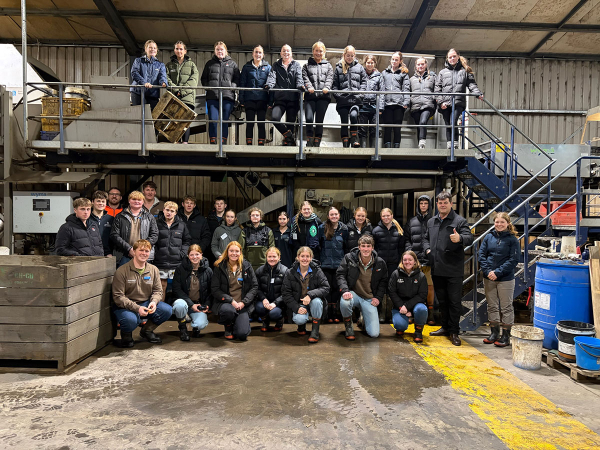 Visit to Oakley’s Premium fresh Vegetables – Robin Oakley second from right at ground level
Twenty five secondary school students from around New Zealand recently completed a three day residential programme designed to explore career opportunities across the food and fibre production supply chain.
Held last month, the Farm2Future educational camp, funded by Rabobank and run by Lincoln University, brought togethr Year 12 students from 20 schools nationwide.
During the programme, participants visited a range of agribusinesses throughout Canterbury, including Rakaia Island Dairy Farm, Oakley's Premium Fresh Vegetables, PGG Wrightson, Original Foods, Zentera Wool Company, and Foodstuffs.
Students also attended a presentation by Sudeley Angus and Sheep Stud, heard from a panel of young agribusiness professionals about their roles and career pathways, and toured Lincoln University to gain further insight into agricultural education.
Rabobank Upper South Island client council chair and Oakley's founder Robin Oakley said Farm2Future was originally developed by Rabobank and Lincoln University in response to a need to raise awareness of the diverse career opportunities available within New Zealand's food and fibre sector among secondary school students.
Twenty-eight emerging leaders from across the horticulture sector spent two days last month learning valuable skills and connecting with industry experts.

A 'tsunami' of milk from key exporting countries is winding down and this may be good news for New Zealand dairy farmers.
Mid Canterbury Federated Farmers arable chair, Bevan Lill, said Beef + Lamb NZ data indicated that for the last six years, the average arable return on investment was about 0.8% while inflation ran about 4% - so the average arable farm was going backwards at about 3% a year.
A warning for New Zealand seed and grain companies – be prepared for an exodus of farmers from the arable sector.
Gareth Hale is the current custodian of a 160-year legacy that saw his great grandfather dairying in Taranaki since the mid-1850s and grandfather dairying in the Waikato from the early 1900s.


OPINION: As election day looms, rural NZ seems to have pressed the pause button – held somewhat in limbo on an orange light.
Will drones be the answer to tackling the problem of wasp and hornet nests high up in trees and other inaccessible places?
Canterbury milk processor Synlait has come through tough times and is now ready to scale up from a stable base, says its newly confirmed CEO Leon Fung.
NZPork says a ham made in New Zealand is not necessarily made from New Zealand pork.
Rural Contractors NZ says proposed changes to land transport rules for agricultural vehicles are a welcome response by the Government to out-of-date regulations which have seen members hit with huge fines.
With New Zealand’s greenhouse gas emissions in the spotlight, Auckland scientist Nathan Balasingham says there’s a better way to tackle the problem than shrinking cow numbers or fertiliser usage.


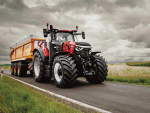

OPINION: The same mainstream media muppets that brought you Jacindamania in 2017 have been flat out pimping for the Opportunities…
OPINION: Your old mate reckons the atrocious way farmers in the UK are treated by their lords and masters in…