Fonterra FY26 Results: $9.69 Milk Price, $3.4bn Profit
Fonterra has unveiled its annual results for the 2026 financial year, posting $27 billion in revenue and close to $20 billion returned to New Zealand farmer owners and unit holders.
 increase font size

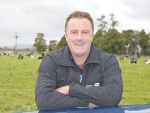
Cash invested in buying units in the Fonterra Shareholders' Fund will go to farmers selling the economic rights of their shares – not Fonterra, says chairman Henry van der Heyden.
"During the recent farmer meetings, it has been suggested that the purpose of Trading Among Farmers (TAF) is to raise capital," he says.
"While debate on TAF is welcome, the misconception that TAF allows new or outside capital into the co-op needs to be laid to rest.
"All our capital will continue to come from our supplying shareholders based on milk supplied. TAF enshrines this principle."
Van der Heyden says the purpose of TAF is not to obtain new capital, but simply to remove redemption risk from the co-operative.
"Removing redemption risk has the added benefit of creating permanent capital on Fonterra's balance sheet, but it's not new capital and certainly no new capital is coming from outside investors."
He says the new Fonterra Shareholders' Fund allowing investors to buy units linked to the performance of Fonterra's shares will not provide capital for the cooperative.
"That capital will go to farmers selling economic rights of those shares to the fund," he says. "It's unlocking new capital for farmers – not for Fonterra – and farmers can choose to use it or not as they see fit.
"The fund is simply to ensure sufficient liquidity in the Fonterra Shareholders' Market in which farmer shareholders – and farmer shareholders alone – can trade their shares," says van der Heyden. "Non-farmer capital invested in the fund – which is separated by a firewall from Fonterra – is not part of Fonterra's capital structure.
"Investors in the fund are putting no money into Fonterra, nor do they obtain any voting rights or control over Fonterra shares."
Van der Heyden says the cooperative's earlier capital structure debate, some five years ago had sent a clear signal to the board that farmers want to ensure capital in the co-op remains tied to milk supplied, and that farmers do not want outside capital injected into the business.
"This is precisely what TAF enables," he says. "It's a strengthening of our traditional capital structure.
"We're fortunate that growth in milk supply and retentions gives us sufficient capital growth as a business, and that's the way it will stay."
Van der Heyden says farmer meetings around the country to discuss TAF had been well-attended and he was pleased with the level of debate and engagement.
TAF is an important step for the cooperative and it is important decisions made by farmers were based on accurate information and not misconceptions, he says.
"It's why we've provided as much information as we can about the TAF proposal and the findings of our due diligence advisors," he says.
Fonterra has unveiled its annual results for the 2026 financial year, posting $27 billion in revenue and close to $20 billion returned to New Zealand farmer owners and unit holders.
Fonterra Co-operative Group has confirmed the independently assessed candidates standing for election to its board in 2026.
Fonterra has revised its Farmgate Milk Price forecast for the 2026/27 season, lifting the midpoint and narrowing the range on the back of improving global dairy commodity prices.
Outgoing Fonterra Co-operative Council chair John Stevenson says that it has been a privilege to represent the co-op's farmer shareholders.
OPINION: It seems Canterbury processor Synlait is still in the doldrums.


Federated Farmers says it welcomes Labour's commitment to reviewing the Sharemilking Agreements Act, calling on other major parties to do the same.
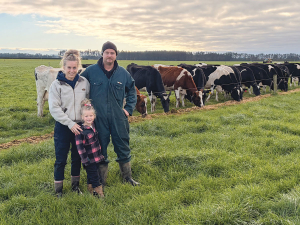
For Canterbury dairy farmers Sian Meijer and Rick Wobben, wearable technology has become one of their most valuable on-farm tools - helping manage 1850 cows across an expansive, high-performing dairy operation while improving efficiency, mating outcomes and day-to-day decision making.
Fonterra has unveiled its annual results for the 2026 financial year, posting $27 billion in revenue and close to $20 billion returned to New Zealand farmer owners and unit holders.
The first major update to the Dairy Cattle Code of Welfare in more than a decade has been released, marking what DairyNZ describes as an important step in ensuring animal welfare standards continue to evolve alongside scientific evidence and on-farm realities.
Ravensdown shareholders have elected Jane Montgomery and Kate Acland to the Ravensdown Board for three-year terms, following a closely contested director election.
Federated Farmers says new legislation replacing the Resource Management Act will cut red tape, unlock investment and help grow New Zealand's export-led economy, after the Planning Bill and Natural Environment Bill passed their third reading in Parliament yesterday.