Rural Vote Debate on Q&A: Substance or Just Platitudes?
It was billed as a chance for all the political parties to woo the rural vote, but question marks hang over just how effective this was.
 increase font size
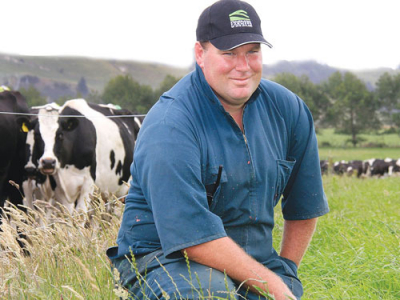 Andrew Hoggard.
Heavily indebted farmers may be under pressure from their banks to sell up on the rising farm market to get out of their debt.
“Reading between the lines, it might be a case of the banks suggesting to the perennial strugglers that it is time to sell up,” said Federated Farmers vice-president Andrew Hoggard.
Banks may have been waiting “until things are looking rosy” on farm prices before encouraging customers to look at their options.
Hoggard was commenting on the May 2018 Federated Farmers’ Banking Survey, which showed that more farmers are feeling under financial pressure, and are less satisfied with their banks.
The proportion of farmers reporting “undue pressure” from their banks has also risen.
The twice-yearly survey drew 1004 responses, more than double those in the last survey in November 2017.
While Hoggard noted that “a helluva lot” of farmers were still satisfied with their banks, the number ‘very satisfied’ or ‘satisfied’ has fallen from 81% to 79% since November. Sharemilkers, especially, dropped markedly, to 68.5% satisfied, down from 77%.
Perceptions of ‘undue pressure’ were up from 8.1% in November to 9.6% in May. The increase was mainly in dairy, especially sharemilkers: their perceptions of undue pressure rose from 9.7% to 13.5%, although that was still lower than the one in five reported in 2016.
The average mortgage in farming has fallen in the last six months, but for dairy it was up from $4.6 million to $5.1m -- the highest since the surveys began in August 2015.
“We need to be careful interpreting these figures,” said Hoggard. “It may just reflect the profile of those who took part in the May survey compared to November participants.
“But it’s a fact that dairy holds two-thirds of the total agricultural debt of about $61 billion, and a growing proportion of that dairy debt is held by highly indebted dairy farms.”
Hoggard said dairy debt has been discussed continually in his time at the top of Federated Farmers. “The Reserve Bank has been talking about it for a good number of years.”
New Zealand farm debt is high by international standards but the climate is pretty settled and farms generally have good systems.
“Part of their risk mitigation in Australia is they don’t carry much debt, so when a big drought hits they are able to buffer themselves to a degree.”
The Reserve Bank, in its six-monthly Financial Stability Report this week, continues to regard dairy debt as a financial stability risk.
“On the positive side,” said Hoggard, “the Reserve Bank observed that better and more stable dairy prices mean most dairy farms are currently profitable, allowing some farms to repay some debt.
“But it warned that dairy farming remains highly indebted and vulnerable to any future downturn in dairy prices. It identified Mycoplasma bovis as an emerging risk that has potential to negatively impact productivity and profitability, and noted that dairy faces long-term challenges including the impact of response to environmental concerns, such as stricter regulations.”
It was billed as a chance for all the political parties to woo the rural vote, but question marks hang over just how effective this was.
There's been widespread support from the primary sector for the Government's announcement on changes to freshwater farm plans that come under the Natural Environment Bill, which is now set to replace the existing RMA.
A pause on Waikato Regional Council's (WRC) plan change that sets new freshwater rules for farming could be announced in the coming weeks.
New Zealanders are being urged to be alert following a confirmed positive case of H5 bird flu this week.
OPINION: Farmers are being put on notice by the Green Party.


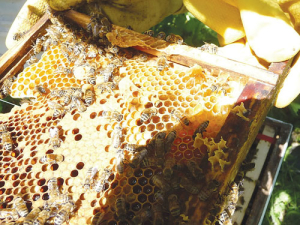
New Plymouth-based Manuka honey exporter Egmont Honey has completed its acquisition of Taihape beekeeping business Tweeddale's Honey, with settlement finalised on Friday, 18 September.

Westpac NZ is calling on farmers and growers to start preparing now for the possibility of a dry summer, as likely El Niño conditions raise the risk of drought across parts of the country.
Fonterra Co-operative Group has confirmed the independently assessed candidates standing for election to its board in 2026.
Fonterra has revised its Farmgate Milk Price forecast for the 2026/27 season, lifting the midpoint and narrowing the range on the back of improving global dairy commodity prices.
New Zealand's citrus growers were challenged to build their future on the value embedded in their fruit rather than the volume they produce, at Citrus New Zealand's annual gathering in Gisborne on 17 September.
Leading John Deere technicians and apprentices from New Zealand and Australians were recognised at the recent sixth annual JD Technician of the Year Awards, held in Brisbane.