Waves bye, bye to birds
Alpine Buildings, Timaru, claims to be New Zealand's first company to make complete kitset buildings and is well known for developing a bird-proof rafter called Zero-Bird-Perch.
 increase font size
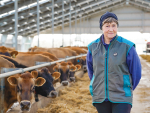
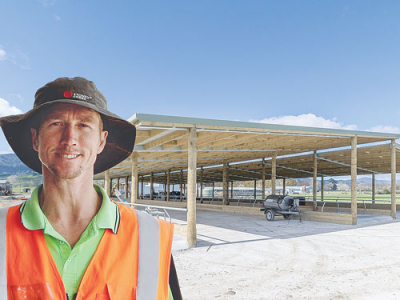 Builder Richard Harden.
Coromandel builder Richard Harden says farmers looking at a shelter for cows should take a look at Alpine Buildings.
He says the bird-proof clearspan sheds from Alpine are fast and easy to install.
The company supplies a large range of high-quality structures to farmers and contractors like Harden.
Located in the Thames area, Harden specialises in rural construction and says he does fencing and farm sheds over 90% of the time.
In 2018, a client approached him with the idea of building a herd home and covered feed pad to improve his cows’ welfare and adhere to new regulations that were being introduced at the time.
Taking only 3 months from initial design to delivery, Alpine Buildings supplied a 22m wide by 60m long structure using their unique bird-proof steel rafter system.
“The practical design of two adjoining lean-tos with overhangs on the ridge and sides gave ample protection from the elements while allowing room for feed-out lanes in the centre and on the sides of the shed.
“The new home will hold the cows in all seasons – They can come in off the paddock of their own free will in the summer, and in winter they will mostly be kept off the paddock to reduce pugging.
“The feed pad is located close to other infrastructure including the calf shed and milking shed for on-farm efficiencies, and the ground is covered with rubber matting to keep the cows comfortable.”
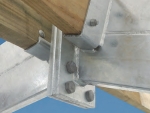
Harden says a key feature of the Alpine design is the bird-proof steel rafter system which eliminates the need for centre poles, making access and cleaning a lot easier. With joist hangers that are pre-welded to the hot dip galvanised steel rafters features include quality control, free delivery direct to the building site and superior after-sales support.
The timber poles used with the Alpine Buildings steel rafter design also eliminate the chance of rust, which is important in areas of high stock effluence. The bird-free rafter system means that birds do not roost or perch which reduces bird poop on the ground, in turn reducing health hazards in the feed pad environment.
Harden says all timber used by Alpine Buildings is stacked and dried before packing into kitsets, making it stronger and lighter.
“The quality of the timber was excellent, there was very little difference in sizes and no bent boards. There’s close to 300 purlins in here and we didn’t have to throw one away.
“The obvious stand-out feature for me is the steel rafter system; quick and easy, just chuck your purlins on the pre-welded cleats, bolt them up and onto the next one. It’s not going anywhere, it’s a very solid structure.”
Alpine Buildings, Timaru, claims to be New Zealand's first company to make complete kitset buildings and is well known for developing a bird-proof rafter called Zero-Bird-Perch.
The dairy is a significant investment and can have a major impact on milking efficiency and the comfort of cows and milkers.
A Manawatu dairy farmer has taken a major step to bridge the rural urban gap with the design of his new $1.5 million, 54 bail rotary dairy shed.


Waikato milk processor Tatua has again declared a record milk payout to farmer shareholders, leaving other processors in the dust.

A Labour-led Government won’t be bringing back the controversial freshwater rules of 2020.
National’s much-touted free trade deal with India featured in the Rural Issues Debate at Mystery Creek, Hamilton on Wednesday night.
New Zealand's 2026-27 freshwater fishing season has opened, with anglers encouraged to head to rivers and lakes over the coming days as conditions look favourable across much of the country.
Central Otago District Council (CODC) has voted against a plan to spread treated sewage sludge from Cromwell and Alexandra on farmland near Lauder, a decision Federated Farmers says reflects strong opposition from rural residents.
Pāmu has released its FY26 Integrated Annual Report, reporting a Net Operating Profit of $113 million, more than double the $49 million recorded in FY25.