Made in New Zealand looks at the wealth of design and manufacturing ability we have in the country, producing productive and cost-effective products for the agricultural sector.
This week Mark Daniel takes a closer look at Agmax Industries Limited, catching up with Paul Whitley, managing director & owner at their East Tamaki, Auckland base.
When was the company founded, by whom and why (was it to solve a problem or market a product)?
Agmax Industries was founded 33 years ago by the then director, Paul Martin, with a plan to create an alternative to the traditional retailer and sales rep approach, to provide high quality products at fair prices, delivered direct to the farm.
Where is the business located and how many people are employed?
Agmax manufacturing, distribution and administration operates from a single site at East Tamaki, Auckland, employing a team of 10 people.
What are your key products and which markets do they serve?
We manufacture and distribute direct to the dairy farming industry nationwide, concentrating on dairy hygiene and animal health products including liquid and powdered acid and alkali detergents, teat sprays, emollients and bloat products. All our products are MPI and ACVM approved or licensed, made in our GMP registered manufacturing plant.
Our rigorous quality assurance programme ensures every product we make is tested and meets the required quality assurance standards, featuring maximum concentration and a 100% money back guarantee.
Are your products unique? If so, what are the four key benefits? If not unique, what are the four unique selling points?
Innovation and low costs have always been our key drivers, and have helped us made a real difference to farmers for convenience of use and an improved bottom line. Back in 1993, we were the first to introduce dairy detergents in sachets, providing accurate premeasured doses, without the need for measuring, no spills and no under or over-dosing. They also retained their full product strength without oxidation so typical of loose product options, while the 100g/100l dilution rate, compared to competitors more typical 150g/100l, makes our product more cost-effective.
We also launched Teatsweet, a powdered teat-spray in a sachet, each sachet making 20l of readyto- spray solution, with the added benefit of adding emollient when needed during the cold, wet months of the year. Agmax Vat Cleaner, an alkali detergent that works in cold water, was also another first, with no more scrubbing – just apply it to the vat wash and rinse it off.
More recently, we introduced Megastart, a high energy drench for nutritionally stressed cows post calving, offering a powdered formulation that doesn’t separate in storage, unlike liquid alternatives.
Looking at an everevolving market, what changes have you made to improve the service you offer?
We are constantly working on cost-effective deliveries on farm, whilst meeting the transport regulations and requirements.
What has been the company’s greatest success since its formation?
Providing dairy farmers with a direct to farm, lowcost alternative compared to the more expensive traditional retail channel. We also pioneered education on milk quality, being the first company to create a milk quality handbook. This helped farmers to understand their milking plants and vats, alongside the use of acid and alkali detergents to clean milk deposits. It also offered the ability to investigate their own milk quality grade, how to rectify them, then control any issues without waiting for an external dairy inspector.
 |
|---|
|
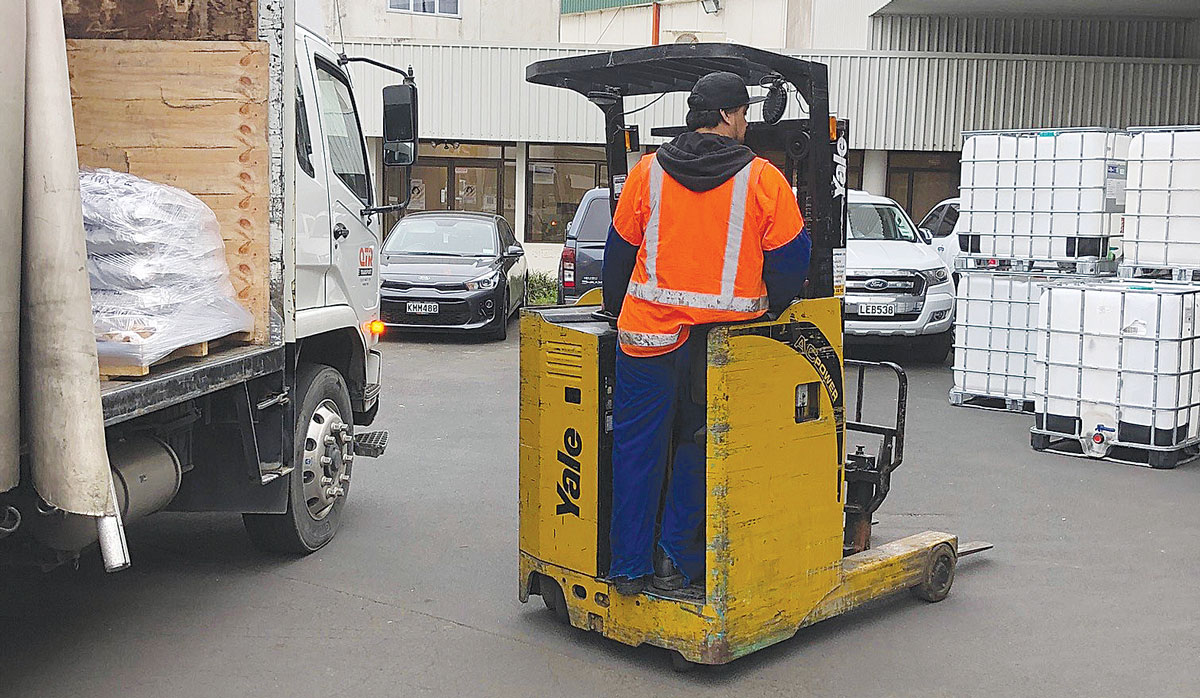
Agmax manufacturing, distribution and administration operates from a single site at East Tamaki, Auckland.
|
What has been the biggest “oh bugger” moment or the steepest learning curve?
The arrival of Covid- 19 was definitely a real “oh bugger” moment, that left us wondering how we would source our supplies of raw materials in time for manufacturing, alongside ensuring we fulfilled our customers’ orders.
If you were approached by someone looking to start a business, what would be your three key pieces of advice?
Is there a market? Are there any barriers to entering that market? Can the proposed business offer something different or unique from the current status quo?
Where do you see the company in the next three, five and ten years?
Growing, while working through the increasing burden of yet more regulatory requirements.