Green but not much grass!
Dairy farmers in the lower North Island are working on protecting next season, according to Federated Farmers dairy chair Richard McIntyre, who farms just north of the Horowhenua township of Levin.
 increase font size
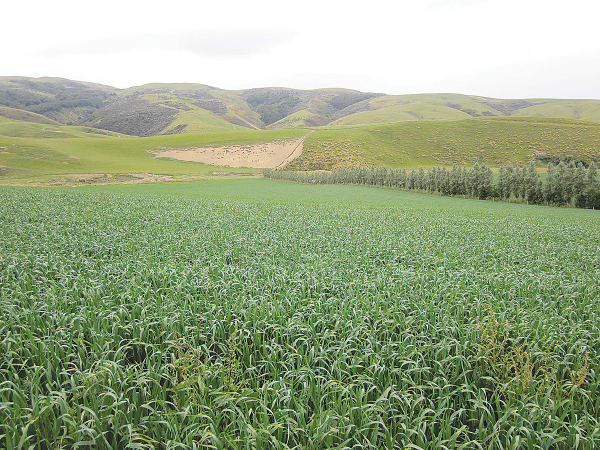 Catch crops like oats and cereal benefit the bottom line and environment.
The purpose of a catch crop is to increase annual dry matter production, to take up soil mineral and urine nitrogen and to reduce the risk of leaching or runoff.
The key attributes of catch crops when following autumn or winter grazed crops are that they: are cold tolerant, winter active and have fibrous deep root systems capable of removing nitrogen at depth.
Catch crop benefits vary depending on weather conditions, particularly during establishment, with direct-drilling or light pre-drilling cultivation being recommended methods where possible to minimise nitrogen mineralisation.
The gross margins (revenue minus costs) and cents/kgDM of catch crops can be used to compare different crops.
The numbers will vary depending on the yield and how the crop fits into an individual farm system, which is influenced by catch crop sowing date, the timing of feed requirements and the sowing date of the following crop or pasture.
The Forages for Reduced Nitrate Leaching (FRNL) research trials gross margin and c/kg DM varied from $173/ha to $1263/ha and 8.1 c/kg DM to 15.3 c/kg DM respectively.
FRNL ran trials of different crops comparing crop nitrogen uptake and residual soil nitrogen as indicators of the risk of nitrate leaching.
A variety of species or combinations can be used as catch crops. Consider the below when selecting species or combinations thereof:
Establishment opportunities of the catch crop; what is the usual soil temperature at the time of planting and can heavy machinery normally access the paddock at that time of year?
Main crop/regrassing planting date; consider effect on potential yield of the following crop or pasture.
Ability to fit into the farm system, e.g. planned crop rotation, harvesting or grazing dates, end use of land planted (permanent pasture or crop), use of catch crop:
Examples of Catch Crops
Visit www.dairynz.co.nz
Dairy farmers in the lower North Island are working on protecting next season, according to Federated Farmers dairy chair Richard McIntyre, who farms just north of the Horowhenua township of Levin.
Up to 50 jobs look likely to be axed at Irish mixer wagon manufacturer Keenan, who have weathered the post-Covid storm with some difficulties that saw production and profitability compromised.
Brett McIntosh of the Palmerston North-based family agricultural engineering firm McIntosh, says their Multi-4 and 5 bale feeders offer a major leap in productivity if you need to lift and feed 10 or more bales daily.
While we have become accustomed to vehicle manufacturers offering alternative fuel sources for its ranges, other than New Holland with its commercially available T6 Methane tractors, the agricultural landscape is firmly fixated on diesel power.
Norwood has imported and distributed Kuhn machinery since 2007, but until now the brand has only been sold through three of Norwood’s 21 dealerships.


Farmgate lamb prices are down by 8%, beef cattle by 4.5% and farm expenditure up by 4.2%.
Kiwifruit growers are watchful but remain optimistic as concerns around the potential effects of the El Niño weather pattern this season.
Almond hulls sourced from Australian orchards may have the potential to help New Zealand cows reduce emissions, boost milk yield and lower input costs.
Striking a balance between meeting the needs of industry to speed up approval time for products but on the other hand ensuring that risks are properly assessed.
Surprised, humbled and quite thrilled. That’s the reaction of James Allen, one of the founding partners and now chief executive of AgFirst, on being made a life member of the Institute of Rural Professionals.