While we have become accustomed to vehicle manufacturers offering alternative fuel sources for its ranges, other than New Holland with its commercially available T6 Methane tractors, the agricultural landscape is firmly fixated on diesel power.
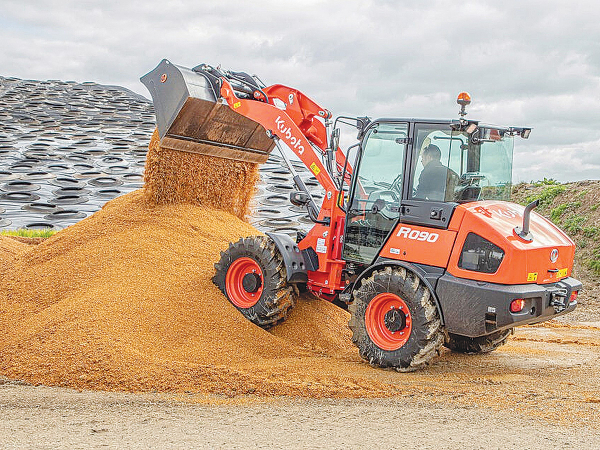
With the realisation that current battery technology does not lend itself to agricultural situations, tractor manufacturers have looked a little more closely at alternative fuels to power their compression ignition (CI) engines. Kubota is the latest to announce that its new tractors are suited to running on hydrotreated vegetable oil (HVO).
The company has also confirmed that it is possible for its new dieselengine tractors to run on both HVO and GTL (gas to liquid) which will contribute to a lower carbon footprint for Kubota IC engines.
As a manufacturer of industrial engines, tractors, grounds care and construction equipment, Kubota has realised that HVO, which is synthesised from vegetable oil and fat, is likely to become increasingly popular due to its environmental benefits. GTL meanwhile is synthesised from natural gas, therefore its contribution to reducing total carbon emissions is somewhat reduced.
Having undergone extensive trials to evaluate any effect on the performance and achieving a clean bill of health, Kubota has confirmed that that any paraffinic fuel that complies with the European standard EN15940 is suitable for use across its range of diesel engines. The company also notes that there is no need to flush fuel tanks or change filters, as HVO and GTL, meeting the EU standard, are safe to mix with common diesel.
There are changes to existing maintenance intervals or warranty conditions when using these fuels, although operators may notice a slight degradation in engine performance when using them due to the lower energy density of paraffinic fuels, compared to diesel.