Turning data into dollars
If growing more feed at home adds up to $428 profit per tonne of dry matter to your bottom line, wouldn’t it be good to have a ryegrass that gets you there quicker?
 increase font size
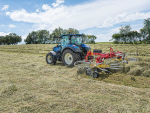
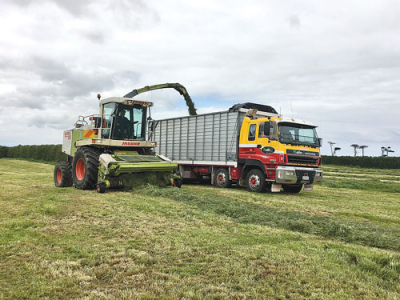 Silage making on a Taranaki farm last week. Photo: Matthew Herbert.
High-quality silage is a stable feed made from high-quality pasture.
Pasture is preserved in the absence of oxygen by a high-quality fermentation to minimise any loss of feeding value.
It is impossible to produce high-quality silage from low-quality pasture, no matter how good the fermentation is.
Both the quality of the ensiled pasture and the quality of the fermentation must be considered.
With well-preserved silage, losses in feeding value during fermentation will be small, and the final silage will be only slightly lower in feeding value than the original pasture.
The quality of the fermentation tells us how well the quality of the original pasture has been preserved in the silage.
The lactic acid produced during fermentation causes a decrease in pH. A low pH will prevent an unwanted butyric fermentation, which reduces both the feeding value and palatability of the silage. Low DM silage needs a lower pH than high DM silage.
fLow values for ammonia-N indicate minimal breakdown of protein in the silage, usually well-preserved because pH has fallen quickly to a low level in the silage.
High concentrations of lactic acid are seen in well-preserved silage. High levels of butyric acid are found in poorly preserved silage and indicate that an unwanted butyric fermentation has occurred.
Top quality
Silage quality can best be ensured by:
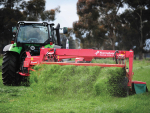
- Gathering several swaths into a windrow for improved baler performance
- Producing uniform box shaped windrows that match the baler’s pick-up capacity
- Making firm, well shaped bales that are easier to enclose and store
- Bale chopping increases the density of the bales (fewer bales/ha so reducing costs)
- Chopping also reduces the air in each bale and releases sugars, both of which improve speed of fermentation.
Wrapping
Wrapping silage quality can best be ensured by:
- Wrapping promptly — within 2-4hrs of baling
- Wrapping close to the stack rather than transporting wrapped bales from the field to reduce chance of physical damage (this also prevents soil compaction in the field)
- Using six layers of wrap to improve sealing and to protect from physical damage. IGER research has identified big increases in lysteria associated with inadequate wrapping
- Using green or white wrap has been shown to reduce the temperatures of stored bales and to subsequently reduce the amount of moulding.
If growing more feed at home adds up to $428 profit per tonne of dry matter to your bottom line, wouldn’t it be good to have a ryegrass that gets you there quicker?
Grass silage is pickled pasture, preserved through the conversion of its sugars into lactic acid by bacteria.
As I write this article, we have just had our first frost in the Waikato, a change in weather signalling that winter is upon us.
When buying supplementary feeds, farmers need to consider the entire package on offer – service, freight and all the components in a feed mix – not just focus on the price of the cheapest component – palm kernel meal, according to J. Swap Stockfoods sales manager Joe Hardman.
Two high producing Canterbury dairy farmers are moving to blended stockfeed supplements fed in-shed for a number of reasons, not the least of which is to boost protein levels, which they can’t achieve through pasture under the region’s nitrogen limit of 190kg/ha.

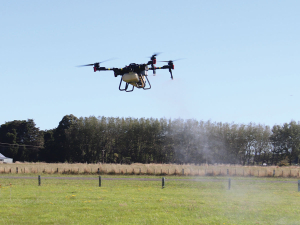
OPINION: David Seymour and James Meager's plan to make it easier for farmers and orchardists to operate drones can best be described a 'courageous' move.
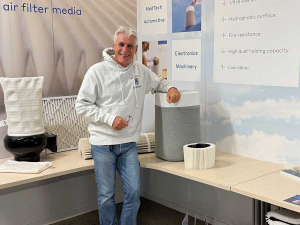
New Zealand wool is reaching new heights as air filtration companies move away from synthetic products to biodegradable alternatives.
Opuha Dam's ability to protect South Canterbury communities from major flooding has taken a significant step forward, with Opuha Water Limited (OWL) successfully commissioning a new outlet valve capable of releasing record volumes of water from the dam ahead of a weather event.
There's been widespread support from the primary sector for the Government's announcement on changes to freshwater farm plans that come under the Natural Environment Bill, which is now set to replace the existing RMA.
A partnership between state-owned enterprise Pāmu (Landcorp Farming Limited) and charity Meet the Need is putting more than quality New Zealand beef into food bank parcels this year.
The Opportunity Party has faced criticism during the election campaign that its policies are too urban-focused and offer little for rural communities.