Calf Shed Design: What Farmers Need to Get Right
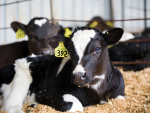
Clean and comfortable calf sheds help create a nurturing environment for calves, reduces the risk of disease and encourages high growth rates.
 increase font size
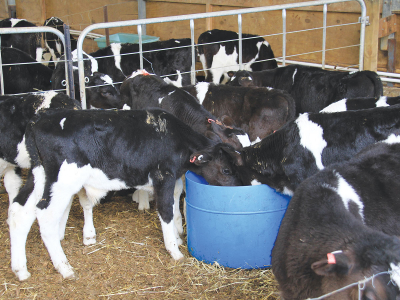
If you're buying or selling calves or milk, take these simple steps to reduce the risk of spreading Mycoplasma bovis and other diseases.
M. bovis is a bacterial disease that can cause serious illness in calves and adult cattle. DairyNZ says calves can contract the disease by direct contact with infected cattle or by consuming milk from infected cows.
About 80 to 90% of infected cattle show no clinical signs, making it nearly impossible to detect a cow suffering from M. bovis by looking at her.
Testing herds for M. bovis is complex, which means negative results are a good sign, but not definitive proof that a herd is completely free of the disease.
And M. bovis is shed intermittently by infected cattle. Shedding and clinical disease typically occur in times of stress, such as at calving.
It is important that every precaution possible is taken to prevent M. bovis from spreading. This includes precautions when buying or selling calves or milk, when it’s vital to take biosecurity practices and animal health history into account.
When buying calves, stock movements are the highest risk for spreading M. bovis. Buy them from as few sources as possible: deal directly with the source farm or via an agent.
Don’t hesitate to ask about any M. bovis test results available from the farm. Also ask if the farm has been subject to any M. bovis tracing by MPI.
Ask about the stock trading practices of the farm and also if all stock movement records are up to date and recorded in NAIT.
Get a picture of cow and calf health on the farm for the past two seasons, and use the pre-purchase checklist available at dairynz.co.nz/mbovis.
Avoid buying from saleyards because of the cattle mixing that occurs there. Buy only calves with NAIT tags and promptly record all movements.
Ask your trucker to avoid mixing calves with other cattle in holding yards or on the truck and keep bought-in calves isolated from your main group for seven days and monitor them for signs of disease.
Find a buyer now for your future weaned calves, if possible, and tell buyers about your efforts to reduce risk of M. bovis exposure.
Don't feed bad milk
Feeding infected milk is the second-highest risk of spreading M. bovis.
Milk at lowest risk of containing M. bovis bacteria comes in these forms: calf milk replacer powder, acidified milk, or pasteurised milk.
If you’re using milk replacer powder, order now to avoid problems with supply.
If you’re feeding whole milk, consider the following:
• Do not feed milk from cows under treatment for mastitis or other illnesses. This milk should be discarded. These cows are more likely to shed M. bovis into their milk than healthy cows.
• Acidification with citric acid to a pH 5.0 or below for at least eight hours will kill M. bovis, but below a pH 4.0 the milk will be unpalatable and the calves will refuse to drink it. DairyNZ’s recommended target is pH 4.5.
• Pasteurisation will kill M. bovis if the machine is working correctly and the proper procedures are followed. A pasteurising machine is a big expense.
• Addition of yoghurt to milk is a less reliable way to reduce the pH, as this process takes more time and is temperature dependent to get the culture growing. If the pH doesn’t drop below 5.0 for at least eight hours, M. bovis will not be killed.
Clean and comfortable calf sheds help create a nurturing environment for calves, reduces the risk of disease and encourages high growth rates.
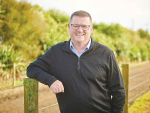
OPINION: It's no surprise that "world-class biosecurity" continues to dominate as the top priority for agribusiness leaders, holding the number one spot for the 16th consecutive year in KPMG's latest agribusiness report.
Giving calves the best possible start to life has been shown to boost growth and resilience.
Success in calf rearing is often measured by minimising health issues and achieving target weaning weights.
Compensation assistance for farmers impacted by Mycoplama bovis is being wound up.
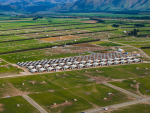
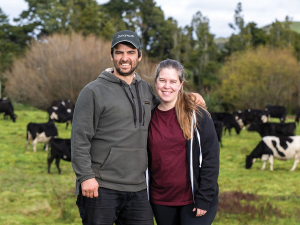
Signing up to a benchmarking tool is not about competition, but about improving collectively, says Ximena Puig and Alvaro Luzardo who are 50-50 sharemilkers at a 164-hectare (effective) dairy farm in Eketāhuna in the Lower North Island.

A leading British farming politician says he's impressed with the positive attitude of New Zealand farmers that he met during his recent trip here.
OPINION: With 10,500 dairy farms, New Zealand continues to punch above its weight around the world.
The Southern Dairy Hub (SDH), which runs a demonstration farm for South Island farmers, has a new general manager.
Esther Guy-Meakin has been announced as the new chief executive of the New Zealand Meat Board (NZMB).
According to a progress report on the Aotearoa Horticulture Action Plan (AHAP), New Zealand's horticulture sector is making real progress on the big issues facing growers.