New Zealand's overseas trading partners will soon increase their scrutiny of what happens on NZ farms affecting milk quality.
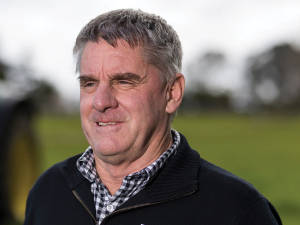
So says Ministry for Primary Industries chief assurance strategy officer Billy Jolly.
This is where the safety and quality of milk begins, and where market and consumer perceptions emanate from, he says.
"While the Government continues to work hard to open up new markets and create new value adding opportunities for our exports, NZ can't ignore current trends, especially those mandated by our trading partners for continued access into their markets."
Changes have been on the way for some time, and the current lower farm milk price will likely only slightly delay their implementation, he says.
Price recovery depends on maintaining and enhancing access as well as providing a platform from which greater value add products can be developed and sold.
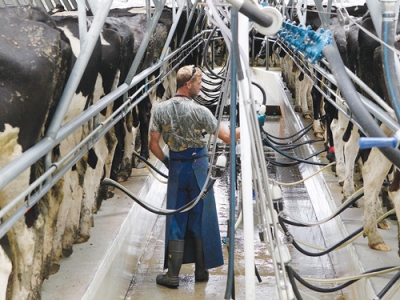
Changes could mean tighter requirements for farm inputs such as fertilisers, pesticides, veterinary drugs and animal feeds; environmental controls; more attention to animal welfare and milking hygiene; enforcement of clean, dry udders prior to milking; and stricter milk cooling requirements.
"There may also be new requirements for design, upkeep and operation of all aspects of the milking plant, including toilets and washing facilities; better sanitation regimes; and tighter water controls; and... enforcement of time and temperature requirements relating to milk cooling, collection, transport and receipt at processing facilities," he told the NZ Veterinary Association conference.
"Increased testing of the acceptability of milk at the point of receipt is also inevitable in the short term, be it for chemical residues, microbiological parameters or other qualitative criteria."
Heat treatment (pasteurisation) has always been the most important critical control point in milk processing and a tighter enforcement of the frequency of checks and reports by qualified heat treatment engineers is a condition of Grade A equivalence with the US.
He says after several years consultation, MPI is about to publish a comprehensive new infant formula processing standard. However, most processing facilities have already begun the necessary upgrading.
While major changes to Chinese regulatory requirements have caused a huge drop-off in the number of brands and formulations produced, the success of NZ's transition to the new standard can be judged by our relative resilience compared to that of other competing countries. NZ continues to get more processors, brands and formulations approved than any other country.
"As the complexity of the production supply chains increases, the ability to assure each and every component and be able to trace back and isolate any problem should it occur, is critical to staying in business," he says.
Furthermore this needs to be able to happen almost in real time, with appropriate interoperability between all companies in the supply chain and the ability to readily search and send comprehensive digital files to customers and regulators.
As more brands or higher value components are produced, the ability to further ensure the integrity and identity of these products becomes increasingly important so as to be able to protect against counterfeiting or threats of intentional adulteration.
"For the NZ dairy industry to continue to grow... we need to have a good story to tell -- importantly a story which allows our manufacturers to be able to extract a premium," he says.
"Value added processing is only part of the story. Having enhanced food safety and quality assurance attributes that markets, customers and consumers can all value is the necessary foundation for further growth."
NZ production and processing and the integrity of NZ regulatory controls will only come under increased scrutiny. "We have to ensure that our substance keeps up with the hype," he says.