DairyNZ's Tracy Brown Flags El Nino Risk for Dairy Farms
Most dairy regions around the country have had a pretty good season so far says Tracy Brown.
 increase font size
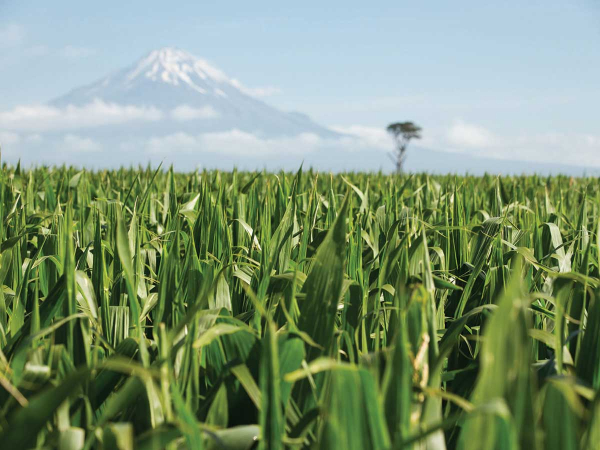 In many respects, maize silage acts as a form of feed insurance.
Walking around the Fieldays this year, expected most of the conversations to be about machinery purchases and farm infrastructure upgrades. Instead, one topic seemed to keep cropping up more frequently with farmers – the price of PKE.
As many farmers would have seen, this year’s Fieldays contract pricing was sitting around $389/t for July onwards. Once freight is added, many North Island farmers are likely to be paying somewhere around $420–430/t delivered to farm. That’s a significant increase on last year’s contract price and a timely reminder of just how quickly feed markets can change.
What interested me most, however, wasn’t the price itself. It was the conversations that followed.
Compared with previous years, there seemed to be a little more hesitation around how much PKE to contract and whether to commit to longer-term supply. This isn’t to suggest PKE won’t continue to play an important role on many dairy farms, it undoubtedly will. Rather, it felt like more farmers were taking the opportunity to reconsider where PKE fits within their overall feed strategy this season at the current price, and how it compares with alternative feed options.
When comparing supplements, it’s easy to focus on price per tonne. The reality is that a tonne of one feed is rarely equivalent to the same amount of another. Nutritional composition varies between products as does palatability, the amount that can be fed, likely pasture substitution rate and price.
Once the current price is converted to a dry matter basis and freight is included, palm kernel is approaching $470/tDM delivered. Depending on yield and growing costs, home-grown maize silage can often be produced for considerably less than this, while purchased maize silage may also compare favourably.
However, comparing supplements on price alone risks overlooking the importance of feed security.
We know pasture supply can vary considerably from season to season. Wet springs, summer dry, variable autumns and cold winters all influence how much pasture is grown and harvested. When pasture falls short of expectations, having already secured additional feed provides a level of certainty that simply can’t be measured in dollars per tonne.
This is where maize silage offers something different. Farmers have a much greater ability to influence both supply and cost. Crop area can be planned months in advance, feed can be contracted before harvest, and surplus silage can simply remain in the stack until it is required. If pasture growth exceeds expectations, it stays there. If a feed deficit develops, it is already on hand.
In many respects, maize silage acts as a form of feed insurance. It provides confidence that when pasture doesn’t deliver, decisions can be made around how best to utilise feed that is already on hand, rather than wondering whether additional feed can still be sourced at an acceptable price.
Perhaps the biggest lesson from this year’s Fieldays pricing isn’t that PKE has become more expensive. Rather, it is a reminder that feed prices, like milk prices, will continue to fluctuate. The most successful farm businesses don’t redesign their systems every time markets move. Instead, they develop robust farming systems that consistently harvest large quantities of high-quality pasture, grow additional feed as economically as possible and use purchased supplements strategically to complement, not replace their home-grown feed.
Whether the best supplement is PKE, maize silage or another feed source will depend on the individual farming system. Rather than asking, “Should I buy PKE?”, the better question is, “What feed will my herd require over the next 12 months, and what is the most economical and reliable way of securing it?”
Good feed planning isn’t about trying to predict where feed or milk prices are heading. It’s about designing a farming system that remains profitable as markets inevitably change.
With maize planting decisions only a few months away and supplement contract terms being considered, there is value in revisiting your annual feed plan. Sit down with your consultant or contact one of our Farm Systems Specialists for farm-specific advice. A changing market doesn’t necessarily require a change in system, but it is an excellent opportunity to confirm that your current feed plan is still delivering the most profitable outcome for your business.
Wade Bell is Genetic Technologies farm systems manager. Contact him at This email address is being protected from spambots. You need JavaScript enabled to view it.
Most dairy regions around the country have had a pretty good season so far says Tracy Brown.

When Simon Hales discovered triple drench resistance on his Weber farm, it was a catalyst to fast-track farm system change.
A new digital assistant is now helping Ballance Agri-Nutrients farmers speed up nutrient information and ordering.
OPINION: At Fieldays this year, one theme kept surfacing across the sector: global shocks are no longer something that happens “over there”. They are now translating quickly into local, farm-level impacts through increasingly complex and connected channels.
As the dust settles after Fieldays, we're once again reminded of the sheer volume of technology now available to New Zealand dairy farmers.



LIC shareholders have elected a new North Island representative to the co-operative's Board, along with five representatives to its Shareholder Reference Group (SRG), following the company's Annual Meeting held in Invercargill.
Farmers across parts of Southland and South Otago are continuing to deal with difficult conditions after a prolonged run of wet weather, with pressure building around feed supply, stock management, pasture damage, farm infrastructure and everyday workloads.
Federated Farmers says it welcomes Labour's commitment to reviewing the Sharemilking Agreements Act, calling on other major parties to do the same.
For Canterbury dairy farmers Sian Meijer and Rick Wobben, wearable technology has become one of their most valuable on-farm tools - helping manage 1850 cows across an expansive, high-performing dairy operation while improving efficiency, mating outcomes and day-to-day decision making.
Fonterra has unveiled its annual results for the 2026 financial year, posting $27 billion in revenue and close to $20 billion returned to New Zealand farmer owners and unit holders.
The first major update to the Dairy Cattle Code of Welfare in more than a decade has been released, marking what DairyNZ describes as an important step in ensuring animal welfare standards continue to evolve alongside scientific evidence and on-farm realities.