Lanaco and Blueair Launch World-First NZ Wool Air Filter
New Zealand wool is reaching new heights as air filtration companies move away from synthetic products to biodegradable alternatives.
 increase font size
 Niall Austin.
When Irish farmer Niall Austin lost a cow and calf during an unexpected difficult calving, he decided to act.
Believing the deaths could have been prevented if he had been there to help, Austin began looking for a solution. He wanted to avoid using an invasive device, believing instead that tail movement could help anticipate calving.
Four years of product development later, Moocall was launched commercially in Ireland in January 2015. The sensor is said to have won many design awards.
The device is to go on sale in New Zealand and Australia via au.moocall.com and through local distributors.
Non-invasive sensors connected to the cow’s tail detect when birthing is imminent, sending an SMS text message alert directly to two mobile phones. Moocall measures over 600 data points per second to determine the onset of calving, then sends the alert.
To date, Moocall has sold devices to 2500 farms in 16 countries and about 10,000 calves have been born using it.
After receiving the first text message the farmer will have on average an hour’s notice before the cow calves. Easy calvings may result in shorter notice periods and difficult calvings could generate a text two-three hours before; a second reminder text is sent one hour after the first text.
The calving sensor has an embedded smart m2m sim that can work over different networks, even on remote farms.
Austin says there can be black spots on some parts of a rural farm. “Our calving sensor can pick the strongest network to help ensure a text is delivered at the right time,” he says.
How many Moocall devices does a farmer need?
Austin says one device is adequate for a farm with up to 50 head. “Farmers know their stock and if they manage the placement of their device well, they can capture as many as six-seven calvings per week with just one device.
“Bigger farms may require more than one unit. Pedigree breeders may also benefit from more than one unit.
“Farmers are less likely to require notifications when the bulk of their herd is calving, as the herd tends to be more closely supervised at this time.”
Calling for help
Moocall devices are particularly valuable to farmers in the following circumstances:
New Zealand wool is reaching new heights as air filtration companies move away from synthetic products to biodegradable alternatives.

Generative AI in the workplace, trials in the field, and industry-relevant research took centre stage at this year’s Grape Days events in Central Otago, Hawke’s Bay and Marlborough.
Body Condition Score (BCS) is a critical element in managing the health and reproduction of the dairy herd.
Giving calves the best possible start to life has been shown to boost growth and resilience.
The first weeks of a calf's life quietly shape the future of the entire herd.



Fonterra chief executive, Richard Allen says being resilient has helped the dairy industry overcome extreme volatility in recent years.
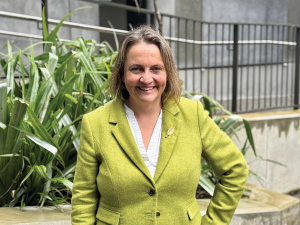
The head of the Ministry for Primary Industries (MPI) trade and international relations group says New Zealand is well-positioned to secure trade access and compete internationally as the world becomes more complicated, demanding and uncertain.
Northland farmer Greg Collins has taken over as chair of the Fonterra Co-operative Council.
The head of global dairy organisation, International Dairy Federation (IDF) is calling for accurate use of ‘dairy' term.
Be alert but not alarmed about El Niño. That’s the message from Professor Danny Donaghy, deputy head of the Massey University’s school of agriculture and the environment.
Farmers opposing rural trader Farmlands’ investment in AgriZeroNZ are warning the co-operative board not to brush away their concerns.