BVD Control Begins Long Before You See A Problem
Bovine Viral Diarrhoea (BVD) is sometimes viewed as a dairy industry issue, but the reality is that the disease can have serious consequences for beef breeding herds as well.
 increase font size
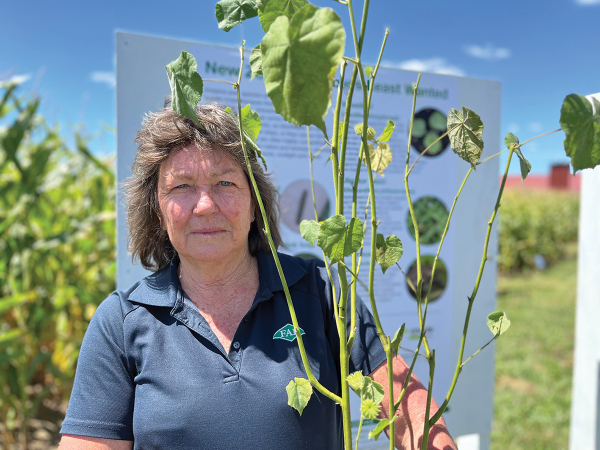 North Island velvetleaf co-ordinator Sally Linton warns that velvetleaf can decimate the New Zealand cropping sector.
A recently held arable field day in the Manawatu brought with it a timely reminder to be on the lookout for velvetleaf incursions.
Classified as an unwanted organism under the Biosecurity Act, the invasive weed can produce up to 30,000 seeds that can survive for 50 years, while statistics note that, uncontrolled, it has the potential to reduce yields by up to 70%.
With the current maize planting regime under way in the North Island, disturbed soils offered an ideal environment for what may have been long dormant seeds to germinate.
North Island velvetleaf co-ordinator Sally Linton reminded growers that given the weed's potential to decimate the New Zealand cropping sector, the economic "ripple effect" could affect the dairy, food production and export sectors.
"Fighting velvetleaf is a shared responsibility, that everyone needs to be involved with, including the grower, their neighbours, contractors and seed merchants," said Linton.
An annual weed that is typically active between October and April, the invasive broad-leaved weed has been identified in over 100 North Island properties, largely in the maize crops of Auckland and the Waikato. Of particular interest to the assembled growers were 13 known incursions in the Horizons region, likely occurring on the arrival of fodder beet to the area following the wider 2016-17 fodder beet incursion in the South Island.
That general incursion occurred in Southland, Otago and Canterbury, traced back to Italian fodder beet seed, imported to feed the growing interest in fodder beet as a winter feed crop.
Emerging as a seedling, the weed quickly matures by aroun 100 days, identified by large heart-shaped leaves, buttery yellow flowers of about 3cm across and the eventual arrival of distinctive black seed pods of 2.5cm diameter, made up of 12-15 segments. Of particular concern is the fact that a single mature plant, that might grow to 1.2 to 1.5 metres high, can produce up to 30,000 seeds that can survive for up to 50 years.
Linton said, "Looking at maize crops taken for silage, the seeds are not killed during the heating process of ensiling. Indeed, the use of feed pads, that in turn lead to feed waste and effluent washing, means that viable seeds can easily be spread over a wide area of a property, without realising."
Linton suggested that anyone buying-in silage, should be inspecting source crops ahead of harvesting and confirm with suppliers that the property was velvetleaf-free. They should also confirm from harvesting contractors whether they had worked at infected properties, and if this was the case, were up to speed with appropriate hygiene practices, before moving to the next job.
As part of the monitoring programme, regional councils are funding inspections, undertaken by Linton in the North Island, while also being assisted by a highly trained detector dog. The detector dog, Wink, was generally used to inspect properties in Nov/Dec after emergence again in Jan/Feb, before harvesting commences.
"However, inspections by councils and with the dog are only to known incursions and where a suspected incursion maybe through tracing of machinery and crop movements," said Linton.
"You cannot insure against a biosecurity risk, so it's in all our interests to be proactive in getting on top of this problem. You also need to realise you cannot sell a crop from a property where seeding velvetleaf is present. If you do suspect an incursion, photography the suspected plant, mark its location and contact MPI via 0800-80-99-66, or your regional council."
Bovine Viral Diarrhoea (BVD) is sometimes viewed as a dairy industry issue, but the reality is that the disease can have serious consequences for beef breeding herds as well.

Election years are always a concerning time for farmers, according to DairyNZ chair Tracy Brown.
Testing confirms H5 bird flu in a single northern giant petrel, found dead on a remote Cape Palliser beach in the Wairarapa, says Dr Mary van Andel, the Ministry for Primary Industries' (MPI) Chief Veterinary Officer.
Bovine Viral Diarrhoea (BVD) is sometimes viewed as a dairy industry issue, but the reality is that the disease can have serious consequences for beef breeding herds as well.
Four years since it was first detected in New Zealand, researchers and growers now know much more about management of maize pest fall armyworm (FAW).


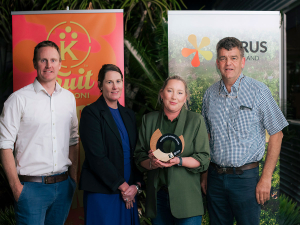
New Zealand's citrus growers were challenged to build their future on the value embedded in their fruit rather than the volume they produce, at Citrus New Zealand's annual gathering in Gisborne on 17 September.
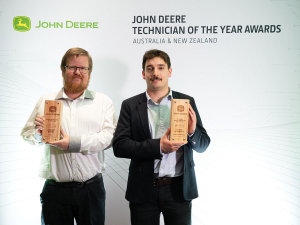
Leading John Deere technicians and apprentices from New Zealand and Australians were recognised at the recent sixth annual JD Technician of the Year Awards, held in Brisbane.
In Dacre, near Invercargill in New Zealand’s South Island, Bruce Dinnington is running a dairy operation unlike any other.
A free online platform aggregating governance vacancies across rural and regional New Zealand has been launched.
Environment Minister Nicola Grigg has announced details of a new rural plastics recycling scheme.
Agricultural drone operators say that a government decision to allow lower-risk drone work without certification won’t lower standards but drive innovation and efficiency.