Fonterra FY26 Results: $9.69 Milk Price, $3.4bn Profit
Fonterra has unveiled its annual results for the 2026 financial year, posting $27 billion in revenue and close to $20 billion returned to New Zealand farmer owners and unit holders.
 increase font size
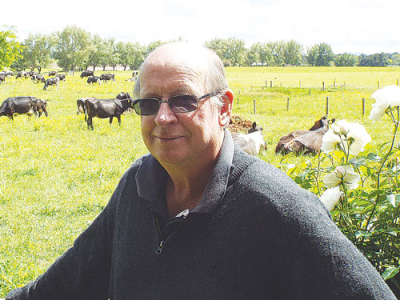 Waikato farmer Neil McLean.
In reflecting on the salary package/bonuses paid to Theo Spierings in the past season it is important to understand that the Fonterra business is owned by shareholders who empower a board to act on their behalf.
Any remuneration paid to Spierings and his management team are based on the rules set and agreed by the Fonterra board.
The Fonterra annual review notes the board engaged McKinsey to assist with these rules as it has international experience in creating positive culture change within large businesses.
Before shareholders shudder at the size of the bonuses paid, they must ask the following questions: did the board set the benchmarks at a reasonable level? And are the rewards for achieving those benchmarks out of alignment with the end point?
One would also ask, was the use of international benchmarks/rewards appropriate in a small trading economy like New Zealand and is it best practice to make bonus payments based on such a short time-span, when the culture and management changes are likely to remain in place much longer?
Theo Spiering’s base salary is $2.462 million plus a staff superannuation payment of $170,000. The remainder of the total salary package he received in the 2016-17 season reflects the performance of the business in the 2014-15 and 2015-16 seasons. Those performance incentives were split into short-term factors, such as return on investment, revenue and the co-op’s share of NZ milk production, to total $1.832m.
Long-term incentives were based on benefits to the farmgate milk price, earnings and working capital, and improvements to the organisational health and employee engagement presumed to have a long-term benefit on future earnings.
So how can a Fonterra shareholder judge whether the apparently high payments have been to his/her advantage as an owner of the business?
A review of the farmgate milk price shows the cost of production of commodities has been stable for a long time. This must indicate that efficiencies gained over a similar period have also been maintained. There has also been a shift of revenue out of the dividend stream into milk price revenue as technological innovations have become mainstream commodities.
It is also worth noting that the shareholder dividend was lifted even though previous seasons’ dividend revenue has been transferred, while improvements in working capital are a direct improvement of revenue to shareholders. One should also note that all these changes have been made while health and safety and employee engagement levels have improved.
All payments made for achieving targets are part of a sliding scale, with the annual review indicating that if the targets were achieved, 60% of the base salary would be paid; so with total velocity payments totaling $3.147m, Spierings and his team achieved levels about 50% greater than targets. In terms of cash back to shareholders these improvements indicate a return of at least 30 cents.
Looking at the funding model, the most important revenue source for the Fonterra shareholder must be the milk price, which can be considered as the return on the capital invested in the farm assets. By contrast, the dividend payment on company shares is the return on the capital that shareholders have invested in the business.
Looking at shareholder returns over the long term, earnings from the milk price will provide at least 90% of their income from Fonterra, so it is important that this income is maximised. From the co-operative perspective, Fonterra can strive to control costs associated with the manufacture of its products, and it appears these costs have been stable for several seasons, while improvements in milk collection and manufacturing costs have been equal to or better than the increases due to inflation.
In summary, for a shareholder the changes brought about by the Velocity 3 scheme have delivered benefits to on-farm cashflow, even at a time of lower world commodity prices, which suggests that the Fonterra board should continue to focus on both a superior milk price and an above average return on investment in the supply chain, by making plans that will serve the co-op well and long after the present management team has moved on.
• Neil McLean is a Waikato dairy farmer and Fonterra suppler.
Fonterra has unveiled its annual results for the 2026 financial year, posting $27 billion in revenue and close to $20 billion returned to New Zealand farmer owners and unit holders.

Fonterra Co-operative Group has confirmed the independently assessed candidates standing for election to its board in 2026.
Fonterra has revised its Farmgate Milk Price forecast for the 2026/27 season, lifting the midpoint and narrowing the range on the back of improving global dairy commodity prices.
Outgoing Fonterra Co-operative Council chair John Stevenson says that it has been a privilege to represent the co-op's farmer shareholders.
OPINION: It seems Canterbury processor Synlait is still in the doldrums.



Federated Farmers says it welcomes Labour's commitment to reviewing the Sharemilking Agreements Act, calling on other major parties to do the same.
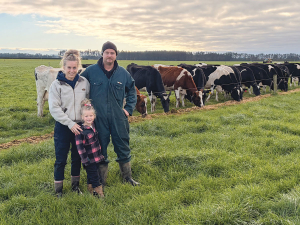
For Canterbury dairy farmers Sian Meijer and Rick Wobben, wearable technology has become one of their most valuable on-farm tools - helping manage 1850 cows across an expansive, high-performing dairy operation while improving efficiency, mating outcomes and day-to-day decision making.
Fonterra has unveiled its annual results for the 2026 financial year, posting $27 billion in revenue and close to $20 billion returned to New Zealand farmer owners and unit holders.
The first major update to the Dairy Cattle Code of Welfare in more than a decade has been released, marking what DairyNZ describes as an important step in ensuring animal welfare standards continue to evolve alongside scientific evidence and on-farm realities.
Ravensdown shareholders have elected Jane Montgomery and Kate Acland to the Ravensdown Board for three-year terms, following a closely contested director election.
Federated Farmers says new legislation replacing the Resource Management Act will cut red tape, unlock investment and help grow New Zealand's export-led economy, after the Planning Bill and Natural Environment Bill passed their third reading in Parliament yesterday.