Arable Sector Costs Are the Biggest Problem, Says FAR
Flat pricing in the face of significant increases in costs is the greatest problem facing the arable sector, says Foundation for Arable Research (FAR) chief executive Dr Scott Champion.
 increase font size
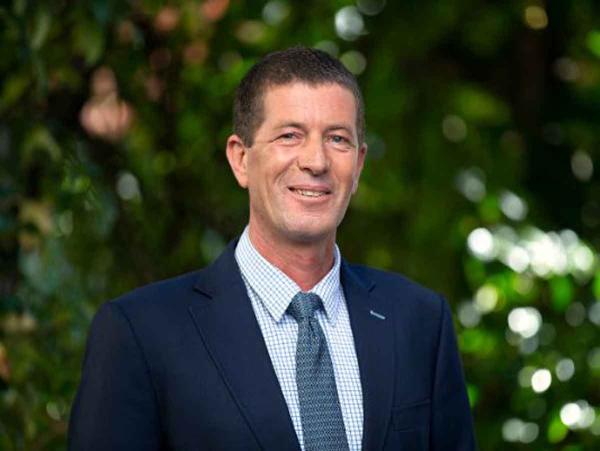 National’s new Wairarapa MP Mike Butterick.
Sheep and beef farmer and National’s MP for Wairarapa, Mike Butterick recently delivered his maiden speech in Parliament. Here are parts of what he said.
I'm fortunate to have lived my dream, lived my passion—not everyone can say that. I’ve got an opportunity to give back to the community I’ve spent my life in. I’m a product of it. I’ve been shaped by those that are in it. Our provincial communities aren’t complicated. They have strong values, they work hard, they have a strong sense of community, and they know how to have fun and enjoy each other’s company.
Things are not right when I talk to a local dairy farmer about how they don’t want to say what they do for a living when they go out, about their kids getting bullied at school because their parents are farming—it’s not OK.
When I talk to local sheep and beef farmers about their despair when contemplating their legislative fatigue, it’s not OK. Why don’t we talk about the 25,000 kilometres of waterways fenced off, the over 36,000 culverts or bridges over waterway crossings by the dairy industry alone, the hundreds of thousands of dollars spent on effluent systems per family farm, this country’s 5000th Queen Elizabeth the Second National Trust covenant that was registered in the Wairarapa in 2022, the community catchment groups, the millions of trees planted, or the 2.8 million hectares of woody vegetation that’s already on our farmland?
Understand that the rural community, despite all the rhetoric, are environmentalists. The relationship between the farming business, the family, and the environment is a reciprocal one. I acknowledge those efforts being made to protect and enhance the environment.
The rural community has likely spent more on the environment than those that criticise them, those that flush the dunny without a thought about where it goes, in their plastic clothes, standing on their plastic carpet, that ignore their own impacts on the environment, and would rather point the finger.
As Benjamin Franklin said, “Don’t throw stones at your neighbours, if your own windows are made of glass”. We as primary producers may not always get it right, but we are certainly trying. My message is simple: if, individually, we don’t all make the choices that will inevitably come with a price tag, collectively nothing will change.
Our rural people are unique. They’re the only sector that I know of that live in their business. They look out the window or walk out the door and it’s there. Passion is what motivates the rural sector to do what they do, and it’s the avalanche of previous rushed legislation that’s eroding away the passion. That’s not a great outcome.
Understand that provincial New Zealand is interconnected.
The rural or farming community is greater than what is traditionally articulated in the statistics. The mechanics, the stock agents, the accountants, the freezing workers, the truck drivers, the shearers, the loggers, and others are all part of the sector and contribute to the local economy. The rural-urban divide in provincial New Zealand is a myth. We know each other and we respect each other.
The message to the farming community and all those that contribute to it is that this Government supports you, this Government has your back, and you should be proud to be a part of the food and fibre sectors that earn 82 percent of this country’s export income—export income that pays the wages of our teachers, our nurses, and our policemen.
Be proud of what you do and what you contribute to your communities, to your environment, and to the economy.
Flat pricing in the face of significant increases in costs is the greatest problem facing the arable sector, says Foundation for Arable Research (FAR) chief executive Dr Scott Champion.

New Zealand's high country farmers could soon gain greater flexibility to diversify their land use as the new Crown Land Legislation Amendment Bill is introduced to Parliament.
OPINION: Your canine crusader reckons no single lobby group has had a bigger turnaround in fortunes than Federated Farmers since the election of the new coalition Government.
OPINION: Your canine crusader notes that the new parliament will have a fresh array of new MPs from farming backgrounds taking up seats in the nation's capital.
A slew of farming sector leaders linked to Federated Farmers are contesting the upcoming general election.


New Zealand's red meat and fifth-quarter exports reached $867 million in August, up 23% on the same month last year, as stronger returns lifted earnings across all major markets.
State farmer Pāmu is bracing for a $30 million hit from soaring farm input costs this financial year.
Flat pricing in the face of significant increases in costs is the greatest problem facing the arable sector, says Foundation for Arable Research (FAR) chief executive Dr Scott Champion.
Entries opened on Monday, 5 October 2026 for the 2027 New Zealand Dairy Industry Awards (NZDIA), which organisers describe as the nation's biggest celebration of excellence in the dairy sector.
Waikato milk processor Tatua has again declared a record milk payout to farmer shareholders, leaving other processors in the dust.
A Labour-led Government won’t be bringing back the controversial freshwater rules of 2020.