
Federated Farmers Welcomes ACT’s New Farming Policies
Federated Farmers has welcomed new rural policies released by ACT, saying they align closely with its own election priorities.
 increase font size
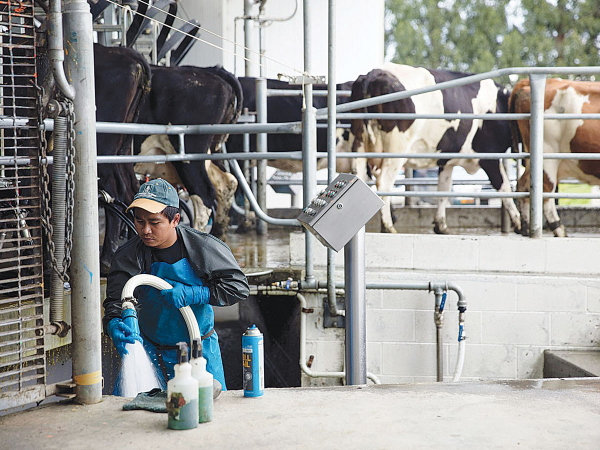 The Government's decision to allow 500 more overseas dairy workers into the country is a step in the right direction.
OPINION: The Government's decision to allow 500 more overseas dairy workers into the country is a step in the right direction.
While this won't solve the sector's labour shortage nationally, many farmers will be breathing a sigh of relief.
However, past experience shows that the the Government's green light for more overseas workers doesn't quickly result in more workers landing on farms. The immigration process is cumbersome.
The challenge facing farmers is getting the overseas workers before calving starts in three months time.
Spring calving season kicks off in July in the Waikato and a month later down the country.
However, it may take workers from the Philippines up to six weeks to arrive in New Zealand and receive all the necessary medical checks and paperwork.
Federated Farmers is rightly concerned that administrative hold ups and bureaucracy would see some farmers unable to get workers on the ground in time for calving.
Many farmers may already have connections with workers overseas and getting those workers in will be easier. They must be agile and willing to make this happen super quick.
The labour shortage has been stressful for farmers and their staff over the past few years, thanks to border closures caused by the pandemic.
Many farmers have struggled to provide a competitive roster to prospective and current staff, leading to some managers and sharemilkers bailing out. The stress has been just too great to handle.
The Government had previously approved 300 foreign workers in dairying under an exceptions policy. However, DairyNZ pointed out that it was nowhere near enough to meet the demands on-farm and reduce the current high levels of farmer stress.
Last week's announcement added another 500 to that number. The workers need to be paid at least $28 an hour. DairyNZ has pushed for 1,500 international dairy workers to arrive in time for the 2022 dairy season on June 1.
The 500 extra workers will help reduce some of the pressure on farm teams. However, the sector will continue to advocate for more to be allowed into New Zealand to help address the significant staff shortage. New Zealand needs overseas workers. The Government has recognised this but a streamlined and easy immigration process will help farmers get these 500 overseas workers on farm quickly.
Let's hope Government bureaucracy doesn't throw a spanner in the works.
Federated Farmers has welcomed new rural policies released by ACT, saying they align closely with its own election priorities.

Federated Farmers is backing Feilding High School’s call to keep Agriculture and Horticultural Science as a standalone subject in Year 11.
National’s pledge to introduce 19 new national standards shows the party is serious about getting Wellington out of farming, Federated Farmers says.
Mobile phone coverage and reliability are deteriorating in rural areas, and farming families are bearing the cost, according to a Federated Farmers survey.
Central Otago District Council (CODC) has voted against a plan to spread treated sewage sludge from Cromwell and Alexandra on farmland near Lauder, a decision Federated Farmers says reflects strong opposition from rural residents.


Federated Farmers has welcomed new rural policies released by ACT, saying they align closely with its own election priorities.

Rural Contractors NZ says proposed changes to land transport rules for agricultural vehicles are a welcome response by the Government to out of date regulations which have seen members hit with huge fines.
Alliance is calling for final applications for its 2027 Graduate Programme, with applications closing on Sunday 25 October.
Decades piloting planes has ensured vet and farmer David Hayes is focused on safety. So, after a serious accident while welding on farm, he is sharing his experience so others can learn from it.
Canterbury milk processor, Synlait Milk has confirmed Leon Fung as its chief executive officer.
OPINION: Making it easier to collect rainwater and use it to grow crops and livestock is a no brainer.