Federated Farmers Praises Labour's Emissions Tax Backdown
For the first time in a quarter of a century, Federated Farmers has something positive to say about the Labour Party’s climate change policy leading into a general election.
 increase font size
OPINION: Global warming could be more bad news for cows and humans, according to some research.
If the climate heats up, humans will increasingly suffer from rising temperatures. But how will climate change affect cows?
Turns out more heat can be harmful to dairy cows.
In recent year, US scientists have found links between human-caused climate change and heat stress, which can lower milk production and lead to diseases and other issues in dairy cows.
Cows eat less when they're hot - a factor researchers believe leads to a 50% drop in milk production. But those drops in production can reach up to 70% in hot weather.
In a search to account for the other 20%, researchers conducted a trial with 48 Holstein cows housed in temperature-controlled stalls. The research was published in the Journal of Dairy Science.
For the first time in a quarter of a century, Federated Farmers has something positive to say about the Labour Party’s climate change policy leading into a general election.
OPINION: Groundswell's opinion of the incumbent farm industry representatives isn't high.
Climate, nature and animal wellbeing make up Fonterra's refreshed sustainability roadmap released last week.
OPINION: After hogging the media limelight for telling a NZ Chinese MP to "go back home", Winston Peters has decided to focus on a domestic issue - oil and gas drilling.


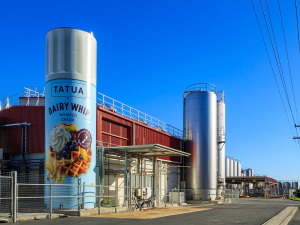
Waikato milk processor Tatua has again declared a record milk payout to farmer shareholders, leaving other processors in the dust.
A Labour-led Government won’t be bringing back the controversial freshwater rules of 2020.
National’s much-touted free trade deal with India featured in the Rural Issues Debate at Mystery Creek, Hamilton on Wednesday night.
New Zealand's 2026-27 freshwater fishing season has opened, with anglers encouraged to head to rivers and lakes over the coming days as conditions look favourable across much of the country.
Central Otago District Council (CODC) has voted against a plan to spread treated sewage sludge from Cromwell and Alexandra on farmland near Lauder, a decision Federated Farmers says reflects strong opposition from rural residents.
Pāmu has released its FY26 Integrated Annual Report, reporting a Net Operating Profit of $113 million, more than double the $49 million recorded in FY25.